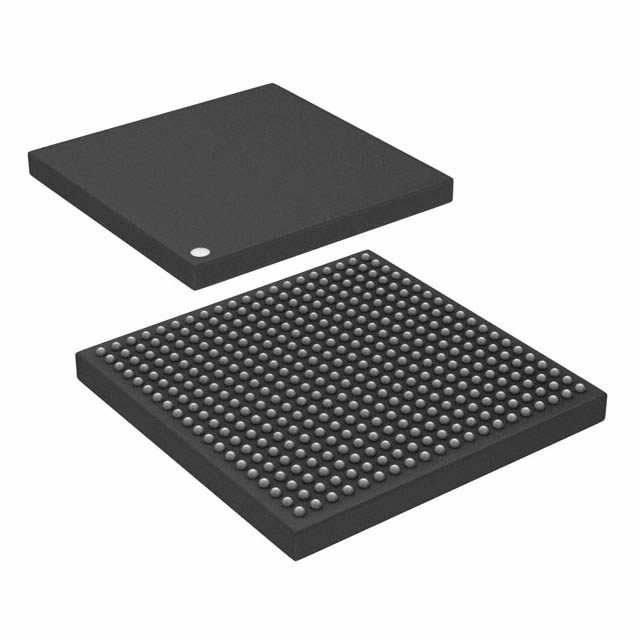
## Microprocessor (CPU)
## Overview
A microprocessor, commonly referred to as the Central Processing Unit (CPU), is the primary component of a computer that performs most of the processing inside a computer. It executes instructions from programs, handles arithmetic and logical operations, controls data flow, and manages tasks within the computer.## Key Features
1. General-Purpose Processing:
- Designed for a wide range of tasks, from running operating systems and applications to performing complex calculations.
- Can handle a variety of instructions and workloads efficiently.
2. Core Architecture:
- Typically consists of a few powerful cores (often 2 to 16 in consumer CPUs).
- Each core is capable of executing multiple threads simultaneously through technologies like Hyper-Threading (Intel) or Simultaneous Multithreading (SMT) (AMD).
3. Performance Characteristics:
- High single-thread performance, meaning each core is highly optimized for speed and efficiency in executing individual instructions.
- Lower parallel processing capabilities compared to GPUs but excels in sequential task execution.
4. Cache Hierarchy:
- Large, sophisticated cache systems (L1, L2, and L3 caches) to reduce latency and speed up data access.
5. Flexibility:
- CPUs are versatile and can run complex algorithms, manage I/O operations, and handle system control tasks.
6. Power Consumption:
- Generally designed to balance performance and power efficiency.
## Applications
- Running operating systems- General-purpose applications (e.g., web browsers, office suites)
- Complex calculations and simulations
- System management tasks
## Graphics Processing Unit (GPU)
## Overview
A Graphics Processing Unit (GPU) is a specialized processor designed to accelerate graphics rendering. GPUs are optimized for handling large blocks of data in parallel, making them particularly effective for tasks that involve processing many similar operations simultaneously.## Key Features
1. Parallel Processing:
- Designed with a large number of smaller, less powerful cores (often thousands in modern GPUs).
- Ideal for highly parallelizable tasks where the same operation is performed on multiple data points simultaneously.
2. Core Architecture:
- Consists of hundreds to thousands of simpler cores organized into streaming multiprocessors (SMs).
- Each core is much simpler than a CPU core but excels in executing many operations concurrently.
3. Performance Characteristics:
- High throughput for floating-point operations, essential for rendering graphics and performing scientific computations.
- Excels at parallel processing but generally has lower single-thread performance compared to CPUs.
4. Memory Bandwidth:
- Typically equipped with high-bandwidth memory (e.g., GDDR6, HBM2) to handle large datasets required for graphics and compute tasks.
5. Specialized Instructions:
- Optimized for operations used in graphics rendering (e.g., shading, texture mapping) and parallel computations (e.g., matrix multiplication).
6. Power Consumption:
- Can be more power-hungry compared to CPUs due to their high computational throughput.
## Applications
- Rendering 2D and 3D graphics for video games and animations- Video processing and encoding
- General-purpose computing on GPUs (GPGPU), such as scientific simulations, financial modeling, and machine learning
- Cryptocurrency mining
## Summary of Differences
1. Design Philosophy:
- CPU: Optimized for general-purpose computing, handling a wide variety of tasks with high flexibility and efficiency.
- GPU: Optimized for parallel processing, handling tasks that can be broken down into many smaller, concurrent operations.
2. Core Count and Structure:
- CPU: Few powerful cores optimized for single-thread performance.
- GPU: Many smaller cores optimized for high parallelism and throughput.
3. Task Suitability:
- CPU: Best for tasks requiring high single-thread performance, complex branching, and varied instructions.
- GPU: Best for tasks that can leverage parallelism, such as graphics rendering, large-scale numerical simulations, and machine learning.
4. Memory and Bandwidth:
- CPU: Sophisticated cache hierarchy to enhance performance for general computing tasks.
- GPU: High-bandwidth memory to handle large datasets efficiently.
5. Usage Scenarios:
- CPU: Running the operating system, managing I/O operations, executing general-purpose applications.
- GPU: Rendering graphics, accelerating parallel computation tasks, and handling specific types of data-intensive workloads.
In essence, while both CPUs and GPUs are critical to modern computing, they serve different purposes and are designed with different strengths in mind. CPUs provide versatility and control for a broad range of computing needs, whereas GPUs offer immense parallel processing power for specialized tasks.
icDirectory United Kingdom | https://www.icdirectory.co.uk/a/blog/what-is-the-difference-between-a-microprocessor-and-a-gpu-graphics-processing-unit.html