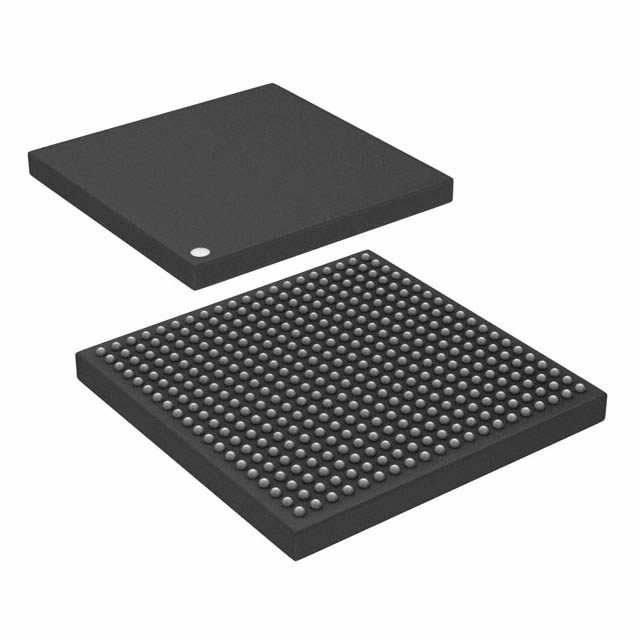
A microprocessor and a Digital Signal Processor (DSP) are both types of processors used in electronic devices, but they have distinct characteristics and are designed for different purposes. Here's a detailed comparison between the two:
1. General Purpose vs. Specialized Functions:
- A microprocessor is a general-purpose processor designed to perform a wide range of tasks, such as running operating systems, executing applications, and handling various computational tasks.
- A DSP, on the other hand, is specifically optimized for processing digital signals, such as audio, video, telecommunications, and real-time control applications. It excels at performing repetitive mathematical calculations involved in signal processing.
2. Instruction Set Architecture (ISA):
- Microprocessors typically have a complex instruction set architecture (CISC), which supports a wide range of instructions with varying execution times. This flexibility allows them to handle diverse tasks efficiently.
- DSPs, however, usually have a reduced instruction set architecture (RISC) or a modified Harvard architecture. This streamlined ISA focuses on commonly used signal processing operations, enabling faster and more efficient execution of signal-related algorithms.
3. Data Precision and Formats:
- Microprocessors generally work with data in a variety of formats, including integers, floating-point numbers, and ASCII characters. They provide support for a wide range of data types and sizes.
- DSPs prioritize fixed-point arithmetic, as it is most commonly used in signal processing applications. They are optimized to perform high-speed fixed-point calculations accurately, which reduces cost and power consumption compared to floating-point operations.
4. Parallelism and Pipelining:
- Microprocessors often employ techniques such as pipelining, superscalar execution, and out-of-order execution to improve performance by executing multiple instructions simultaneously or overlapping instruction stages.
- DSPs are designed with parallelism in mind, using specialized hardware structures like multiple arithmetic logic units (ALUs), SIMD (Single Instruction, Multiple Data) instructions, and MAC (Multiply-Accumulate) units. These features enable simultaneous execution of multiple data elements in parallel, significantly enhancing signal processing performance.
5. Memory Hierarchy and Access Patterns:
- Microprocessors typically have larger caches and sophisticated memory management units (MMUs) to handle diverse memory access patterns of general-purpose computing tasks. They prioritize data locality and employ techniques like virtual memory to optimize access to large address spaces.
- DSPs focus on data streaming and processing throughput. They often have smaller, specialized data and instruction caches tuned for efficient streaming access, ensuring a smooth flow of data through the pipeline and minimizing memory latency.
6. Power Efficiency and Cost Considerations:
- Microprocessors aim for a balance between performance, power consumption, and cost, making them suitable for a wide range of applications from desktop computers to mobile devices.
- DSPs are optimized for power efficiency and cost-effectiveness in signal processing applications. By focusing on specific functions and reducing unnecessary overhead, they deliver higher performance per watt and are commonly found in devices like smartphones, audio/video equipment, and wireless communications systems.
In summary, while microprocessors are versatile and suitable for general-purpose computing tasks, DSPs are specialized processors specifically designed for efficient and high-performance digital signal processing. Their distinct architectures, ISAs, parallelism, memory hierarchies, and optimization goals make them well-suited for their respective target applications.
icDirectory United Kingdom | https://www.icdirectory.co.uk/a/blog/what-is-the-difference-between-a-microprocessor-and-a-dsp-digital-signal-processor.html

☰