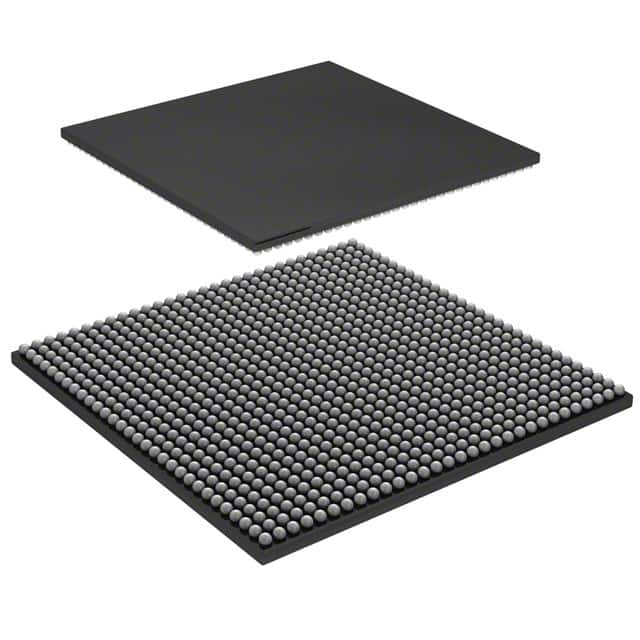
## Overview of Xilinx XCZU9CG-2FFVC900E
The Xilinx XCZU9CG-2FFVC900E is part of the Zynq UltraScale+ MPSoC (Multiprocessor System-on-Chip) series, which is designed to meet the increasing demands of high-performance computing, embedded systems, and advanced signal processing. This FPGA-based device integrates both programmable logic and ARM-based processing, providing a versatile solution for complex applications requiring powerful data processing and high throughput.
## Key Specifications
1. Architecture:
* Series: Zynq UltraScale+ MPSoC
* Family: ZCU9CG
* Package Type: FFVC900 (900-pin FFC)
* Process Technology: 16nm FinFET
* Logic Cells: 1,110,000
* Maximum Frequency: 1.5 GHz
* Internal Memory: 16 MB (On-chip Memory)
* Programmable Logic:
* Configurable logic blocks
* Large amount of programmable logic fabric
* Multiple DSP slices (digital signal processing)
2. ARM Processing Subsystem:
* ARM Cortex-A53: Quad-core, 64-bit, capable of handling high-performance applications
* ARM Cortex-R5: Dual-core, for real-time processing tasks
* ARM Mali-400 MP2 GPU: For accelerated graphical processing
* System Memory: Supports DDR4, DDR3, and LPDDR4, with up to 32 GB of memory bandwidth.
3. I/O and Connectivity:
* High-Speed Transceivers: Up to 28 Gbps data rates supported through the transceivers for high-speed connectivity.
* PCIe Gen 3: For high-speed peripheral interfacing, supporting up to 16 lanes.
* USB 3.0: High-speed USB interface.
* Ethernet: 10GbE, 1GbE, and 100Mbps Ethernet connectivity for industrial networking and communication.
* HDMI: Multiple high-definition video output options.
* JTAG & UART: For development and debugging purposes.
4. Security Features:
* TrustZone Technology: ARM-based security architecture for separating and protecting sensitive data.
* Secure Boot: Hardware-enforced boot security to prevent unauthorized access.
* AES Encryption: Hardware acceleration for advanced encryption standards.
5. Power Management:
* Dynamic Voltage and Frequency Scaling (DVFS): Allows for power-efficient operation by adjusting voltage and frequency based on workload demands.
* Power Consumption: Power-efficient design, with optimizations for industrial and automotive applications.
6. Performance & Applications:
* Real-time Processing: Excellent for applications requiring real-time processing and high-throughput, such as automotive, aerospace, and communications.
* DSP and AI Acceleration: Supports hardware-accelerated DSP algorithms and AI workloads, making it ideal for AI-based edge computing tasks, machine learning, and data processing.
* Embedded Vision: Optimized for embedded vision applications with high-performance video and image processing.
7. Development Tools:
* Xilinx Vivado Design Suite: Offers a complete development environment for programming the programmable logic and designing custom hardware accelerators.
* PetaLinux: Xilinx’s Linux-based software development platform that enables efficient software design for the ARM cores.
* SDK (Software Development Kit): Provides tools for integrating software and hardware design flows.
## Applications
The XCZU9CG-2FFVC900E is highly suitable for various advanced applications across industries that demand high computational power and flexibility. Some of the key applications include:
* Automotive: Real-time vision systems, autonomous driving, advanced driver-assistance systems (ADAS), infotainment systems.
* Aerospace and Defense: Signal intelligence, radar, and communications systems.
* Telecommunications: 5G base stations, high-speed networking, and cloud computing.
* Industrial Automation: Robotics, factory automation, and data acquisition systems.
* Edge AI/IoT: AI-powered edge devices for faster decision-making and low-latency data processing.
## Conclusion
The Xilinx XCZU9CG-2FFVC900E is a powerful, flexible, and high-performance MPSoC that combines ARM-based processors with programmable logic, offering immense versatility for complex embedded applications. It caters to the needs of industries that require high-speed computation, advanced signal processing, and the ability to integrate sophisticated control and real-time data processing systems.