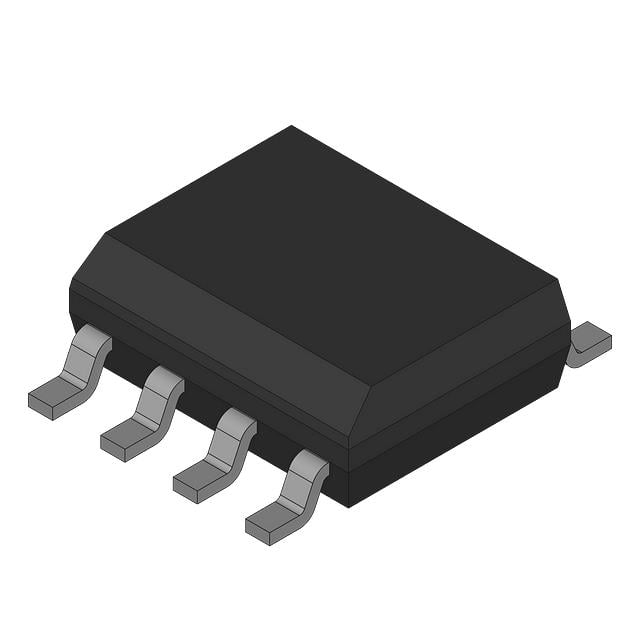
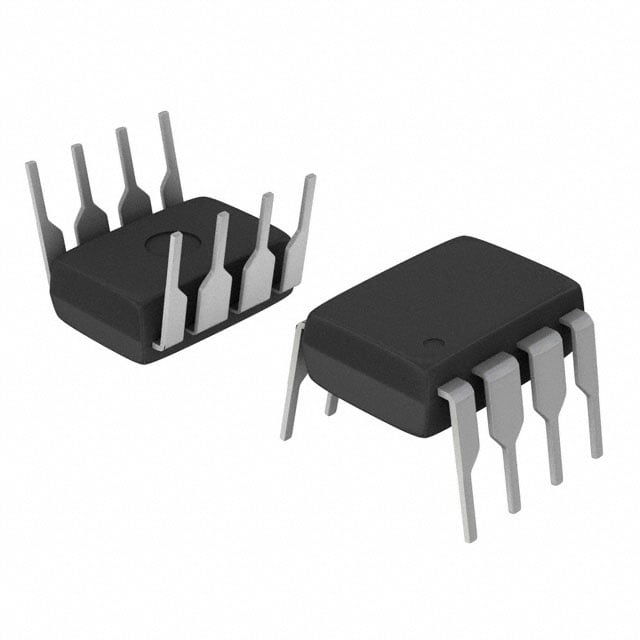
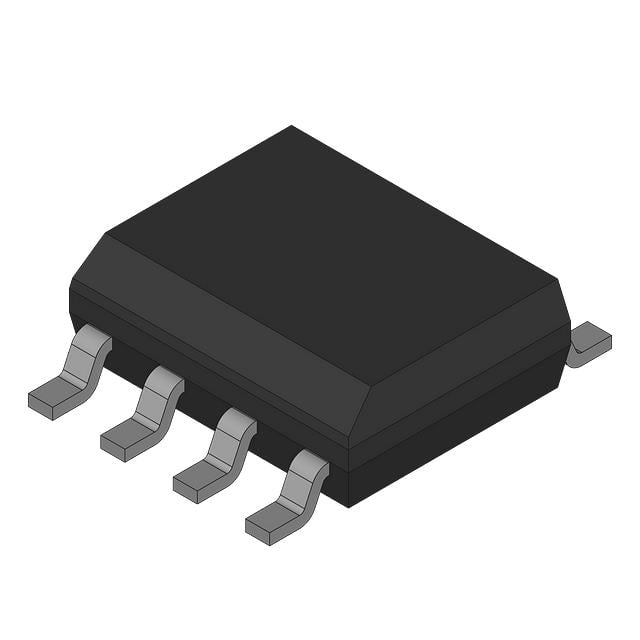
The ACE1202EM is a Fairchild Semiconductor ACEx™ family low-power 8-bit microcontroller implemented as a compact embedded controller with on-chip non-volatile memory and integrated system management peripherals. It belongs to the ACE1202 product family, which is designed for cost-sensitive embedded control applications requiring minimal external components, low standby power, and integrated timing and reset functions. The device architecture is centered around a fully static CMOS 8-bit CPU core with EEPROM-based program memory, enabling in-system reprogrammability and high data retention characteristics typical of embedded control and security-oriented applications.
## Core Architecture and CPU Subsystem
The ACE1202EM integrates an 8-bit arithmetic controller engine core (ACEx architecture), optimized for compact instruction execution and low-power operation. The CPU is fully static, allowing operation down to very low power states without loss of register or RAM content. Instruction execution is based on a tightly coupled internal oscillator, eliminating the requirement for an external crystal or resonator in typical configurations.
The architecture is designed around deterministic execution timing, with an internal instruction cycle derived from the on-chip oscillator. The core is optimized for bit-manipulation and control-oriented workloads rather than high-throughput computation. This aligns with its intended use in embedded control logic, I/O sequencing, and simple state machine implementations.
## Memory Organization
The ACE1202EM implements a Harvard-style separation between program memory and data memory, both realized using non-volatile or semi-non-volatile technologies depending on region.
Program memory consists of approximately 2 Kbytes of EEPROM-based code storage, enabling field reprogramming without external programming memory devices. This memory type provides endurance suitable for repeated firmware updates in embedded environments.
Data memory includes a small SRAM block (64 bytes) used for runtime variables and stack operations, as well as a separate 64-byte data EEPROM region intended for persistent configuration storage. The separation between volatile and non-volatile data storage allows the device to retain configuration parameters across power cycles while maintaining execution flexibility during runtime.
## Peripheral and System Integration Features
The device integrates a set of system-level peripherals intended to reduce external component count and improve reliability in embedded designs. These peripherals include a watchdog timer used for system recovery from software faults, a power-on reset (POR) circuit to ensure deterministic startup behavior, and a brown-out reset (BOR) / low-voltage detection subsystem to maintain operational integrity under supply instability.
A multi-function timer block is integrated to support timing generation, event counting, and basic waveform control functions. The timer subsystem is intended for low-complexity control tasks such as periodic sampling, time base generation, and simple PWM-related operations depending on configuration mode.
The device also includes multi-level voltage detection logic, which provides monitoring of supply rails and supports controlled reset or interrupt generation when voltage thresholds are violated. This is a key feature for battery-powered or unstable supply environments.
## I/O Structure and Digital Interface
The ACE1202EM provides a small number of general-purpose I/O pins, typically organized as an 8-bit I/O structure depending on package configuration. These I/O lines are software-configurable and support multiple electrical behaviors including push-pull output mode, high-impedance input mode, and weak pull-up configurations.
The I/O subsystem is memory-mapped, allowing direct register-based control from the CPU core. Input pins can be configured for interrupt-on-change or wake-up functionality, enabling low-power operation with event-driven activation.
The architecture supports multi-input wake-up capability, allowing external pin transitions to bring the device out of low-power HALT or IDLE modes. This is essential for battery-operated control systems requiring minimal energy consumption during standby states.
## Clocking and Oscillator System
The ACE1202EM includes an integrated internal oscillator, removing the need for external clock generation components. The oscillator provides the system clock for both CPU execution and peripheral timing functions. This internal clock architecture simplifies PCB design and reduces BOM cost.
Clock stability is managed internally and is sufficient for control-oriented embedded tasks rather than high-precision communication protocols. The oscillator also supports low-power operation modes, where clock gating or reduced frequency operation may be applied depending on system state.
## Power Management and Low-Power Operation
A key design feature of the ACE1202EM is its support for multiple low-power operating modes, including HALT and IDLE states. In HALT mode, the CPU execution is suspended while maintaining RAM and critical system state retention, achieving extremely low current consumption levels as specified in the device family documentation.
The power management subsystem is closely integrated with the reset and voltage detection circuits. This ensures that the device can reliably transition between active and low-power states without corruption of memory or register contents. The architecture is optimized for battery-powered and energy-constrained applications.
## Reset, Watchdog, and Fault Protection
System robustness is enforced through a combination of reset sources including power-on reset, brown-out reset, and watchdog timer reset. The watchdog timer is intended to recover the system from firmware lockup conditions by forcing a controlled reset if periodic servicing is not detected.
The brown-out detection system monitors supply voltage stability and ensures that the device does not execute code under unsafe voltage conditions, preventing unpredictable behavior or memory corruption.
The reset controller coordinates these mechanisms to guarantee deterministic startup sequencing and safe recovery from fault conditions.
## Programming Model and EEPROM Characteristics
The ACE1202EM uses EEPROM-based program memory, allowing in-circuit reprogramming without external flash or ROM devices. This architecture is particularly suited for low-volume or field-upgradable embedded systems.
The programming model supports write and erase cycles with defined endurance limits consistent with EEPROM technology. Data retention characteristics are specified for long-term storage applications, making it suitable for configuration-heavy embedded control systems.
In-circuit programming capability is supported, enabling device programming without removal from the target system under appropriate hardware conditions.
## Package and Electrical Characteristics
The ACE1202EM is typically offered in small-outline surface-mount packages such as SOIC variants, optimized for compact PCB integration. Electrical characteristics include a single-supply operating range spanning low-voltage operation up to standard 5V-class systems depending on variant.
The device is designed for industrial temperature ranges, supporting operation in extended environmental conditions suitable for embedded industrial and consumer control systems.
## System-Level Application Positioning
The ACE1202EM is positioned as a compact embedded controller for low-power control applications requiring integrated memory and minimal external circuitry. Typical use cases include simple automation logic, sensor interfacing, timing control systems, and embedded security or state-machine control functions.
Its architecture prioritizes integration density, low standby consumption, and deterministic control behavior rather than computational throughput or high-speed communication capabilities.
## Conclusion
The Fairchild ACE1202EM is a compact 8-bit EEPROM-based microcontroller built on the ACEx architecture, combining an internal oscillator, integrated reset and voltage supervision circuits, small RAM/EEPROM memory blocks, and configurable I/O in a highly integrated low-power design. Its system architecture is optimized for embedded control applications requiring minimal external components, deterministic execution, and robust power management.