What is the purpose of a freewheeling diode?
Technical Blog / Author: icDirectory United Kingdom / Date: Apr 07, 2024 01:04
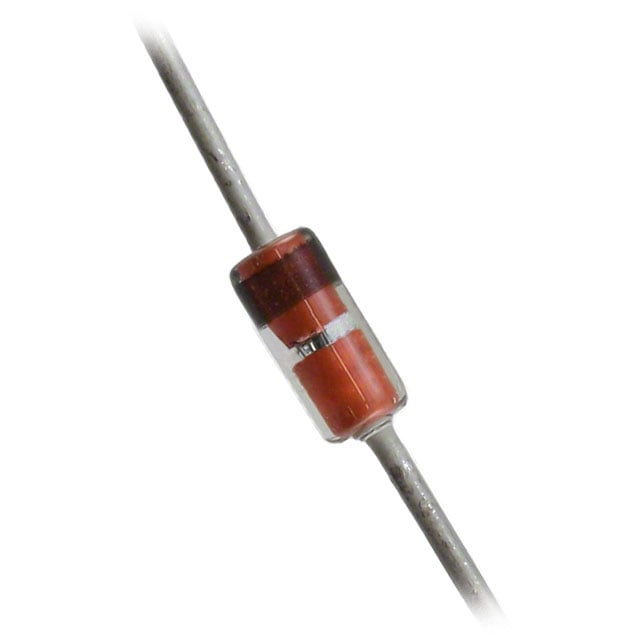
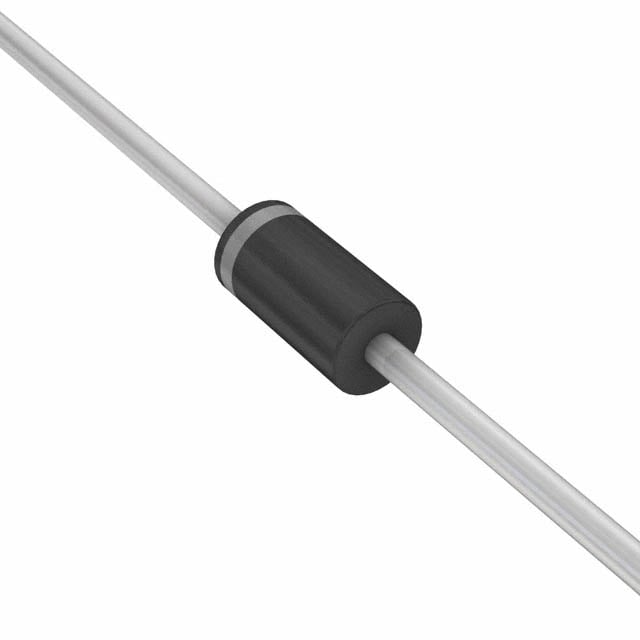
The freewheeling diode, also known as a flyback diode, serves a crucial purpose in electronic circuits, particularly those involving inductive loads (such as motors or solenoids). Let%27s explore its function in detail:

## Purpose of Freewheeling Diode (Flyback Diode)


1. Energy Dissipation:
- When an inductive load (such as a coil or motor) is switched off, the stored energy in the inductor must be dissipated.
- Without a freewheeling diode, this energy would cause a voltage spike across the switch contacts and the inductor.
- The freewheeling diode provides a short-circuit path for the inductor%27s decay current, allowing the stored energy to dissipate harmlessly.

2. Working Principle:
- When the switch (such as a transistor or relay) turns off, the inductor%27s current tends to decay exponentially.
- The freewheeling diode becomes forward-biased, providing a low-resistance path for the current.
- The diode allows the inductor%27s energy to flow through it, preventing voltage spikes and protecting the switch.

3. Preventing Overvoltage:
- The freewheeling diode ensures that the reverse voltage across the inductor remains within safe limits.
- It prevents the switch and other components from experiencing high overvoltage conditions.

4. Applications:
- Freewheeling diodes are commonly used in:
- DC motor control: To protect the motor driver circuit.
- Relay circuits: To prevent voltage spikes when relays are turned off.
- Inductive loads: Such as solenoids, transformers, and electromagnets.

5. Selection Considerations:
- Choose a freewheeling diode with a sufficient PIV (peak inverse voltage) rating to handle the maximum reverse voltage.
- Ensure that the diode%27s current rating matches the load requirements.

In summary, the freewheeling diode provides a safe path for inductor current decay, prevents voltage spikes, and protects electronic components from overvoltage during switch-off transitions¹²³.


(1) Purpose of Freewheeling Diode and Its Working. https://www.youtube.com/watch?v=RSqJU1igy_U.
(2) Freewheeling Diode | Power Electronics. https://www.youtube.com/watch?v=RyGfwzDukPs.
(3) The Freewheeling Diode. https://www.youtube.com/watch?v=aNFFBLSmjmM.
(4) Freewheeling or Flyback Diode – Working and Purpose. https://electricalbaba.com/freewheeling-diode-working-purpose/.
(5) What is a Freewheeling Diode : Circuit & Its Working - WatElectronics.com. https://www.watelectronics.com/freewheeling-diode-flyback-diode/.
(6) undefined. https://youtube.com/channel/UCvN_mOcb9CtpZ_tXP8nQ_oA.

icDirectory United Kingdom | https://www.icdirectory.co.uk/a/blog/what-is-the-purpose-of-a-freewheeling-diode.html
Related Products
R4000
R4000
Rectron Limited
Date: Apr 14, 2026
11DQ04
11DQ04
SMC Diode Solutions
Date: Apr 14, 2026
SR502
SR502
Taiwan Semiconductor
Date: Apr 14, 2026
BAT54-7-F
BAT54-7-F
Diodes Inc
Date: Apr 14, 2026
BAT46-TR
BAT46-TR
Vishay
Date: Apr 14, 2026
1N456A
1N456A
onsemi
Date: Apr 14, 2026
BAS516,115
BAS516,115
Nexperia
Date: Apr 14, 2026
UF4004 R1G
UF4004 R1G
Taiwan Semiconductor
Date: Apr 14, 2026
S3MB-TP
S3MB-TP
Micro Commercial Components
Date: Apr 14, 2026
1N6080/TR
1N6080/TR
Microchip Technology
Date: Apr 14, 2026
1N5806
1N5806
Solid State
Date: Apr 14, 2026
1N5408-B
1N5408-B
Diodes Inc
Date: Apr 14, 2026
Technical Blog
  • What is the impact of load current on rectifier performance?
  • What is the impact of transformer turns ratio on rectifier performance?
  • What is the effect of load resistance on rectifier performance?
  • How do we minimize voltage ripple in rectified output?
  • How do we protect rectifiers from overcurrent conditions?
  • How do we calculate the peak current through a diode in a rectifier?
  • How do we calculate the output power of a rectifier?
  • Can we use transistors for rectification?
  • What is the difference between half-wave and full-wave rectifier output?
  • What is the peak inverse voltage (PIV) of a diode?
  • How do we convert AC to DC using thyristors?
  • What is the output voltage of a single-phase rectifier?
  • What is the maximum allowable forward current for a diode?
  • Can we use tunnel diodes for rectification?
  • How do we calculate the conduction angle in a rectifier circuit?
  • What is the effect of load impedance on rectifier efficiency?
  • How do we ensure proper cooling of rectifiers?
  • Can we use avalanche diodes for rectification?
  • How do we prevent diode breakdown in rectifiers?
  • How do we protect rectifiers from reverse voltage?
  • What is the purpose of a bleeder resistor in rectifier circuits?
  • What is the difference between peak inverse voltage (PIV) and reverse breakdown voltage?
  • Can we use Schottky barrier rectifiers for high-frequency applications?
  • How does the choice of diode affect rectifier efficiency?
  • How do we troubleshoot rectifier failures?
  • What is the role of inductors in smoothing rectified output?
  • What is the significance of zero-crossing detection in rectifiers?
  • Can we use Schottky diodes for rectification?
  • What is the role of gate triggering in controlled rectifiers?
  • What is the purpose of a choke coil in rectifier circuits?