Let%27s explore the use of transistors for rectification in detail:
1. Active Rectification (Synchronous Rectification):
- Active rectification, also known as synchronous rectification, involves replacing traditional diodes with actively controlled switches—usually power MOSFETs or power bipolar junction transistors (BJTs).
- The motivation behind active rectification lies in improving efficiency by minimizing voltage drops across rectifying elements.
2. Why Replace Diodes?:
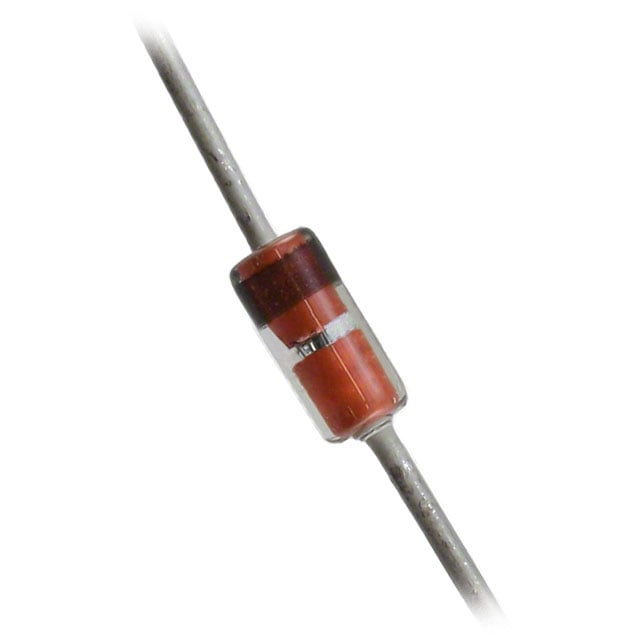
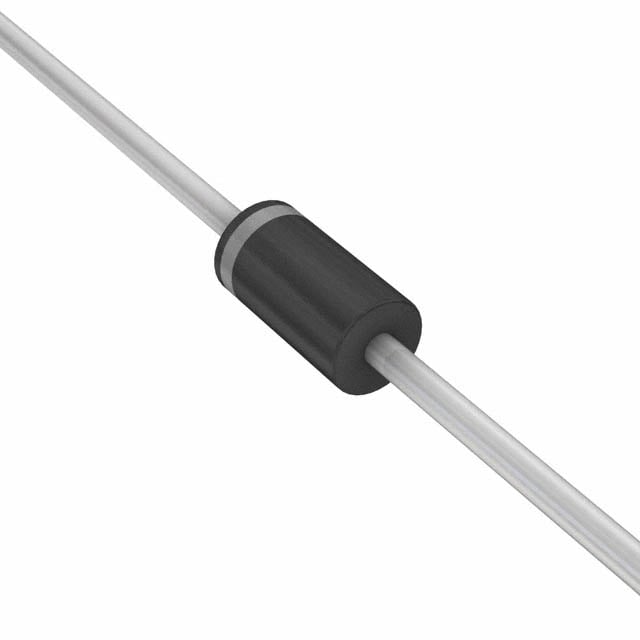
- Standard silicon diodes have a fixed voltage drop (typically between 0.7 V and 1.7 V).
- This voltage drop leads to significant power loss in the diode.
- In low-voltage converters (around 10 volts or less), diode voltage drops adversely affect efficiency.
- Even Schottky diodes, which have lower voltage drops (as low as 0.3 V), can be less efficient than synchronous rectifiers at high currents and low voltages.
3. Transistor-Based Active Rectification:
- The heart of active rectification is replacing diodes with actively controlled switching elements:
- MOSFETs: These have very low on-resistance (R_DS(on)) when conducting. Their voltage drop is significantly lower than that of diodes.
- BJTs: Power bipolar junction transistors can also be used.
- MOSFETs can achieve extremely low on-resistance (as low as 10 mΩ or even lower), resulting in reduced power loss and increased efficiency.
- Ohm%27s law governs the voltage drop across the MOSFET, ensuring that even at high currents, the drop remains lower than that of a diode.
4. Applications of Active Rectification:
- Active rectification finds applications in various scenarios:
- Photovoltaic Arrays: It prevents reverse current flow in partially shaded panels, minimizing power loss.
- Switched-Mode Power Supplies (SMPS): Improves efficiency in power conversion.
5. Conclusion:
- While diodes remain essential for many applications, active rectification becomes necessary in situations where low-voltage converters demand optimal efficiency.
- Transistors, especially MOSFETs, play a crucial role in achieving efficient AC-to-DC conversion.
In summary, transistors can indeed be used for rectification, enhancing efficiency and reducing power losses compared to traditional diodes¹³⁴.
(1) Active rectification - Wikipedia. https://en.wikipedia.org/wiki/Active_rectification.
(2) How to Simplify Synchronous Rectification - Diodes Incorporated. https://www.diodes.com/design/support/perspective/how-to-simplify-synchronous-rectification/.
(3) 3.2: Rectification - Engineering LibreTexts. https://eng.libretexts.org/Bookshelves/Electrical_Engineering/Electronics/Semiconductor_Devices_-_Theory_and_Application_(Fiore)/03:_Diode_Applications/3.2:_Rectification.
(4) IGBT Rectifier: All You Want to Know - Nevsemi Electronics. https://www.nevsemi.com/blog/igbt-rectifier.
icDirectory United Kingdom | https://www.icdirectory.co.uk/a/blog/can-we-use-transistors-for-rectification.html

☰