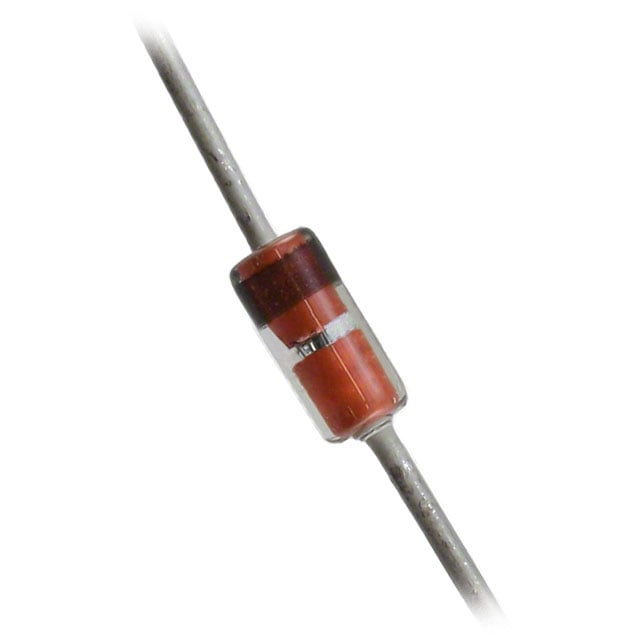
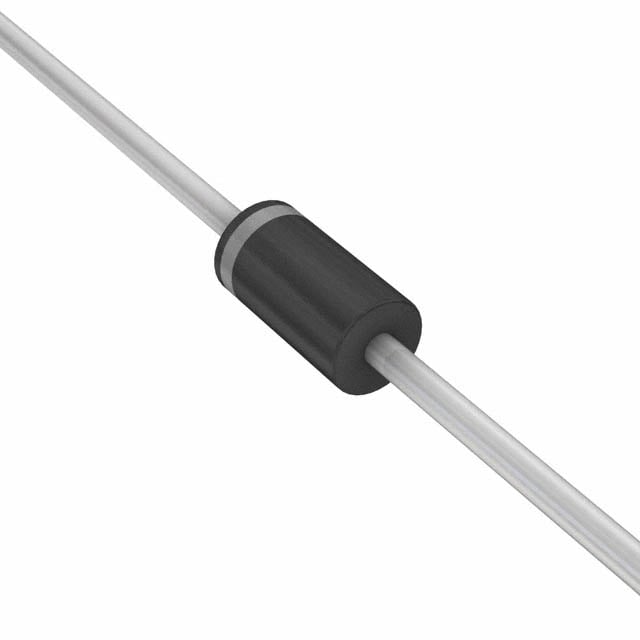
## Understanding Rectifiers
A rectifier is an electronic circuit that converts alternating current (AC) to direct current (DC). It%27s commonly used in power supplies, battery chargers, and other applications where a steady DC voltage is required. There are different types of rectifiers, including half-wave rectifiers and full-wave rectifiers.
In this explanation, I%27ll focus on the full-wave bridge rectifier, which is widely used due to its efficiency and simplicity.
## Full-Wave Bridge Rectifier Basics
1. Components:
- Four diodes (usually silicon diodes).
- An AC supply (alternating voltage source).
- A load resistor (connected to the output).
2. Operation:
- During the positive half-cycle of the AC signal, diodes D2 and D3 conduct, allowing current to flow through the load resistor.
- During the negative half-cycle, diodes D1 and D4 conduct, again allowing current through the load resistor.
- The output voltage always has the same polarity, regardless of the input signal%27s polarity.
3. Output Voltage:
- The output voltage of a full-wave bridge rectifier is pulsating DC. To calculate the average output voltage (V_dc), use the following formula:
[ V_{dc} = frac{2 cdot V_m}{pi} - 2 cdot V_D ]
- (V_m) represents the peak input voltage.
- (V_D) accounts for the voltage drops across the conducting diodes.
## Calculating Output Power
Now, let%27s determine the output power. The rectifier output power ((P_L)) can be calculated as:
[ P_L = V_{dc} cdot I_L ]
Where:
- (V_{dc}) is the average output voltage (as calculated above).
- (I_L) is the load current (current flowing through the load resistor).
## Example Calculation
Suppose we have the following parameters:
- Peak input voltage ((V_m)) = 10 V
- Voltage drop across each diode ((V_D)) = 0.7 V
- Load current ((I_L)) = 0.15 A
1. Calculate the average output voltage:
[ V_{dc} = frac{2 cdot 10}{pi} - 2 cdot 0.7 ]
[ V_{dc} approx 6.36 , ext{V} ]
2. Calculate the output power:
[ P_L = 6.36 cdot 0.15 ]
[ P_L approx 0.954 , ext{W} ]
Therefore, the output power of this rectifier circuit is approximately 0.954 watts.
Remember that this calculation assumes ideal diodes and neglects other losses. In practical scenarios, additional factors (such as diode forward resistance and ripple voltage) may affect the actual output power.
Feel free to explore more about rectifiers and their applications! ️<br>
(1) Bridge Rectifier Calculator. https://www.omnicalculator.com/physics/bridge-rectifier.
(2) 3-Phase Rectifier Voltage Calculator - GEGCalculators. https://gegcalculators.com/3-phase-rectifier-voltage-calculator/.
(3) Bridge rectifier equation | Example of Calculation. https://www.electricity-magnetism.org/bridge-rectifier-equation/.
(4) Rectification of a Single Phase Supply - Basic Electronics Tutorials .... https://www.electronics-tutorials.ws/power/single-phase-rectification.html.
(5) Bridge Rectifier Calculator - CalcTool. https://www.calctool.org/electronics/bridge-rectifier.
icDirectory United Kingdom | https://www.icdirectory.co.uk/a/blog/how-do-we-calculate-the-output-power-of-a-rectifier.html