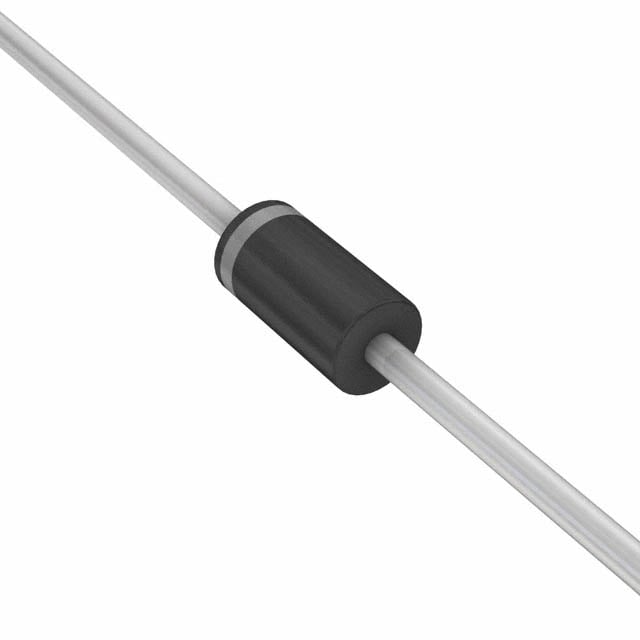
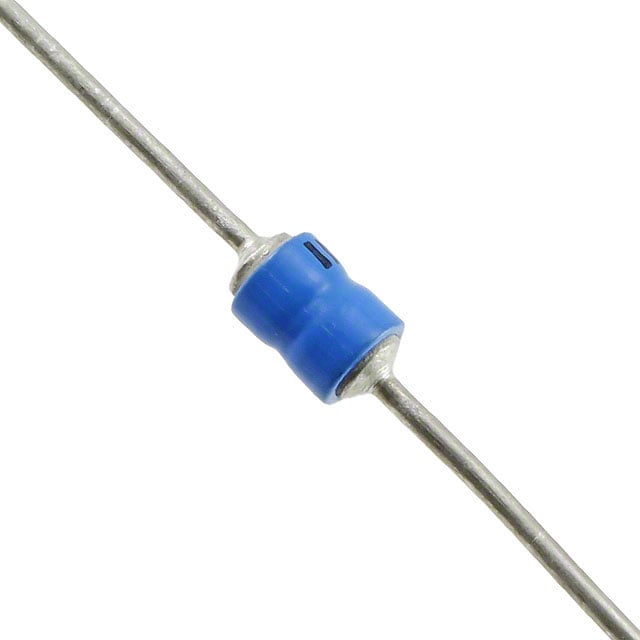
What is the maximum allowable forward current for a diode?
Technical Blog / Author: icDirectory United Kingdom / Date: Apr 15, 2024 23:04
The maximum allowable forward current for a diode is a critical parameter that determines the safe operating limits of the diode. Let%27s explore this in detail:

1. Definition:
- The Maximum Forward Current (often denoted as (I_F)) represents the highest continuous current that a diode can safely carry without damaging itself.
- Manufacturers specify this rating in the diode%27s datasheet.
- If the forward current exceeds this specified value, the diode%27s junction may be permanently damaged.

2. Importance:
- When a diode conducts current in the forward direction (from anode to cathode), heat is generated at the P-N junction.
- Excessive heat can lead to junction breakdown, affecting the diode%27s performance and reliability.

3. Key Ratings:
- Maximum Forward Continuous Current ((I_F)):
- This is the continuous current the diode can handle safely.
- Operating within this limit ensures the diode remains undamaged.
- Peak Forward Current ((I_{FSM})) or Non-repetitive Peak Forward Surge Current:
- Represents the maximum current surge the diode can handle for a short duration.
- Typically rated for an 8.3 ms single half-sine-wave peak current.
- Useful for applications with transient current spikes.

4. Example:
- Let%27s say we have a switching diode with the following ratings:
- Average Forward Current ((I_{AV})): < 200 mA
- Peak Forward Current ((I_{FSM})): < 400 mA (at 25°C)
- To ensure safe operation:
- Keep the average forward current below 200 mA.
- Limit peak current to less than 400 mA during short surges.

Remember that these ratings are temperature-dependent, and derating may apply at elevated temperatures. Always refer to the diode%27s datasheet for precise information¹²³⁴.


(1) What is Maximum Forward Current? definition - Circuit Globe. https://circuitglobe.com/maximum-forward-current.html.
(2) Diode ratings - How to understand a diode datasheet? - Electrical Classroom. https://www.electricalclassroom.com/diode-ratings-diode-datasheet/.
(3) Top 15 Diode Definition and Parameters you should know - How to Read .... https://www.electricalengineering.xyz/article/top-15-diode-definition-and-parameters-you-should-know-how-to-read-diode-datasheet/.
(4) Finding required maximum current rating for a diode which will run in .... https://electronics.stackexchange.com/questions/109664/finding-required-maximum-current-rating-for-a-diode-which-will-run-in-pwm-mode.

icDirectory United Kingdom | https://www.icdirectory.co.uk/a/blog/what-is-the-maximum-allowable-forward-current-for-a-diode.html
Related Products
ES2D/1
ES2D/1
Vishay
Date: Apr 10, 2026
GP10-4004EHE3/53
GP10-4004EHE3/53
Vishay
Date: Apr 10, 2026
BAT54-7-F
BAT54-7-F
Diodes Inc
Date: Apr 10, 2026
1N4006-N-2-4-AP
1N4006-N-2-4-AP
Micro Commercial Components
Date: Apr 10, 2026
1N4942/TR
1N4942/TR
Microchip Technology
Date: Apr 10, 2026
1N4454-1
1N4454-1
Microchip Technology
Date: Apr 10, 2026
FR101G A0G
FR101G A0G
Taiwan Semiconductor
Date: Apr 10, 2026
SB190
SB190
Diotec Semiconductor
Date: Apr 10, 2026
LS412060
LS412060
Powerex Inc
Date: Apr 10, 2026
1N5187
1N5187
Microchip Technology
Date: Apr 10, 2026
1N5060GP-E3/54
1N5060GP-E3/54
Vishay
Date: Apr 09, 2026
UF4004 R1G
UF4004 R1G
Taiwan Semiconductor
Date: Apr 09, 2026
Technical Blog
  • How do we minimize voltage ripple in rectified output?
  • What is the peak inverse voltage (PIV) of a diode?
  • Can we use tunnel diodes for rectification?
  • How do we calculate the conduction angle in a rectifier circuit?
  • What is the effect of load impedance on rectifier efficiency?
  • How do we ensure proper cooling of rectifiers?
  • Can we use avalanche diodes for rectification?
  • How do we prevent diode breakdown in rectifiers?
  • What is the impact of load current on rectifier performance?
  • How do we protect rectifiers from reverse voltage?
  • What is the purpose of a bleeder resistor in rectifier circuits?
  • What is the difference between peak inverse voltage (PIV) and reverse breakdown voltage?
  • Can we use Schottky barrier rectifiers for high-frequency applications?
  • How does the choice of diode affect rectifier efficiency?
  • How do we troubleshoot rectifier failures?
  • What is the role of inductors in smoothing rectified output?
  • What is the significance of zero-crossing detection in rectifiers?
  • Can we use Schottky diodes for rectification?
  • What is the impact of transformer turns ratio on rectifier performance?
  • How do we protect rectifiers from overcurrent conditions?
  • What is the role of gate triggering in controlled rectifiers?
  • What is the purpose of a choke coil in rectifier circuits?
  • Can we use light-emitting diodes (LEDs) for rectification?
  • How do we calculate the rectification efficiency of a circuit?
  • What is the role of phase angle control in rectifiers?
  • How do we mitigate harmonics in rectified output?
  • Can we use germanium diodes for rectification?
  • How do we calculate the average DC output voltage in a rectifier?
  • How do we minimize voltage drop across diodes in rectifiers?
  • How does temperature affect diode behavior in rectifiers?