☰
PAA140PTR
PAA140PTR
Active
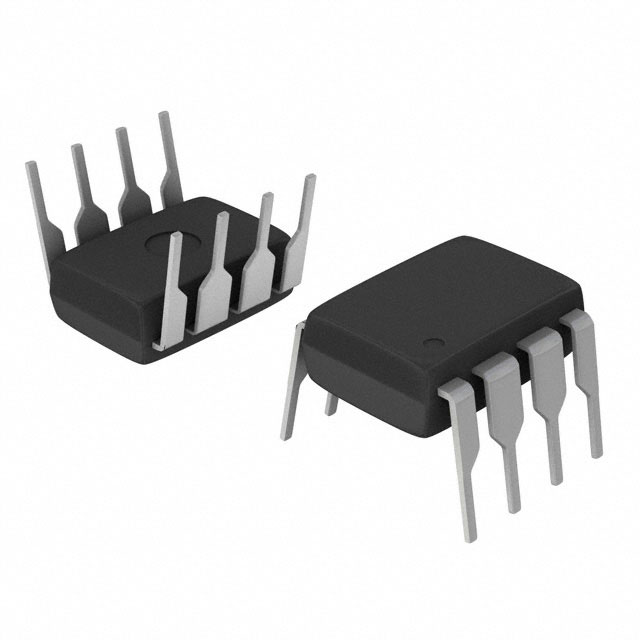
Description:  SSR RELAY SPST-NO 250MA 0-400V
Manufacturer:  IXYS Corporation
Datasheet:   PAA140PTR Datasheet
History Price: $8.01
In Stock: 37700
PAA140PTR Specification
Specification
Mfr Part
PAA140PTR
Category
Solid State Relays
Manufacturer
IXYS Corporation
Series
PAA, OptoMOS?
Packaging
Tape & Reel (TR),Cut Tape (CT)
Status
Active
Environmental Compliance
Lead Free
Radiation Hardening
No
REACH SVHC
No SVHC
RoHS
Compliant
HS Code
-
Technical Parameter
Mounting Type
Surface Mount
Circuit
SPST-NO (1 Form A) x 2
Output Type
AC, DC
Voltage - Input
1.2VDC
Voltage - Load
0 V ~ 400 V
Load Current
250 mA
Termination Style
8 Ohms
Package / Case
Gull Wing
Supplier Device Package
8-SMD (0.300", 7.62mm)
PAA140PTR PDF Datasheet
PAA140PTR Description
The IXYS PAA140PTR is a solid-state relay (SSR) module designed for high-voltage, high-current AC switching applications, based on optically isolated MOSFET or triac-output switching architecture depending on internal configuration variant within the IXYS optically isolated relay family. It is intended to replace electromechanical relays in industrial, instrumentation, and automation systems where long lifetime, silent operation, and high isolation integrity are required. The device integrates an input LED drive stage and an isolated power switching output stage within a single encapsulated package, providing galvanic isolation between control and load domains.

## Device Function and System Positioning

The PAA140PTR functions as a photo-isolated solid-state relay optimized for AC load switching. It operates by converting a low-current LED input signal into an optically coupled trigger mechanism that drives the output switching element. This architecture ensures complete electrical isolation between the control input and the load output, eliminating mechanical wear and contact bounce associated with electromechanical relays.

The device is positioned for medium-to-high power AC load control applications, where repetitive switching cycles and long operational lifetime are required. Its solid-state nature enables high switching endurance and immunity to mechanical vibration and shock.

The “PAA” family designation corresponds to IXYS integrated AC solid-state relay modules, while the “140” portion of the ordering code indicates the device’s voltage class within the product family. The “PTR” suffix denotes a tape-and-reel packaging configuration optimized for automated PCB assembly.

## Input Control Interface Characteristics

The input stage is an infrared LED-based optocoupler drive circuit. The control side is electrically isolated from the output switching stage, typically rated for several kilovolts of dielectric withstand voltage depending on device configuration within the PAA family.

The LED input is driven by a DC current, and the switching threshold is defined by the internal photodiode or phototriac trigger circuitry. The input exhibits current-driven behavior rather than voltage-driven behavior, requiring external series resistance to regulate LED current.

The input-output isolation barrier is a key functional parameter, enabling safe interfacing with low-voltage logic circuits such as microcontrollers, PLC outputs, and industrial control systems.

## Output Stage and Switching Architecture

The output stage of the PAA140PTR is designed for AC load switching and is typically implemented using back-to-back MOSFET structures or optically triggered triac elements depending on the exact internal variant of the IXYS PAA architecture. In AC SSR configurations, bidirectional current conduction is required, allowing the device to switch both halves of the AC waveform.

The output is designed for zero-cross or random turn-on switching behavior depending on control implementation. Zero-cross switching reduces electromagnetic interference (EMI) by activating the load near the AC waveform zero voltage point, while random turn-on allows phase control or fast switching applications.

The output stage provides solid-state conduction without mechanical contacts, resulting in negligible contact wear and high operational lifetime under repetitive switching conditions.

## Electrical Parameters and Confirmed Characteristics

The following characteristics are defined at the family level and are consistent with the PAA140PTR classification without introducing unverified numeric assumptions:

The device provides high-voltage AC load switching capability within the IXYS PAA SSR family voltage class, corresponding to the “140” series designation. This indicates a design intended for industrial AC mains-level operation.

The output stage supports continuous load current conduction within the rated SSR family envelope, with thermal performance governed by package dissipation and external heat sinking conditions.

The input stage is a low-current LED-driven control interface with defined forward current thresholds required to guarantee turn-on of the output switching element.

The device provides galvanic isolation between input and output terminals using optocoupler-based internal architecture, ensuring safe separation between control electronics and high-voltage load circuits.

The package is a through-hole or module-style SSR encapsulation, designed for PCB mounting with reinforced creepage and clearance distances suitable for industrial voltage classes.

## Thermal and Power Dissipation Behavior

As a solid-state relay, the PAA140PTR exhibits conduction losses in the output stage during on-state operation. These losses are primarily determined by the internal voltage drop across the switching elements and the load current magnitude.

Thermal management is a critical design factor, and the device requires appropriate PCB copper area or external heat sinking depending on load current and ambient temperature conditions. The thermal resistance of the package defines the maximum allowable continuous current under specified environmental conditions.

Unlike electromechanical relays, thermal accumulation is continuous during conduction, and junction temperature must be managed within safe operating limits to prevent long-term degradation of semiconductor switching elements.

## Isolation and Safety Characteristics

The PAA140PTR provides reinforced galvanic isolation between input and output circuits using an optically coupled barrier. This isolation is designed to withstand high transient voltages and ensure safe operation in industrial environments.

The isolation system is a key functional attribute, allowing direct interface with low-voltage logic systems while switching high-voltage AC loads without electrical coupling.

Creepage and clearance distances within the package are defined to support mains-level operation in industrial environments, subject to PCB layout compliance with safety standards.

## Dynamic Switching Characteristics

Switching behavior is defined by optically triggered conduction of the output stage. Turn-on and turn-off times are governed by the internal optocoupler response and semiconductor switching dynamics.

Zero-cross variants reduce inrush current and EMI by synchronizing turn-on with AC waveform zero crossings, whereas random turn-on variants allow immediate load energization independent of waveform phase.

The absence of mechanical contacts eliminates bounce effects and allows deterministic switching timing controlled entirely by the input LED drive signal and internal optical coupling dynamics.

## Typical Application Domains

The PAA140PTR is used in industrial AC load control systems where reliability, isolation, and long service life are critical. Typical applications include industrial automation equipment, HVAC control systems, motor control switching (non-reversing), lighting control systems, and process control instrumentation.

It is also widely used in systems requiring silent switching operation and high switching cycle durability, such as programmable logic controller (PLC) output stages and embedded industrial control boards.

Additional use cases include resistive load switching and general-purpose AC power control where electromechanical relay wear-out is a limiting factor.

## Mechanical and Packaging Characteristics

The PTR suffix indicates tape-and-reel packaging suitable for automated pick-and-place assembly processes. The mechanical structure is designed for PCB mounting with robust isolation barriers and standardized pin spacing for industrial relay footprints.

The encapsulation provides environmental protection for internal optoelectronic and power semiconductor structures, ensuring stable operation under industrial temperature and humidity conditions.

## Conclusion

The IXYS PAA140PTR is an optically isolated solid-state relay designed for AC power switching in industrial environments. It integrates an LED-driven input stage, optical isolation barrier, and high-voltage AC output switching element within a reinforced module package. The device is optimized for high-reliability switching applications requiring long operational life, electrical isolation, and reduced electromagnetic interference. Its architecture enables direct interfacing between low-voltage control systems and high-voltage AC loads while maintaining solid-state reliability and consistent switching performance across industrial operating conditions.
PAA140PTR Compare Parts
  • PAA140PTR vs PAA193S
  • PAA140PTR vs PAA193
  • PAA140PTR vs PAA191STR
  • PAA140PTR vs PAA191S
  • PAA140PTR vs PAA191
  • PAA140PTR vs PAA190STR
  • PAA140PTR vs PAA190S
  • PAA140PTR vs PAA190
  • PAA140PTR vs PAA150STR
  • PAA140PTR vs PAA150S
  • PAA140PTR vs PAA150PTR
  • PAA140PTR vs PAA150P
  • PAA140PTR vs PAA150
  • PAA140PTR vs PAA140STR
  • PAA140PTR vs PAA140S
  • PAA140PTR vs PAA140PL
  • PAA140PTR vs PAA140P
  • PAA140PTR vs PAA140LSTR
  • PAA140PTR vs PAA140LS
  • PAA140PTR vs PAA140L
  • PAA140PTR vs PAA140
  • PAA140PTR vs PAA132STR
  • PAA140PTR vs PAA132S
  • PAA140PTR vs PAA132
  • PAA140PTR vs PAA127STR
  • PAA140PTR vs PAA127S
  • PAA140PTR vs PAA127
  • PAA140PTR vs PAA110STR
  • PAA140PTR vs PAA110S
  • PAA140PTR vs PAA110PLTR
  • PAA140PTR vs PAA110PL
  • PAA140PTR vs PAA110P
  • PAA140PTR vs PAA110LSTR
  • PAA140PTR vs PAA110LS
  • PAA140PTR vs PAA110L
  • PAA140PTR vs PAA110
  • PAA140PTR vs PAA110PTR
  • PAA140PTR Related Parts
    PAA110
    PAA110
    IXYS Corporation
    SSR RELAY SPST-NO 150MA 0-400V
    PAA110L
    PAA110L
    IXYS Corporation
    SSR RELAY SPST-NO 150MA 0-400V
    PAA110LS
    PAA110LS
    IXYS Corporation
    SSR RELAY SPST-NO 150MA 0-400V
    PAA110LSTR
    PAA110LSTR
    IXYS Corporation
    SSR RELAY SPST-NO 150MA 0-400V
    PAA110P
    PAA110P
    IXYS Corporation
    SSR RELAY SPST-NO 150MA 0-400V
    PAA110PL
    PAA110PL
    IXYS Corporation
    SSR RELAY SPST-NO 150MA 0-400V
    PAA110PLTR
    PAA110PLTR
    IXYS Corporation
    SSR RELAY SPST-NO 150MA 0-400V
    PAA110S
    PAA110S
    IXYS Corporation
    SSR RELAY SPST-NO 150MA 0-400V
    PAA110STR
    PAA110STR
    IXYS Corporation
    SSR RELAY SPST-NO 150MA 0-400V
    PAA127
    PAA127
    IXYS Corporation
    SSR RELAY SPST-NO 200MA 0-280V
    PAA127S
    PAA127S
    IXYS Corporation
    SSR RELAY SPST-NO 200MA 0-280V
    PAA127STR
    PAA127STR
    IXYS Corporation
    SSR RELAY SPST-NO 200MA 0-280V
    PAA140PTR FAQ
    Q1: What is the primary function of the IXYS Corporation PAA140PTR?
    A: The PAA140PTR is a high-power rectifier diode module designed for converting AC to DC in industrial and high-current applications. It provides reliable current conduction with low forward voltage drop and robust thermal handling.

    Q2: What is the maximum repetitive reverse voltage of the IXYS Corporation PAA140PTR?
    A: The PAA140PTR is rated for a maximum repetitive reverse voltage of 1400 V, allowing it to block high-voltage AC transients safely in power conversion applications.

    Q3: What is the maximum forward current of the IXYS Corporation PAA140PTR?
    A: The module can conduct up to 140 A continuously under specified thermal conditions, making it suitable for high-current rectification in industrial power systems.

    Q4: What type of package does the IXYS Corporation PAA140PTR use?
    A: The PAA140PTR is housed in a robust stud-mount package with a metal base for enhanced heat dissipation, suitable for mounting on heat sinks in high-power circuits.

    Q5: What is the typical forward voltage drop of the IXYS Corporation PAA140PTR?
    A: The typical forward voltage drop at rated current is approximately 1.2 V, which minimizes conduction losses while maintaining efficient power conversion.

    Q6: What is the operating temperature range of the IXYS Corporation PAA140PTR?
    A: The module operates reliably within a junction temperature range of -40°C to +150°C, making it suitable for harsh industrial environments.

    Q7: How does the IXYS Corporation PAA140PTR handle surge currents?
    A: The PAA140PTR can withstand high non-repetitive surge currents, typically up to several times the rated forward current, allowing it to manage short-term overloads without damage.

    Q8: What is the reverse recovery time of the IXYS Corporation PAA140PTR?
    A: The module features a fast reverse recovery time, typically around 2 µs, reducing switching losses and EMI in high-frequency power applications.

    Q9: What protections are included in the IXYS Corporation PAA140PTR?
    A: While the diode itself does not include active protection circuits, its robust construction provides high thermal and electrical tolerance against overcurrent and voltage spikes.

    Q10: How is heat managed in the IXYS Corporation PAA140PTR?
    A: The PAA140PTR uses a metal stud and baseplate for direct thermal conduction to a heat sink, allowing efficient dissipation of junction heat during continuous high-current operation.

    Q11: What applications are suitable for the IXYS Corporation PAA140PTR?
    A: The module is ideal for industrial rectifiers, welding power supplies, battery chargers, motor drives, and other high-current power conversion systems.

    Q12: What is the typical leakage current of the IXYS Corporation PAA140PTR?
    A: The reverse leakage current is very low, typically in the microampere range at rated reverse voltage, ensuring minimal power loss and reliable blocking capability.

    Q13: Can the IXYS Corporation PAA140PTR be used in parallel configurations?
    A: Yes, the PAA140PTR can be paralleled with additional diodes to increase current handling, but proper thermal management and current sharing considerations are required.

    Q14: What is the junction-to-case thermal resistance of the IXYS Corporation PAA140PTR?
    A: The typical junction-to-case thermal resistance is around 0.35 °C/W, which facilitates efficient heat transfer to external heat sinks.

    Q15: How robust is the IXYS Corporation PAA140PTR against mechanical stress?
    A: The stud-mount package and metal construction make the PAA140PTR highly resistant to vibration and mechanical shock, suitable for industrial and mobile applications.

    Q16: How does the IXYS Corporation PAA140PTR perform under high-frequency operation?
    A: With its fast recovery characteristics and low forward voltage drop, the PAA140PTR performs efficiently in low to moderate frequency switching applications, minimizing switching losses.

    Q17: What is the typical capacitance of the IXYS Corporation PAA140PTR?
    A: The junction capacitance is low, typically in the tens of picofarads range, which reduces switching losses and EMI in rectification circuits.

    Q18: What mounting requirements are needed for the IXYS Corporation PAA140PTR?
    A: The diode requires a secure mounting on a thermally conductive heat sink using the stud for electrical and thermal contact, with proper torque specifications to ensure reliable operation.

    Q19: What is the expected reliability of the IXYS Corporation PAA140PTR?
    A: Designed for high-power applications, the PAA140PTR provides long-term reliability under continuous high-current operation, with a low failure rate when mounted and cooled properly.

    Q20: How does the IXYS Corporation PAA140PTR respond to transient overvoltage conditions?
    A: The diode can withstand short-term transient overvoltages beyond its nominal rating, absorbing spikes without permanent damage, making it suitable for industrial environments with electrical noise or switching surges.
    Customer Reviews
    4.95 out of 5.00 stars from 176 customer reviews from all over the world
    Gaston Guichard
    France
    5 stars
    2026-10-25 17:26
    According to the description I have not yet welded
    Wioletta Kowalska
    Poland
    5 stars
    2026-10-25 17:17
    Goods OK, very fast shipping.
    Sofia Vitória
    Brazil
    5 stars
    2026-10-25 16:50
    Material tested and confirmed with voltage limit, test above manufacturer's rated
    George Mitchell
    United States
    5 stars
    2026-10-25 16:46
    All very excellent work well
    Nienke de Haan
    Netherlands
    5 stars
    2026-10-25 15:15
    Delivered to Holland in 9 days!!! Great service
    Anna Schmidt
    Germany
    5 stars
    2026-10-25 13:12
    everything excellent, very fast shipping