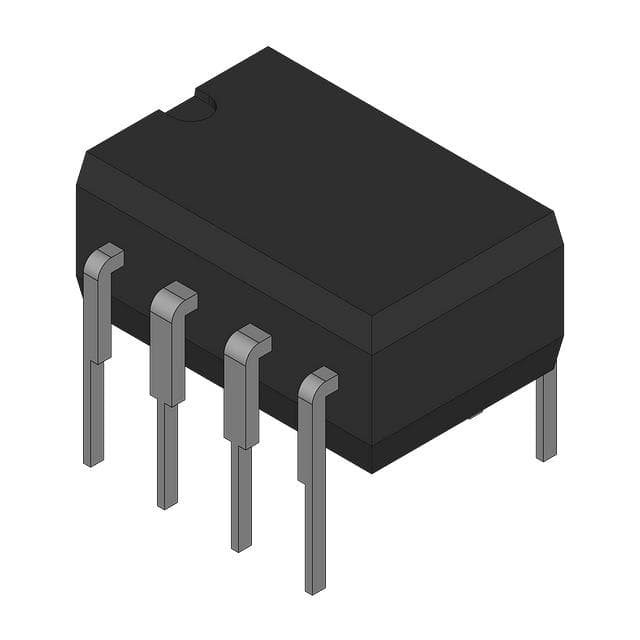
Overview of Texas Instruments TLC274CDR
The TLC274CDR is a quad operational amplifier (op-amp) from Texas Instruments, designed for low-power applications while providing high performance. This device is part of the TLC series, which is known for its excellent linearity, low noise, and wide bandwidth. The TLC274CDR is particularly suitable for battery-operated devices and applications requiring precision signal processing.
Key Specifications
- Supply Voltage (V+ to V-): 3 V to 15 V (single supply) or ±1.5 V to ±7.5 V (dual supply)
- Input Voltage Range: Common-mode input voltage range from V- to V+ - 1.5 V
- Output Voltage Swing: Typically within 10 mV of the supply rails (for a load of 10 kΩ)
- Gain Bandwidth Product (GBP): 1 MHz
- Slew Rate: 0.3 V/µs
- Total Supply Current: 1.5 mA per amplifier (typical)
- Input Offset Voltage: 1 mV (maximum)
- Package Type: 14-pin SOIC (Small Outline Integrated Circuit)
Functional Features
The TLC274CDR offers several functional features that enhance its usability in various applications:
- Low Power Consumption: With a total supply current of only 1.5 mA per amplifier, the TLC274CDR is ideal for low-power applications, making it suitable for portable and battery-operated devices.
- Rail-to-Rail Output: The op-amp provides a rail-to-rail output swing, allowing it to utilize the full supply voltage range effectively. This feature is particularly beneficial in applications where maximizing output voltage is critical.
- Wide Common-Mode Range: The input common-mode voltage range extends from the negative supply rail to within 1.5 V of the positive supply rail, enabling the op-amp to handle a variety of input signal levels without distortion.
- Low Noise: The TLC274CDR is designed to minimize noise, making it suitable for sensitive applications such as audio processing and instrumentation.
Applications
The TLC274CDR is suitable for a wide range of applications, including:
- Signal Conditioning: It can be used in signal conditioning circuits to amplify and filter analog signals, ensuring accurate signal processing.
- Active Filters: The op-amp is ideal for designing active filters, such as low-pass, high-pass, and band-pass filters, due to its high gain and bandwidth characteristics.
- Data Acquisition Systems: The TLC274CDR can be employed in data acquisition systems to amplify sensor signals before analog-to-digital conversion.
- Battery-Powered Devices: Its low power consumption makes it an excellent choice for battery-operated devices, such as portable medical equipment and consumer electronics.
Performance Characteristics
The performance of the TLC274CDR is characterized by its low power consumption, wide input voltage range, and rail-to-rail output capability. The gain bandwidth product of 1 MHz allows for effective signal amplification in a variety of applications, while the slew rate of 0.3 V/µs ensures that the op-amp can respond quickly to changes in input signals. The low input offset voltage of 1 mV contributes to the accuracy of the device in precision applications.
Design Considerations
When designing with the TLC274CDR, several factors should be taken into account:
- Power Supply Decoupling: Proper decoupling capacitors should be placed close to the power supply pins to ensure stable operation and reduce noise.
- PCB Layout: A well-designed PCB layout is crucial for minimizing parasitic capacitance and inductance, which can affect the performance of high-frequency applications.
- Load Impedance: Consider the load impedance when designing circuits with the TLC274CDR, as it can impact the output voltage swing and overall performance.
Conclusion
The Texas Instruments TLC274CDR is a versatile and efficient quad operational amplifier that meets the needs of various analog applications. Its low power consumption, rail-to-rail output, and wide common-mode input range make it an excellent choice for engineers looking to implement reliable and effective signal processing solutions. By considering the key specifications and design parameters, the TLC274CDR can significantly enhance the performance and reliability of electronic circuits.