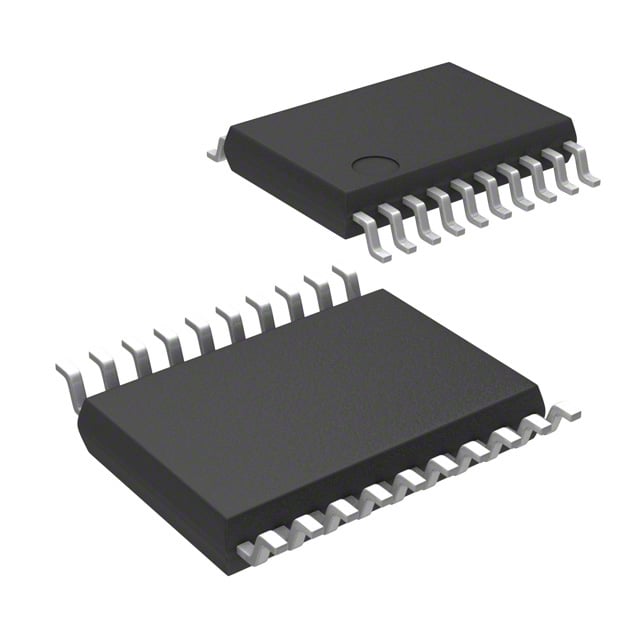
STMicroelectronics STM8S103F3P3TR Overview
The STM8S103F3P3TR is a member of STMicroelectronics’ STM8S family of microcontrollers, which are designed for cost-sensitive applications requiring low-power and high-performance features. This microcontroller is ideal for applications in automotive, industrial, consumer electronics, and more, offering a balance between performance, power efficiency, and ease of integration.
Key Specifications:
* Core Architecture: STM8 8-bit RISC architecture with a 16 MHz operating frequency.
* Flash Memory: 8 KB of Flash memory, which is used for storing the application program code.
* RAM: 1 KB of Static RAM (SRAM), which is used for data storage during runtime.
* Operating Voltage: 2.95V to 5.5V, making it versatile for a wide range of power supply voltages.
* Operating Temperature Range: -40°C to 85°C, suitable for a variety of environmental conditions.
* Clock Speed: The STM8S103F3P3TR operates at a maximum clock frequency of 16 MHz, which ensures efficient processing for most low- to mid-range applications.
Peripherals and Features:
* Timers:
* 2 x 8-bit timers.
* 1 x 16-bit timer, all capable of PWM output, pulse generation, and more.
* Communication Interfaces:
* 1 x I2C interface.
* 1 x SPI interface.
* 1 x USART interface.
* Analog Features:
* 10-bit ADC (Analog-to-Digital Converter) with 8 channels, providing high-resolution analog-to-digital conversion.
* 1 x DAC (Digital-to-Analog Converter) for analog signal generation.
* GPIO Pins: The STM8S103F3P3TR has up to 18 I/O pins, which can be configured as input or output, enabling flexible connectivity with external devices.
* Watchdog Timer: A built-in independent watchdog timer ensures system reliability by resetting the microcontroller if the software hangs.
* Brown-out Reset: The integrated brown-out reset feature helps ensure the device resets automatically when the supply voltage drops below a predefined threshold.
Power Efficiency:
* The STM8S103F3P3TR is designed with low-power consumption in mind, ideal for battery-operated devices. It features several power-saving modes:
* Run mode: Full-speed operation for normal execution.
* Wait mode: The CPU is halted, but peripherals continue to operate.
* Low-power run mode: Reduced CPU speed for lower power consumption, useful for energy-efficient applications.
* Sleep mode: Minimizes power consumption while still allowing the device to wake up when required by external interrupts.
Development and Debugging:
* In-System Programming (ISP): The STM8S103F3P3TR supports in-system programming using a standard SWIM (Single Wire Interface Module) programming interface, simplifying firmware updates.
* Debugging: The microcontroller is equipped with a 2-wire debug interface, which helps developers debug applications in real-time.
Application Areas:
* Automotive control systems, such as sensors, switches, and monitoring devices.
* Industrial automation, including sensors and actuators.
* Consumer electronics, particularly low-power, low-cost devices such as remote controls and small appliances.
* Home automation and security systems.
Conclusion:
The STM8S103F3P3TR offers a highly cost-effective and energy-efficient solution for a wide range of embedded applications. Its blend of performance, low power consumption, and ease of integration makes it suitable for both simple and complex tasks in many electronic devices.