Overview
The Texas Instruments SN74LV161APWR is a high-speed, low-voltage synchronous 4-bit binary counter with synchronous reset and load capabilities. It belongs to the SN74LV logic family optimized for low-voltage operation with fast switching speeds and low power consumption. The device is designed for use in various digital systems where precise counting and timing control are required, including digital clocks, frequency dividers, event counters, and address generation.
Key Features
The SN74LV161APWR operates with a single 2.7 V to 3.6 V power supply, making it suitable for low-voltage digital circuits common in modern electronics. Its synchronous design ensures that all state changes occur on the rising edge of the clock signal, improving timing predictability and minimizing glitches. The device features parallel synchronous load inputs allowing the counter to be preset to any desired value, and a synchronous reset input that clears the counter to zero synchronously with the clock.
Additional features include:
* Fully synchronous operation for accurate timing.
* Asynchronous master reset for immediate counter clearing.
* Ripple-carry output (RC) for cascading multiple counters.
* TTL-compatible inputs and outputs.
* Typical propagation delay under 11 ns for high-speed counting.
Electrical Specifications
* Supply Voltage (Vcc): 2.7 V to 3.6 V (typical operation at 3.3 V)
* Operating Temperature Range: –40°C to +85°C (industrial grade)
* Input Voltage Levels:
* Input high voltage (VIH): Minimum 2.0 V
* Input low voltage (VIL): Maximum 0.8 V
* Output Voltage Levels:
* Output high voltage (VOH): Minimum 2.4 V at IOH = –4 mA
* Output low voltage (VOL): Maximum 0.4 V at IOL = 4 mA
* Maximum Clock Frequency: Approximately 85 MHz under typical conditions
* Propagation Delay:
* Clock to output (tPD): Typically around 7 ns to 11 ns depending on load and conditions
* Power Dissipation: Typical ICC supply current around 8 mA at 3.3 V
Functional Description
The SN74LV161APWR functions as a 4-bit synchronous binary counter with inputs for synchronous load, synchronous clear, and asynchronous master reset. On the rising edge of the clock:
* If the asynchronous master reset is active (low), the counter immediately resets to zero.
* If synchronous clear is active (low), the counter synchronously resets to zero on the clock edge.
* If synchronous load is active (low), the data on the parallel inputs (D0-D3) is loaded into the counter.
* Otherwise, if enable inputs are active, the counter increments by one.
The device outputs the current count on four output pins (Q0 to Q3) and provides a ripple carry output (RC) that goes high when the counter reaches its terminal count (1111), facilitating cascaded counting.
Package and Physical Characteristics
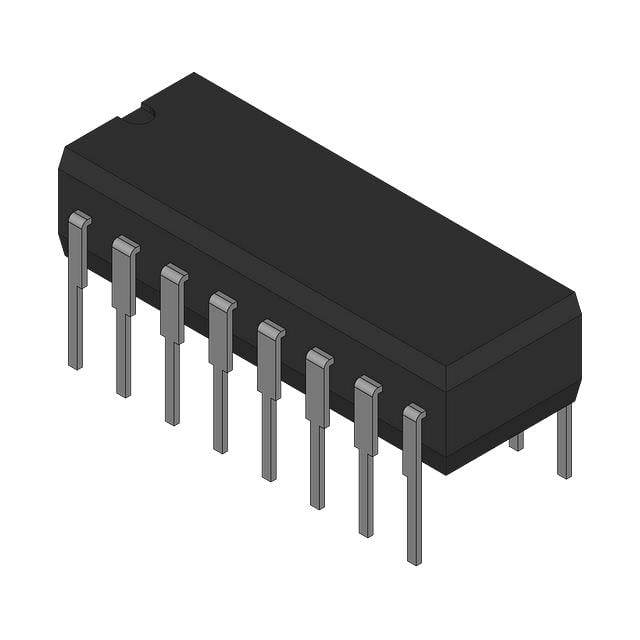
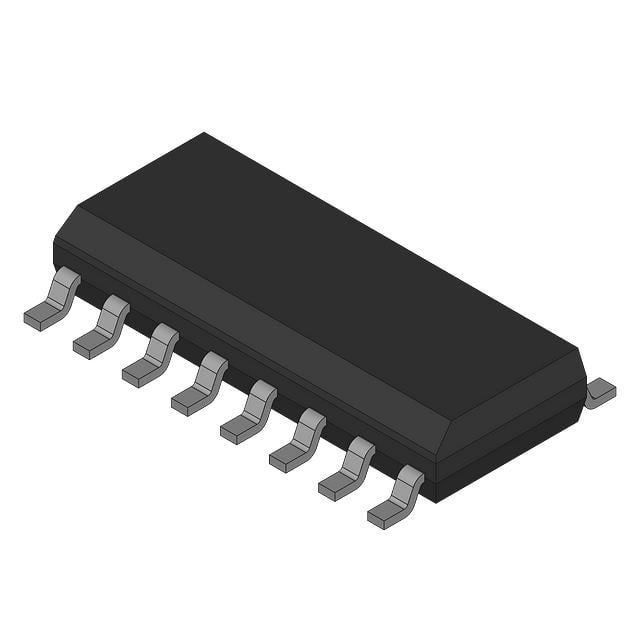
The SN74LV161APWR is housed in a small-outline package (TSSOP-16), measuring approximately 4.4 mm × 6.5 mm. This package offers a compact footprint suitable for dense PCB designs. The device's lead finish ensures reliable soldering and mechanical stability.
Typical Applications
* Frequency division and timing circuits
* Event counting and digital measurement
* Digital clocks and timers
* Address counters in memory devices
* State machine design and sequencing logic
* Cascaded counters for extended bit-width counting
Performance Highlights
* Synchronous inputs ensure glitch-free operation and precise control.
* High-speed operation supports clock rates up to 85 MHz, suitable for fast digital systems.
* Low power consumption compatible with battery-operated and portable devices.
* TTL- and CMOS-compatible input/output levels provide easy interfacing.
* Ripple carry output enables multi-stage counter cascades for higher-bit counting.
Summary
The Texas Instruments SN74LV161APWR is a versatile, low-voltage, synchronous 4-bit binary counter delivering fast and reliable counting performance in a compact package. Its synchronous operation with parallel load and clear functions offers flexibility and precision for timing and sequencing applications. With its robust electrical characteristics, high-speed capability, and low power consumption, this device is an excellent choice for a wide range of digital systems requiring efficient counting solutions.