Introduction to Texas Instruments SN74LS191N
The Texas Instruments SN74LS191N is a synchronous 4-bit binary up/down counter widely used in digital logic design, counting, and timing applications. This device is part of the 74LS (Low-power Schottky) logic family, which offers improved speed and reduced power consumption compared to traditional TTL circuits. The SN74LS191N provides a flexible and efficient solution for synchronous counting with parallel load capability, making it ideal for applications such as frequency division, event counting, and digital clocks.
Key Features
* 4-bit synchronous binary up/down counter with parallel load
* Synchronous counting controlled by the clock input
* Separate up/down control input to select counting direction
* Parallel load capability for presetting the counter to any desired value
* Asynchronous master reset for immediate clearing of the counter
* Fast propagation delay (typically 20 ns) for high-speed operation
* TTL compatible inputs and outputs
* Fully synchronous operation eliminates glitches associated with asynchronous counters
* Typical power dissipation of about 15 mW
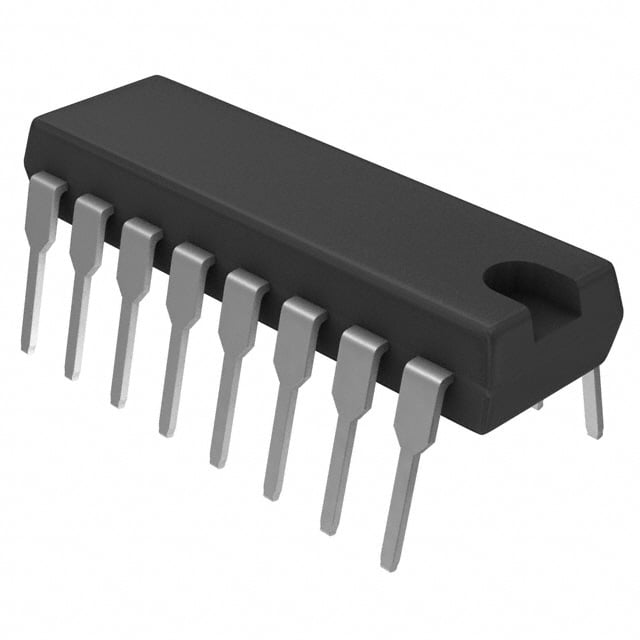
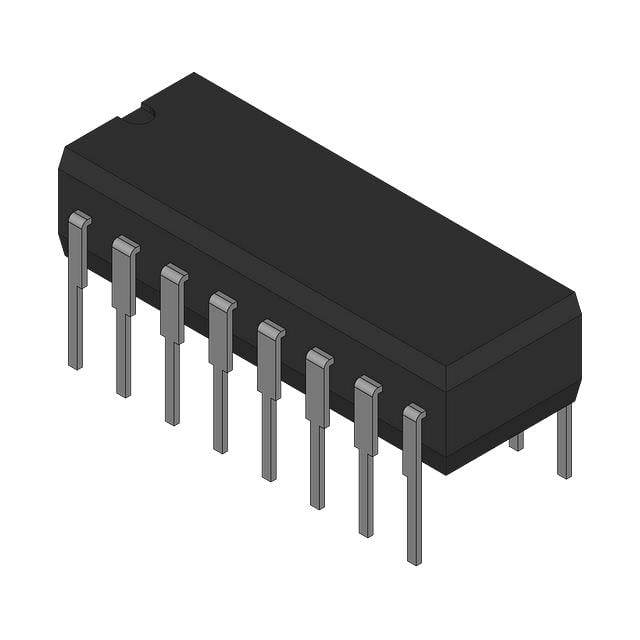
* Packaged in a standard 16-pin dual in-line package (DIP) designated as N suffix
Electrical Specifications
* Supply Voltage (Vcc): 4.75 V to 5.25 V (standard 5 V TTL supply)
* Input Voltage Levels:
* Logic High (VIH): Min 2.0 V
* Logic Low (VIL): Max 0.8 V
* Output Voltage Levels:
* Logic High (VOH): Min 2.7 V (at IO = -0.4 mA)
* Logic Low (VOL): Max 0.5 V (at IO = 8 mA)
* Operating Temperature Range: 0 °C to 70 °C (commercial grade)
* Maximum Clock Frequency: Up to 25 MHz (typical, depending on load)
* Propagation Delay: Approximate 15–20 ns for outputs
* Power Dissipation: Typical 15 mW at 5 V supply
* Input Current: Max 40 µA at 5 V input level
Functional Description
The SN74LS191N counts synchronously on the rising edge of the clock input. The direction of counting is determined by the logic level on the Up/Down input: a high level commands the counter to count up, and a low level commands it to count down. This feature enables the device to be used in applications requiring bidirectional counting, such as digital position encoders and reversible event counters.
The device includes parallel data inputs that allow the counter to be preset asynchronously at any time by applying a low logic level to the Load input, enabling the counter to be initialized to any 4-bit value. The asynchronous Master Reset input can clear the count immediately to zero regardless of the clock state.
Outputs Q0 to Q3 represent the 4-bit binary count, providing a natural binary count sequence from 0 to 15. The synchronous nature of the counter ensures that all bits change state simultaneously on the clock edge, reducing timing errors and glitches.
Pin Configuration
* Pin 1–4: Parallel data inputs (D0–D3) for presetting the counter
* Pin 5: Load input (active low) for parallel load functionality
* Pin 6: Clock input (rising edge triggered)
* Pin 7: Ground (GND)
* Pin 8–11: Counter outputs (Q0–Q3)
* Pin 12: Up/Down control input
* Pin 13: Terminal count output (TC), which goes high when the counter reaches terminal count conditions (0 or 15 depending on direction)
* Pin 14: Ripple carry output (RCO), used for cascading counters to create wider bit-width counters
* Pin 15: Master reset input (active low)
* Pin 16: Supply voltage (Vcc)
Applications
* Digital frequency division and timing circuits
* Event counting and measurement
* Position tracking and rotary encoder interfaces
* Digital clocks and timers
* Programmable counters and sequencers
* Cascading multiple counters for larger bit-width counting
* Data acquisition and processing systems requiring binary counting
* Control systems requiring bidirectional counting with preset capabilities
Performance Characteristics
* The synchronous design avoids asynchronous timing glitches common in ripple counters, ensuring reliable output transitions.
* The device’s up/down counting flexibility makes it suitable for reversible counting scenarios, increasing design versatility.
* Fast propagation delay supports use in higher-frequency systems, while low power consumption ensures efficient operation in battery-powered devices.
* The parallel load feature allows rapid initialization or presetting of counters during system startup or control sequences.
* The terminal count and ripple carry outputs facilitate multi-stage counter configurations for extended counting ranges.
Reliability and Quality
* Manufactured under stringent quality standards ensuring stable operation across temperature and voltage variations.
* Designed for commercial temperature range but robust enough for many industrial applications where conditions are controlled.
* TTL family compatibility simplifies system integration with other logic devices and legacy components.
* Tested for high noise immunity and low susceptibility to latch-up and input/output glitches.
Summary
The Texas Instruments SN74LS191N is a versatile and reliable synchronous 4-bit binary up/down counter featuring parallel load capability, making it a fundamental building block in digital electronics. Its combination of fast operation, low power consumption, and flexible control inputs supports a wide range of counting applications in digital systems, instrumentation, and control. The device’s robust design and TTL compatibility enable straightforward integration into existing logic systems, providing precise and glitch-free counting performance for both up and down counting needs.