## Introduction to Texas Instruments SN74HC590ADR
The SN74HC590ADR is a high-speed CMOS 8-bit shift register with an asynchronous reset and parallel output capability. It is part of the 74HC family of logic devices from Texas Instruments, known for their performance, low power consumption, and wide range of applications. This device is particularly useful in digital circuits requiring data storage, manipulation, and shifting capabilities.
## Key Features
1. 8-Bit Shift Register: Capable of shifting 8 bits of data either left or right.
2. Asynchronous Reset: Provides the ability to reset the register without needing a clock signal.
3. Parallel Output Capability: Outputs can be accessed directly, allowing for simultaneous reading of all bits.
4. High-Speed Operation: Fast shifting and data processing due to its high-speed CMOS technology.
5. Low Power Consumption: Designed for energy-efficient applications.
6. Wide Voltage Range: Compatible with a variety of supply voltages, enhancing its flexibility in different circuits.
7. Standard Logic Compatibility: Can interface with other CMOS and TTL logic devices.
## Specifications
Here are the detailed specifications for the SN74HC590ADR:
| Parameter | Specification |
|---------------------------------------|--------------------------------------|
| Device Type | 8-bit Shift Register |
| Technology Family | HC (High-Speed CMOS) |
| Supply Voltage (VCC) | 2V to 6V |
| Input Voltage (VIH min/max) | 0.7 VCC to VCC |
| Output Voltage (VOL/VOL max) | 0.1V max (at 4.5V VCC) |
| Maximum Clock Frequency | 25 MHz at VCC = 5V |
| Propagation Delay (tpd) | 15 ns maximum at VCC = 5V |
| Reset Time (tr) | 15 ns maximum at VCC = 5V |
| Power Dissipation (PD) | 1 μA typical at VCC = 5V |
| Operating Temperature Range | -40°C to +125°C |
| Number of Bits | 8 |
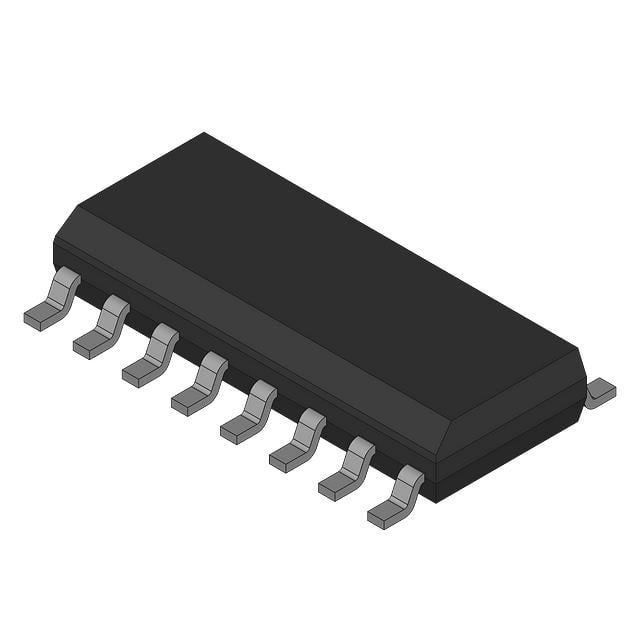
| Package Type | SOIC (Small Outline Integrated Circuit) |
| Pin Count | 16 |
## Pin Configuration
The SN74HC590ADR comes in a 16-pin package. The pin configuration is as follows:
| Pin Number | Pin Name | Function |
|------------|----------------|-----------------------------------------------|
| 1 | Q0 | Output of bit 0 |
| 2 | Q1 | Output of bit 1 |
| 3 | Q2 | Output of bit 2 |
| 4 | Q3 | Output of bit 3 |
| 5 | Q4 | Output of bit 4 |
| 6 | Q5 | Output of bit 5 |
| 7 | Q6 | Output of bit 6 |
| 8 | Q7 | Output of bit 7 |
| 9 | GND | Ground |
| 10 | DS | Serial Data Input |
| 11 | SH/LD | Shift/Load Control |
| 12 | CLK | Clock Input |
| 13 | MR | Master Reset (active low) |
| 14 | OE | Output Enable (active low) |
| 15 | VCC | Power Supply |
| 16 | NC | No Connection (for internal use) |
## Functional Description
- Shift Operations: The SN74HC590ADR can perform both left and right shifts based on how it is configured. Data can be loaded into the register serially via the `DS` pin, which shifts the data through the register on each clock pulse applied to the `CLK` pin.
- Parallel Load: When the `SH/LD` pin is activated (low), the device loads data present on the parallel input pins into the shift register, allowing for quick data input.
- Asynchronous Reset: The device provides a master reset function through the `MR` pin. When this pin is asserted low, all outputs will be reset to low regardless of the clock state.
- Output Control: The `OE` (Output Enable) pin allows for controlling output states. When asserted low, the outputs are enabled; when high, the outputs are in a high-impedance state.
## Applications
The SN74HC590ADR is suitable for a wide range of applications, including:
1. Data Storage: Useful for temporary data storage in various digital circuits.
2. Shift Registers: Functions in shift register applications for data manipulation.
3. Digital Signal Processing: Can be used in systems requiring serial-to-parallel conversions.
4. Control Systems: Acts as a buffer or interface in control systems requiring digital switching.
5. LED Driving: Employed in driving LED displays and similar applications where shifting data is essential.
## Conclusion
The Texas Instruments SN74HC590ADR is a versatile and efficient 8-bit shift register that meets the demands of various digital applications. With its asynchronous reset, parallel output, and compatibility with standard logic levels, it serves as a valuable component in modern electronic designs. Its low power consumption and high-speed capabilities make it ideal for both consumer electronics and industrial applications.