Overview of Texas Instruments SA555DR
The Texas Instruments SA555DR is a highly versatile and widely used integrated circuit (IC) that functions as a timer, pulse generator, and oscillator. It is an improved version of the classic 555 timer IC, which has been a staple in electronic design since its introduction in the 1970s. The SA555DR is ideal for various applications, including timing, pulse width modulation (PWM), frequency generation, and oscillation tasks across consumer electronics, automotive systems, industrial controls, and more.
Key Features
1. Versatile Timing Functions: The SA555DR can be configured in different modes—monostable (one-shot) or astable (oscillator)—allowing it to generate precise time delays or continuous square waves based on external resistor and capacitor values.
2. Wide Supply Voltage Range: This IC operates with a supply voltage ranging from 4.5V to 15V, making it suitable for various power supply configurations in different applications.
3. High Accuracy and Stability: The SA555DR provides excellent timing accuracy with a typical tolerance of ±1%, ensuring reliable performance in critical timing applications.
4. Low Power Consumption: With low quiescent current draw, the SA555DR is energy-efficient, making it suitable for battery-powered devices and other low-power applications.
5. Temperature Stability: The device operates effectively over a wide temperature range from -40°C to +125°C, making it suitable for industrial and automotive applications where temperature variations are common.
6. Output Drive Capability: The output stage can source or sink up to 200 mA of current, allowing it to drive loads directly without additional buffering in many applications.
7. Ease of Use: The design of the SA555DR simplifies circuit implementation with standard resistor-capacitor (RC) components for setting timing parameters. It also features a straightforward pin configuration for easy integration into various designs.
8. Integrated Comparator and Flip-Flop: The internal architecture includes comparators that facilitate the timing functions and a flip-flop that helps control the output state based on input conditions.
Specifications
- Type: Monolithic Timer IC
- Supply Voltage (VCC): 4.5V to 15V
- Timing Accuracy: ±1%
- Operating Temperature Range: -40°C to +125°C
- Output Current Drive Capability: Up to 200 mA
- Duty Cycle Range (Astable Mode): Adjustable from approximately 0% to 100%
- Frequency Range (Astable Mode): Up to several kHz depending on external RC components
- Pin Configuration:
- Pin 1: Ground
- Pin 2: Trigger
- Pin 3: Output
- Pin 4: Reset
- Pin 5: Control Voltage
- Pin 6: Threshold
- Pin 7: Discharge
- Pin 8: Supply Voltage (VCC)
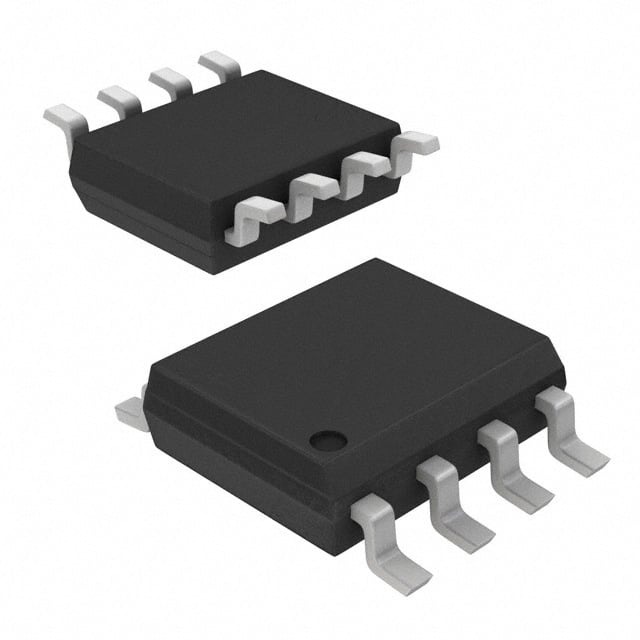
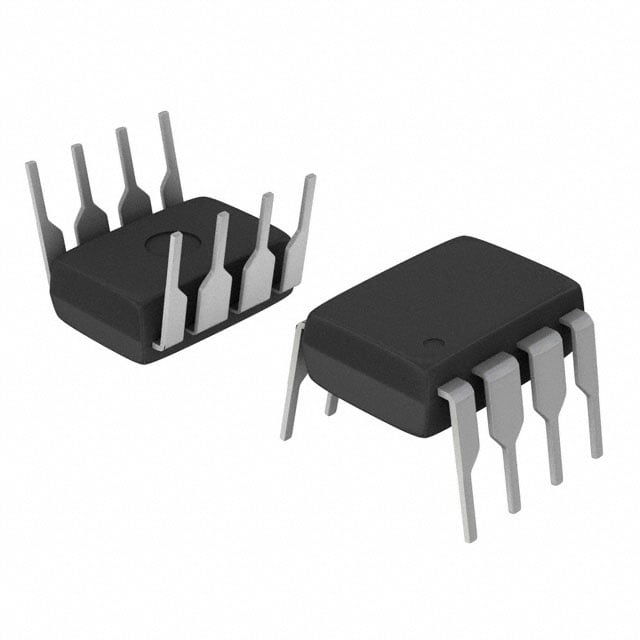
- Package Type: Available in various packages including SOIC (Surface Mount) and PDIP (Dual In-line Package).
Applications
The Texas Instruments SA555DR finds application across a wide range of fields due to its versatility:
1. Timer Circuits: Used in timing applications such as delays in alarms, timers for home appliances, and event counters.
2. Pulse Width Modulation (PWM): Employed in motor control systems where varying speed is required through PWM signals.
3. Frequency Generators: Utilized in generating clock signals for digital circuits or audio signals for sound generation.
4. Oscillators: Commonly used in audio tone generation circuits or as clock sources in microcontroller applications.
5. Flashing LED Lights: Implemented in circuits designed for blinking LEDs at adjustable intervals.
6. Signal Conditioning Applications: Serves as a component in signal processing where precise timing is crucial.
7. Control Systems: Integrated into feedback systems where timed responses are necessary for maintaining system stability.
8. Educational Kits and Prototyping Boards: Frequently included in educational electronics kits due to its simplicity and ease of use for teaching basic electronics concepts.
Conclusion
The Texas Instruments SA555DR timer IC remains an essential component in modern electronics due to its adaptability and reliability across numerous applications. Its ability to function as both a timer and oscillator makes it invaluable for engineers designing diverse electronic systems—from simple hobby projects to complex industrial automation solutions—while its low power consumption and wide operating range further enhance its appeal in today's energy-conscious market.