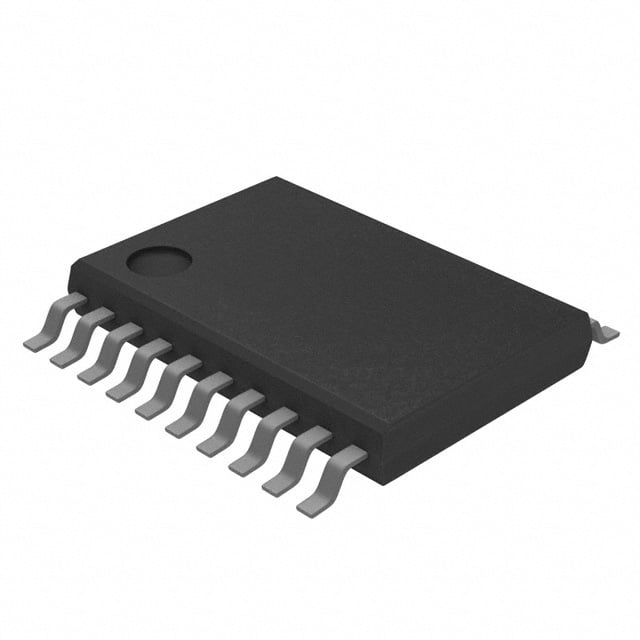
The Texas Instruments PGA205BU is a precision programmable gain amplifier (PGA) designed for a wide range of applications requiring high accuracy and low noise. This device is particularly suitable for sensor signal conditioning, data acquisition systems, and instrumentation applications where precise amplification of small signals is essential. Below is a detailed overview of the PGA205BU, including its specifications and features.
## Overview
The PGA205BU is a low-noise, low-drift amplifier that provides programmable gain settings, allowing users to adjust the gain according to their specific application needs. It is designed to amplify differential input signals, making it ideal for use with various sensors, including thermocouples, strain gauges, and pressure transducers. The PGA205BU features a high input impedance, which minimizes loading effects on the sensor, ensuring accurate signal representation.
## Key Features
1. Programmable Gain: The PGA205BU offers a wide range of gain settings, typically from 1 to 1000, which can be selected using external resistors. This flexibility allows for optimal signal amplification based on the input signal level.
2. Low Noise: The device features low input-referred noise, making it suitable for applications where signal integrity is critical. The low noise performance helps in maintaining the accuracy of the amplified signal.
3. High Input Impedance: With an input impedance of up to 10 MΩ, the PGA205BU minimizes the loading effect on the sensor, ensuring that the signal is accurately captured without distortion.
4. Low Offset Voltage: The amplifier has a low offset voltage, which is crucial for precision applications. This characteristic helps in reducing measurement errors and improving overall accuracy.
5. Wide Supply Voltage Range: The PGA205BU operates over a wide supply voltage range, typically from ±5 V to ±15 V, providing flexibility in various circuit designs.
6. Single-Supply Operation: The device can also operate with a single supply voltage, making it suitable for battery-powered applications and simplifying the design.
7. Temperature Stability: The PGA205BU is designed to maintain performance over a wide temperature range, ensuring reliable operation in various environmental conditions.
8. Differential Input Configuration: The amplifier is optimized for differential input signals, which helps in rejecting common-mode noise and improving signal fidelity.
## Specifications
- Gain Range: 1 to 1000 (programmable)
- Input Impedance: 10 MΩ (typical)
- Input Referred Noise: 0.5 µV (typical)
- Offset Voltage: 0.5 mV (maximum)
- Supply Voltage: ±5 V to ±15 V (dual supply) or 5 V to 30 V (single supply)
- Power Consumption: 1.5 mA (typical)
- Common-Mode Rejection Ratio (CMRR): 100 dB (minimum)
- Power Supply Rejection Ratio (PSRR): 100 dB (minimum)
- Operating Temperature Range: -40°C to +85°C
- Package Type: DIP-8 or SOIC-8
## Applications
The PGA205BU is suitable for a variety of applications, including:
- Sensor signal conditioning (e.g., thermocouples, strain gauges)
- Data acquisition systems
- Medical instrumentation
- Industrial process control
- Weigh scales
- Audio signal processing
## Conclusion
The Texas Instruments PGA205BU is a versatile and high-performance programmable gain amplifier that excels in precision applications. Its low noise, high input impedance, and wide gain range make it an excellent choice for amplifying small signals from various sensors. With its robust specifications and flexible design options, the PGA205BU is well-suited for use in demanding environments, ensuring accurate and reliable signal processing in a wide array of applications.