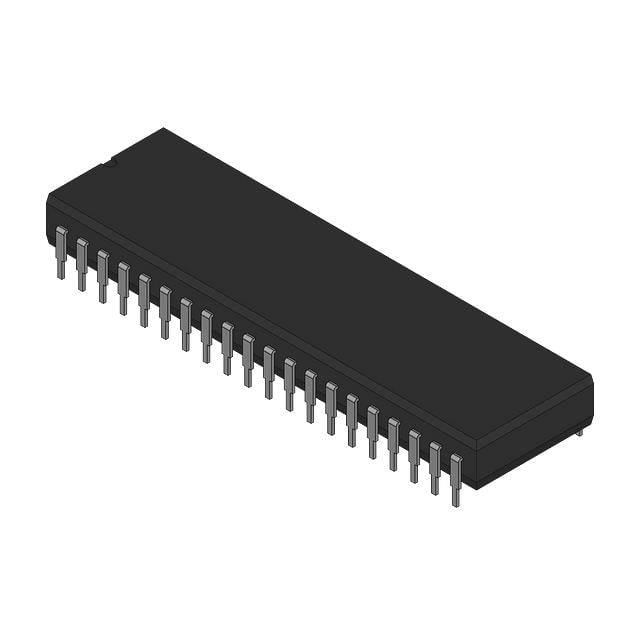
Q1: What is the function of the Rochester Electronics P8085AH?
A1: The Rochester Electronics P8085AH is an 8-bit microprocessor designed for use in embedded systems and general-purpose computing applications, offering features such as interrupt control, addressing modes, and integrated I/O capabilities.
Q2: What is the clock speed of the Rochester Electronics P8085AH?
A2: The Rochester Electronics P8085AH operates with a clock speed of 3 MHz, 5 MHz, or 8 MHz, depending on the configuration and application.
Q3: What is the voltage supply range for the Rochester Electronics P8085AH?
A3: The Rochester Electronics P8085AH operates with a supply voltage of 5 V ±5%.
Q4: How many address lines does the Rochester Electronics P8085AH have?
A4: The Rochester Electronics P8085AH has 16 address lines, allowing it to address up to 64 KB of memory.
Q5: How many data lines does the Rochester Electronics P8085AH have?
A5: The Rochester Electronics P8085AH has 8 data lines, allowing it to process 8 bits of data at a time.
Q6: What type of memory does the Rochester Electronics P8085AH support?
A6: The Rochester Electronics P8085AH supports both RAM and ROM, with a 64 KB maximum addressable memory space.
Q7: What are the key features of the Rochester Electronics P8085AH?
A7: Key features of the Rochester Electronics P8085AH include an 8-bit data bus, 16-bit address bus, five 8-bit registers, and a set of control, status, and interrupt lines for efficient operation in embedded systems.
Q8: Does the Rochester Electronics P8085AH support interrupts?
A8: Yes, the Rochester Electronics P8085AH supports hardware interrupts with a priority system, allowing external devices to signal the processor for immediate attention.
Q9: What is the instruction set architecture of the Rochester Electronics P8085AH?
A9: The Rochester Electronics P8085AH uses the 8085 microprocessor's instruction set architecture, which includes a wide variety of instructions for arithmetic, logic, data transfer, and control operations.
Q10: What are the power consumption specifications of the Rochester Electronics P8085AH?
A10: The power consumption of the Rochester Electronics P8085AH varies depending on the operating voltage and clock speed but typically ranges from 1.5W to 3W under typical operating conditions.
Q11: What is the operating temperature range for the Rochester Electronics P8085AH?
A11: The Rochester Electronics P8085AH operates within a temperature range of 0°C to 70°C.
Q12: What is the package type of the Rochester Electronics P8085AH?
A12: The Rochester Electronics P8085AH is typically packaged in a 40-pin dual in-line package (DIP), though other package types may be available depending on the specific configuration.
Q13: How does the Rochester Electronics P8085AH handle input/output (I/O) operations?
A13: The Rochester Electronics P8085AH features dedicated I/O pins for interfacing with external devices. It uses programmed I/O or memory-mapped I/O to communicate with peripherals.
Q14: Can the Rochester Electronics P8085AH be used for embedded applications?
A14: Yes, the Rochester Electronics P8085AH is commonly used in embedded applications, such as industrial control, consumer electronics, and simple computing systems, due to its low cost, simplicity, and reliable performance.
Q15: What type of bus does the Rochester Electronics P8085AH use for data transfer?
A15: The Rochester Electronics P8085AH uses an 8-bit data bus for data transfer, which is capable of transmitting one byte of data at a time.
Q16: How many general-purpose registers are available in the Rochester Electronics P8085AH?
A16: The Rochester Electronics P8085AH has five general-purpose 8-bit registers (labeled B, C, D, E, and H) for storing temporary data during processing.
Q17: Does the Rochester Electronics P8085AH have a built-in multiplier?
A17: No, the Rochester Electronics P8085AH does not have a built-in hardware multiplier; multiplication operations must be done through software routines.
Q18: What kind of control lines does the Rochester Electronics P8085AH feature?
A18: The Rochester Electronics P8085AH includes control lines for memory and I/O operations, such as read, write, chip enable, and interrupt control, which facilitate interaction with external components.
Q19: Can the Rochester Electronics P8085AH be interfaced with external devices?
A19: Yes, the Rochester Electronics P8085AH can be interfaced with external devices like RAM, ROM, and I/O peripherals through its address, data, and control buses.
Q20: Is the Rochester Electronics P8085AH suitable for use in real-time applications?
A20: Yes, the Rochester Electronics P8085AH is suitable for real-time applications, such as process control or embedded systems, where precise timing and interrupt management are essential.