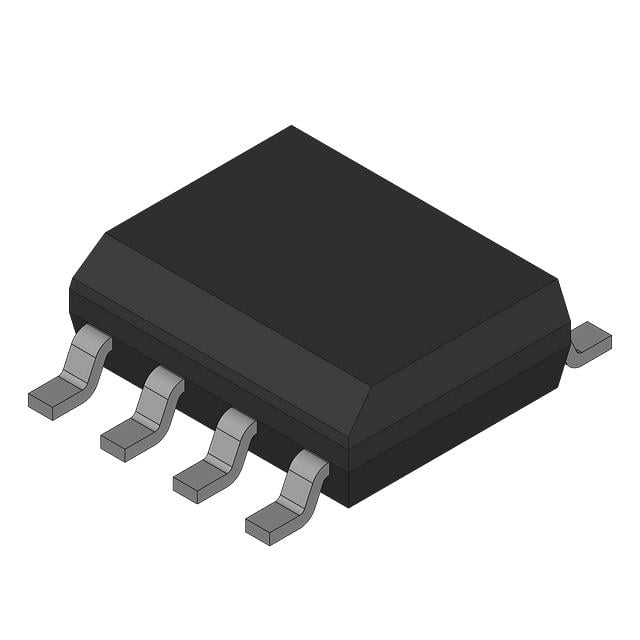
Introduction to Texas Instruments OPA991QDBVRQ1
The Texas Instruments OPA991QDBVRQ1 is a precision operational amplifier designed for automotive and industrial applications. This device is part of the OPA series, known for its high performance, low noise, and low distortion characteristics. The OPA991 features a unique architecture that enables it to deliver excellent linearity and stability across a wide range of operating conditions.
Key Features
- Rail-to-Rail Output: The OPA991 provides rail-to-rail output capability, allowing the output voltage to swing very close to the supply rails. This feature is particularly useful in applications where maximum dynamic range is required.
- Wide Supply Voltage Range: It operates with a supply voltage ranging from 2.7 V to 36 V, making it versatile for various power supply configurations.
- Low Input Offset Voltage: The device exhibits a low input offset voltage (typically 0.5 mV), which enhances accuracy in precision applications such as sensor signal conditioning and data acquisition systems.
- High Slew Rate: With a slew rate of up to 20 V/μs, the OPA991 can handle fast-changing signals without significant distortion, making it suitable for high-speed applications.
- Low Noise Performance: The amplifier features low voltage noise density (typically 15 nV/√Hz), ensuring minimal interference in sensitive measurement applications.
Specifications
- Input Voltage Range: Common-mode input voltage range from -0.1 V to (V+ - 2 V)
- Supply Voltage (V+ / V-): 2.7 V to 36 V
- Output Voltage Swing: Rail-to-rail output capability; typically within 10 mV of the rails under load conditions
- Input Offset Voltage: Typically 0.5 mV; maximum of ±2 mV
- Input Bias Current: Typically 20 pA
- Gain Bandwidth Product (GBW): Approximately 1 MHz
- Slew Rate: Up to 20 V/μs
- Total Harmonic Distortion (THD): Typically less than 0.0003% at unity gain
- Power Supply Rejection Ratio (PSRR): Typically 110 dB
- Temperature Range: -40 °C to +125 °C (automotive grade)
Applications
The OPA991QDBVRQ1 is suitable for a variety of applications due to its robust performance characteristics:
1. Automotive Applications: Ideal for use in automotive sensor signal conditioning, active filters, and audio amplifiers where reliability and precision are critical.
2. Industrial Control Systems: Can be utilized in industrial automation equipment for signal amplification and processing tasks that require high accuracy and stability.
3. Data Acquisition Systems: Suitable for medical instrumentation and data acquisition systems where low noise and high linearity are essential for accurate measurements.
4. Consumer Electronics: Effective in audio processing applications, providing clear sound reproduction with minimal distortion.
Design Considerations
When designing circuits with the OPA991QDBVRQ1, several important factors should be considered:
1. PCB Layout Guidelines: Proper PCB layout is crucial for minimizing parasitic capacitance and inductance that can affect performance. It is advisable to keep traces short and use ground planes to reduce noise interference.
2. Power Supply Decoupling: Adequate decoupling capacitors should be placed close to the power supply pins to ensure stable operation and minimize power supply noise.
3. Thermal Management: Given the wide temperature range specification, ensure that thermal management practices are in place if the amplifier operates in high-temperature environments or under heavy loads.
4. Load Impedance Matching: Ensure that the load impedance is compatible with the output specifications of the amplifier to maintain linearity and avoid distortion.
5. Feedback Network Design: When configuring feedback networks for gain settings or filtering purposes, consider component tolerances as they can impact overall circuit performance.
Conclusion
The Texas Instruments OPA991QDBVRQ1 operational amplifier stands out as a versatile component designed for demanding automotive and industrial applications requiring precision signal amplification. Its combination of rail-to-rail output, wide supply voltage range, low noise performance, and high slew rate makes it an excellent choice for engineers looking to develop reliable systems across various sectors. By understanding its specifications and leveraging its capabilities effectively, designers can create robust solutions that meet stringent performance criteria while ensuring long-term reliability in challenging environments.