☰
OPA569AIDWP
OPA569AIDWP
Active
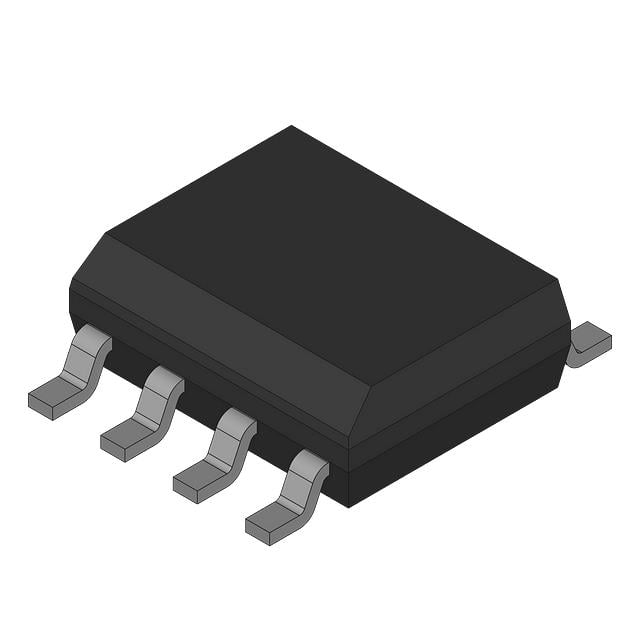
Description:  IC OPAMP GP 1 CIRCUIT 20HSOIC
Manufacturer:  Texas Instruments
Datasheet:   OPA569AIDWP Datasheet
History Price: $11.43000
In Stock: 23550
OPA569AIDWP Specification
Specification
Mfr Part
OPA569AIDWP
Category
Linear - Amplifiers - Instrumentation, OP Amps, Buffer Amps
Manufacturer
Texas Instruments
Series
-
Packaging
Tube
Status
Active
Environmental Compliance
Lead Free
Radiation Hardening
No
REACH SVHC
No SVHC
RoHS
Compliant
HS Code
-
Technical Parameter
Amplifier Type
General Purpose
Number of Circuits
1
Output Type
Rail-to-Rail
Slew Rate
1.2V/μs
Gain Bandwidth Product
1.2 MHz
-3db Bandwidth
-
Current - Input Bias
1 pA
Voltage - Input Offset
500 μV
Current - Supply
9mA
Current - Output / Channel
2.4 A
Voltage - Supply Span (Min)
2.7 V
Voltage - Supply Span (Max)
5.5 V
Operating Temperature
-40 ℃ ~ 85 ℃
Mounting Type
Surface Mount
Package / Case
20-SOIC (0.295", 7.50mm Width) Exposed Pad
Supplier Device Package
20-HSOIC
OPA569AIDWP PDF Datasheet
OPA569AIDWP Description
The Texas Instruments OPA569AIDWP is a high-performance, precision operational amplifier designed for a variety of applications, including industrial, automotive, and medical systems. This device is particularly well-suited for applications requiring high output current, low distortion, and excellent linearity. The OPA569 is part of the OPA series of operational amplifiers, which are known for their versatility and reliability in demanding environments.

## Overview

The OPA569AIDWP features a unique architecture that allows it to deliver high output current while maintaining low distortion and high linearity. It is designed to operate with a wide supply voltage range, making it suitable for various power supply configurations. The device is available in a compact HTQFP (Thin Quad Flat Pack) package, which is ideal for space-constrained applications.

## Key Features

1. High Output Current: The OPA569 can deliver up to 3 A of output current, making it suitable for driving heavy loads, such as motors and speakers.

2. Wide Supply Voltage Range: The device operates from a dual supply voltage of ±4.5 V to ±18 V, providing flexibility for different application requirements.

3. Low Distortion: The OPA569 features low total harmonic distortion (THD) and low noise, ensuring high fidelity in audio and signal processing applications.

4. High Slew Rate: With a slew rate of 10 V/µs, the OPA569 can respond quickly to fast-changing signals, making it suitable for high-speed applications.

5. Excellent Linearity: The device exhibits excellent linearity, which is critical for precision applications where signal integrity is paramount.

6. Thermal Protection: The OPA569 includes built-in thermal shutdown protection, which prevents damage due to overheating by shutting down the amplifier if the junction temperature exceeds a certain threshold.

7. Current Limiting: The device features current limiting to protect against overcurrent conditions, ensuring safe operation in various scenarios.

8. Low Offset Voltage: The OPA569 has a low input offset voltage, which is essential for precision applications where accuracy is critical.

## Specifications

- Supply Voltage (V+ and V-): ±4.5 V to ±18 V
- Output Current (IOUT): Up to 3 A
- Slew Rate: 10 V/µs (typical)
- Total Harmonic Distortion (THD): 0.002% (typical at 1 kHz)
- Input Offset Voltage: 0.5 mV (maximum)
- Input Bias Current: 10 nA (typical)
- Common-Mode Rejection Ratio (CMRR): 100 dB (typical)
- Power Bandwidth: 1 MHz (typical)
- Gain Bandwidth Product: 1.5 MHz (typical)
- Thermal Shutdown: Yes
- Current Limiting: Yes
- Operating Temperature Range: -40°C to +125°C
- Package Type: HTQFP (DWP)

## Applications

The OPA569AIDWP is suitable for a wide range of applications, including:

- Audio Amplification: Its low distortion and high output current make it ideal for audio amplification applications, such as driving speakers and headphones.
- Motor Control: The high output current capability allows the OPA569 to drive motors in industrial automation and robotics.
- Signal Conditioning: The device can be used in signal conditioning applications, where precision and low noise are critical.
- Medical Equipment: Its reliability and performance characteristics make it suitable for medical instrumentation and monitoring systems.
- Test and Measurement: The OPA569 can be used in test and measurement equipment, where accuracy and precision are essential.

## Conclusion

The Texas Instruments OPA569AIDWP is a high-performance operational amplifier that combines high output current capability with low distortion and excellent linearity. Its wide supply voltage range, thermal protection, and current limiting features make it a versatile choice for a variety of demanding applications. Whether used in audio amplification, motor control, or precision signal conditioning, the OPA569 provides the performance and reliability needed for modern electronic systems. With its robust design and advanced features, the OPA569AIDWP is an excellent solution for engineers looking to create efficient and effective amplification solutions.
OPA569AIDWP Compare Parts
  • OPA569AIDWP vs OPA992IDCKR
  • OPA569AIDWP vs OPA992IDBVR
  • OPA569AIDWP vs OPA991TIDCKR
  • OPA569AIDWP vs OPA991SIDBVR
  • OPA569AIDWP vs OPA991QDBVRQ1
  • OPA569AIDWP vs OPA991IDCKR
  • OPA569AIDWP vs OPA991IDBVR
  • OPA569AIDWP vs OPA990SIDBVR
  • OPA569AIDWP vs OPA990IDCKR
  • OPA569AIDWP vs OPA990IDBVR
  • OPA569AIDWP vs OPA890IDR
  • OPA569AIDWP vs OPA890IDG4
  • OPA569AIDWP vs OPA890IDBVTG4
  • OPA569AIDWP vs OPA890IDBVT
  • OPA569AIDWP vs OPA890IDBVR
  • OPA569AIDWP vs OPA890ID
  • OPA569AIDWP vs OPA863SIDBVR
  • OPA569AIDWP vs OPA862IDTKR
  • OPA569AIDWP vs OPA861IDRG4
  • OPA569AIDWP vs OPA861IDR
  • OPA569AIDWP vs OPA861IDBVT
  • OPA569AIDWP vs OPA861IDBVRG4
  • OPA569AIDWP vs OPA861IDBVR
  • OPA569AIDWP vs OPA861ID
  • OPA569AIDWP vs OPA860IDRG4
  • OPA569AIDWP vs OPA860IDR
  • OPA569AIDWP vs OPA860ID
  • OPA569AIDWP vs OPA859QDSGRQ1
  • OPA569AIDWP vs OPA859IDSGT
  • OPA569AIDWP vs OPA859IDSGR
  • OPA569AIDWP vs OPA858QDSGRQ1
  • OPA569AIDWP vs OPA858IDSGT
  • OPA569AIDWP vs OPA858IDSGR
  • OPA569AIDWP vs OPA857TD2
  • OPA569AIDWP vs OPA857IRGTT
  • OPA569AIDWP vs OPA857IRGTR
  • OPA569AIDWP vs OPA856IDSGR
  • OPA569AIDWP vs OPA855QDSGRQ1
  • OPA569AIDWP vs OPA855IDSGT
  • OPA569AIDWP vs OPA855IDSGR
  • OPA569AIDWP Related Parts
    OPA1013CN8
    OPA1013CN8
    Texas Instruments
    IC OPAMP GP 2 CIRCUIT 8DIP
    OPA1013CN8G4
    OPA1013CN8G4
    Texas Instruments
    IC OPAMP GP 2 CIRCUIT 8DIP
    OPA1013DN8
    OPA1013DN8
    Texas Instruments
    IC OPAMP GP 2 CIRCUIT 8DIP
    OPA111AM
    OPA111AM
    Texas Instruments
    IC INST AMP 1 CIRCUIT TO99-8
    OPA111BM
    OPA111BM
    Texas Instruments
    IC INST AMP 1 CIRCUIT TO99-8
    OPA121KU
    OPA121KU
    Texas Instruments
    IC OPAMP GP 1 CIRCUIT 8SOIC
    OPA121KU-TI
    OPA121KU-TI
    Texas Instruments
    IC OPAMP GP 1 CIRCUIT 8SOIC
    OPA121KU/2K5
    OPA121KU/2K5
    Texas Instruments
    IC OPAMP GP 1 CIRCUIT 8SOIC
    OPA121KU/2K5E4
    OPA121KU/2K5E4
    Texas Instruments
    IC OPAMP GP 1 CIRCUIT 8SOIC
    OPA121KUG4
    OPA121KUG4
    Texas Instruments
    IC OPAMP GP 1 CIRCUIT 8SOIC
    OPA124PA
    OPA124PA
    Texas Instruments
    IC OPAMP GP 1.5MHZ SGL LN 8DIP
    OPA124U
    OPA124U
    Texas Instruments
    IC OPAMP GP 1 CIRCUIT 8SOIC
    Customer Reviews
    4.95 out of 5.00 stars from 161 customer reviews from all over the world
    Carlos Eduardo Rocha
    Brazil
    5 stars
    2026-11-25 05:43
    Great product and working perfectly.
    Mariana
    Brazil
    5 stars
    2026-11-25 05:13
    Working perfectly, recommend.
    Maria Júlia
    Brazil
    5 stars
    2026-11-25 01:21
    According to the description, not yet tested,
    Gisele Nascimento Silva
    Brazil
    5 stars
    2026-11-25 00:59
    Still not tested more looks good
    Eric Richardson
    United States
    5 stars
    2026-11-24 21:44
    Fast shipping, package arrived, as described. Perfect.
    Gabriela Soto
    Spain
    5 stars
    2026-11-24 19:59
    Just what I needed: it's the easiest way to share power supply in electronics projects where different modules require different power supplies. These integrated circuits generate an isolated power supply from another. And what does this mean? That bo