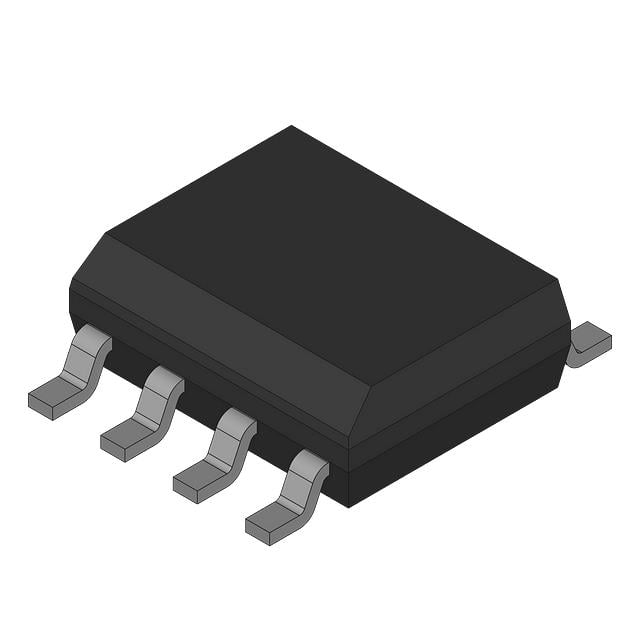
The OPA379AIDBVT is a precision, low-power operational amplifier (op-amp) designed by Texas Instruments. This device is optimized for applications requiring high accuracy, low noise, and low supply voltage. With its versatile features and excellent performance characteristics, the OPA379 is suitable for a wide range of applications, including sensor signal conditioning, medical instrumentation, and portable battery-powered devices.
## Key Features
1. Wide Supply Voltage Range:
- The OPA379 operates with a single supply voltage from 2.7 V to 5.5 V or dual supplies of ±1.35 V to ±2.75 V, making it flexible for various applications.
2. Low Power Consumption:
- It features a low quiescent current of only 70 µA per channel, making it ideal for battery-operated devices where power efficiency is critical.
3. Rail-to-Rail Input and Output:
- The op-amp provides rail-to-rail input and output capability, enabling it to operate effectively in low-voltage environments and maximizing dynamic range.
4. High Gain-Bandwidth Product:
- With a gain-bandwidth product of 1 MHz, the OPA379 offers sufficient bandwidth for many general-purpose applications, including filtering and amplification.
5. Low Noise:
- The device features a low input voltage noise density of 18 nV/√Hz at 1 kHz, which aids in accurate signal processing in sensitive applications.
6. High Slew Rate:
- The op-amp has a slew rate of 0.5 V/µs, allowing it to handle fast transient signals, making it suitable for dynamic applications.
7. Temperature Stability:
- The OPA379 is designed to operate over a temperature range of -40°C to +125°C, ensuring reliability in challenging environments.
8. Low Input Offset Voltage:
- Featuring an input offset voltage of only 50 µV (max), it helps maintain accuracy in precision applications.
9. Small Package Size:
- Housed in a compact SOT-23-5 package, the OPA379 is suited for space-constrained applications without compromising performance.
## Specifications
- Part Number: OPA379AIDBVT
- Type: Low-Power Precision Operational Amplifier
- Input Voltage Range: Rail-to-Rail
- Supply Voltage Range:
- Single Supply: 2.7 V to 5.5 V
- Dual Supply: ±1.35 V to ±2.75 V
- Quiescent Current (I_Q): 70 µA (typical)
- Gain-Bandwidth Product: 1 MHz (typical)
- Slew Rate: 0.5 V/µs (typical)
- Input Offset Voltage: 50 µV (max)
- Input Common-Mode Voltage Range:
- Rail-to-Rail (V- to V+)
- Output Voltage Swing:
- Rail-to-Rail
- Noise Density: 18 nV/√Hz at 1 kHz (typical)
- Power Supply Rejection Ratio (PSRR): 100 dB (typical)
- Input Bias Current: 10 pA (max)
- Output Current: 30 mA (typical)
- Temperature Range: -40°C to +125°C
- Package Type: SOT-23-5
## Applications
The OPA379AIDBVT is versatile and can be utilized in various applications, including:
1. Sensor Signal Conditioning:
- Ideal for amplifying signals from sensors such as thermocouples, strain gauges, and pressure sensors.
2. Medical Instrumentation:
- Suitable for use in medical devices that require precise analog signal processing, such as ECG and EEG monitoring systems.
3. Portable Battery-Powered Devices:
- Its low power consumption makes it perfect for handheld devices, wearable technology, and other applications where battery life is crucial.
4. Data Acquisition Systems:
- Used in ADC front-end designs to condition and filter signals before digitization.
5. Audio Applications:
- The op-amp can be employed in audio amplification circuits due to its low noise and distortion characteristics.
6. Signal Processing:
- Effective in various signal processing tasks, including filtering, level shifting, and buffering.
## Evaluation Module
Texas Instruments provides evaluation modules (EVMs) for the OPA379, allowing engineers and designers to test the performance of the op-amp in real-world conditions. These modules include all necessary components and connections for easy integration into prototype designs.
## Conclusion
The OPA379AIDBVT from Texas Instruments is an excellent choice for applications requiring precision, low power consumption, and versatility. Its combination of rail-to-rail operation, low noise, and high accuracy makes it suitable for both consumer and industrial applications. For more detailed specifications, application notes, and design resources, users should refer to the official Texas Instruments documentation and datasheets.