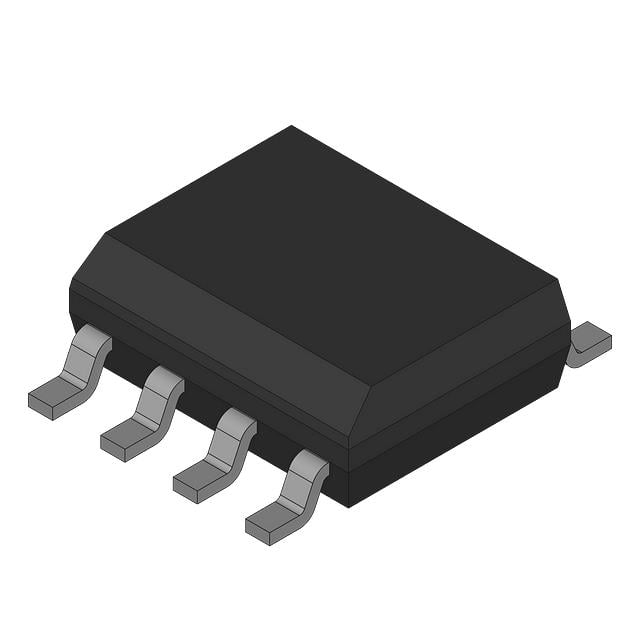
Texas Instruments OPA320SAIDBVR Overview
The Texas Instruments OPA320SAIDBVR is a high-performance, low-power, operational amplifier (op-amp) designed to provide excellent precision in a variety of applications. Featuring a rail-to-rail output and low quiescent current, the OPA320SAIDBVR is suitable for low-voltage systems and battery-operated devices, making it an ideal choice for signal conditioning, audio, and instrumentation applications. The device offers exceptional performance characteristics such as low offset voltage, low input bias current, and wide bandwidth, which are essential for achieving high-accuracy measurements in demanding systems.
Key Specifications
* Supply Voltage Range (V\_S): 2.7V to 5.5V
* The OPA320SAIDBVR operates over a supply voltage range of 2.7V to 5.5V, making it compatible with both low-voltage and standard-voltage systems. This flexibility ensures that the device can be used in various applications, from battery-powered devices to more traditional, higher-voltage circuits.
* Output Voltage Swing: Rail-to-Rail
* The device features a rail-to-rail output, meaning it can drive its output signal all the way to the supply rails. This feature is particularly useful for maximizing the output swing in low-voltage systems, where there is limited headroom for signal output, ensuring efficient use of the available voltage.
* Bandwidth: 8 MHz (typical)
* The OPA320SAIDBVR offers a wide bandwidth of 8 MHz (typical), ensuring that the device can handle a broad range of signal frequencies. This makes it suitable for use in high-speed applications, where wide frequency response is needed, such as in audio amplification, active filters, and instrumentation.
* Slew Rate: 0.3 V/µs (typical)
* The slew rate of the OPA320SAIDBVR is 0.3 V/µs (typical), which indicates how quickly the op-amp can change its output in response to an input signal. Although not extremely fast, this slew rate is sufficient for many general-purpose applications, including audio and instrumentation, where moderate-speed signals are typically encountered.
* Input Offset Voltage: 50 µV (maximum)
* The OPA320SAIDBVR offers an exceptionally low input offset voltage of just 50 µV (maximum). A low offset voltage is crucial in high-precision applications where even small voltage differences can cause errors in measurements, such as in sensor signal conditioning and analog-to-digital conversions.
* Input Bias Current: 1 nA (maximum)
* The device features a very low input bias current of 1 nA (maximum), ensuring minimal influence on the input signal. Low input bias current is important in applications involving high-impedance sources, where even a small bias current could result in inaccurate signal measurements.
* Quiescent Current (I\_q): 20 µA (typical)
* The OPA320SAIDBVR operates with a low quiescent current of just 20 µA (typical), which contributes to its overall low-power consumption. This feature makes the device particularly well-suited for battery-operated systems or energy-sensitive applications where minimizing power draw is essential.
* Common-Mode Input Voltage Range: 0V to (V\_S - 0.3V)
* The common-mode input voltage range extends from 0V to (V\_S - 0.3V), allowing the op-amp to work effectively with signals that span the entire input range, ensuring high-performance operation even in low-voltage systems.
* Package Type: 5-Pin SOT-23
* The OPA320SAIDBVR is housed in a compact 5-pin SOT-23 package, offering a small form factor that is ideal for space-constrained applications. The SOT-23 package provides excellent thermal dissipation while maintaining the high-performance characteristics of the op-amp.
Functional Features
* Low Power Consumption:
* The OPA320SAIDBVR is designed with low power consumption in mind, operating at a typical quiescent current of just 20 µA. This makes the device an excellent choice for low-power and battery-operated applications, such as portable instrumentation and sensors, where power efficiency is crucial.
* Precision Performance:
* With its low input offset voltage, low input bias current, and high CMRR (common-mode rejection ratio), the OPA320SAIDBVR delivers precise performance in signal amplification applications. This high level of precision is crucial for systems requiring accurate analog signal conditioning and where any small deviation can result in significant errors.
* Rail-to-Rail Output:
* The rail-to-rail output capability ensures that the device can drive output voltages close to the supply rails, maximizing the usable output range. This feature is particularly important in low-voltage designs, where maximizing the output swing can increase the system's dynamic range.
* Wide Common-Mode Input Voltage Range:
* The OPA320SAIDBVR can accept input signals that extend from ground (0V) up to nearly the supply voltage (V\_S - 0.3V), allowing it to handle a wide variety of input conditions. This feature enables the op-amp to operate effectively in low-voltage systems where input signals may be close to the rails.
* Low Noise Performance:
* The OPA320SAIDBVR provides low noise performance, which is vital for precision analog signal processing applications, especially in sensor applications or low-level signal amplification, where noise can degrade signal quality.
* Output Drive Capability:
* The op-amp’s ability to drive loads with a rail-to-rail output helps it interface directly with analog-to-digital converters (ADCs), digital-to-analog converters (DACs), and other high-impedance components in electronic systems. This characteristic improves system integration and signal clarity.
Applications
The OPA320SAIDBVR is well-suited for a variety of applications, especially those that require low power, high precision, and small form factors. Key application areas include:
* Audio Amplification:
* The low noise and wide bandwidth of the OPA320SAIDBVR make it ideal for use in audio signal amplification. Its precision characteristics ensure high-fidelity audio processing without distortion or signal degradation, making it perfect for audio devices, microphones, and portable audio systems.
* Sensor Signal Conditioning:
* In sensor applications, where accurate amplification of small signals is crucial, the OPA320SAIDBVR provides precise signal conditioning. The device's low input offset voltage and high common-mode rejection ratio make it ideal for processing signals from various types of sensors, including temperature, pressure, and light sensors.
* Portable and Battery-Powered Devices:
* Due to its low power consumption (20 µA typical quiescent current), the OPA320SAIDBVR is particularly well-suited for portable and battery-operated devices. Applications include handheld measurement tools, medical devices, and portable instrumentation, where energy efficiency is critical.
* Active Filters:
* The wide bandwidth and precision of the OPA320SAIDBVR make it an excellent choice for active filter designs, where accurate signal processing and filtering are needed. The rail-to-rail output ensures that the op-amp can drive the necessary load without distortion.
* Test and Measurement Equipment:
* In test and measurement applications, where accuracy and stability are key, the OPA320SAIDBVR provides reliable performance. It is used in various test equipment that require signal amplification, such as oscilloscopes, signal analyzers, and function generators.
Conclusion
The Texas Instruments OPA320SAIDBVR is a high-performance, low-power operational amplifier that excels in precision applications requiring accuracy, low noise, and minimal power consumption. With its rail-to-rail output, wide input voltage range, and excellent noise performance, it is suitable for a broad range of applications, from audio amplification to sensor signal conditioning and battery-operated devices. The small SOT-23 package and low quiescent current make it an ideal choice for space-constrained and energy-efficient designs. Whether used in portable instrumentation, audio systems, or high-precision analog applications, the OPA320SAIDBVR delivers reliable, accurate performance in demanding environments.