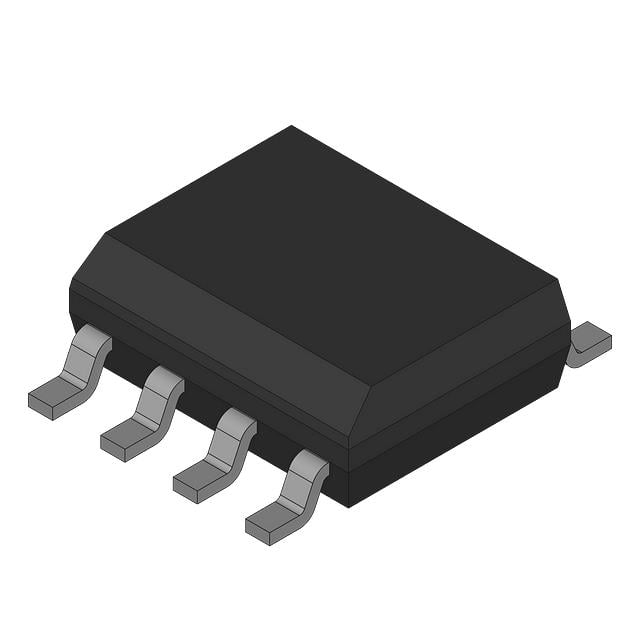
The Texas Instruments OPA320AIDBVR is a precision operational amplifier designed for a variety of analog applications requiring high performance, low power consumption, and low offset voltage. It is part of the OPA320 series, which provides high precision, low noise, and low drift for sensitive applications. This device is ideal for use in sensor interfaces, audio systems, precision instrumentation, and medical devices, among other applications where accurate analog signal processing is crucial.
## Key Specifications
## General Features
* Low Offset Voltage: The OPA320AIDBVR is designed with low input offset voltage of typically 25 µV and a maximum of 50 µV. This feature ensures that the amplifier is highly accurate, with minimal deviation in the output for small input signal changes, which is critical for applications requiring precision.
* Low Input Bias Current: The device has a low input bias current of 1 pA (typical), which minimizes the potential for errors in high-impedance sensor and signal source circuits. This makes it ideal for sensitive applications like strain gauges or high-impedance sensors.
* Low Drift: The device has low temperature drift of 0.1 µV/°C (typical), ensuring stable performance even in varying temperature conditions. This is essential for applications in environments where temperature fluctuations may occur, such as industrial sensors or medical monitoring systems.
* Rail-to-Rail Input and Output: The OPA320AIDBVR features rail-to-rail input and output, allowing it to operate with input and output voltage levels that are close to the supply rails, making it suitable for systems with low supply voltages or systems that require maximum signal swing without distortion.
## Electrical Characteristics
* Supply Voltage Range: The operational amplifier operates within a supply voltage range of 2.7V to 5.5V, which allows for flexibility in design and makes it compatible with both 3.3V and 5V systems. This broad voltage range ensures that the amplifier can be integrated into various low-voltage systems, reducing the need for complex power management.
* Supply Current: The typical supply current for the OPA320AIDBVR is around 35 µA, which makes it highly power-efficient, suitable for battery-powered or portable applications that require low power consumption.
* Common-Mode Input Voltage Range: The common-mode input voltage range is from 0V to (V+ - 1.2V), ensuring that the amplifier can handle signals close to the ground potential and can work in systems with low common-mode voltages.
* Open-Loop Gain: The open-loop gain of the OPA320AIDBVR is typically 120 dB, which ensures that the amplifier can achieve high gain even with small input signals. This makes it well-suited for precision amplification tasks where small signal amplification is required.
## Performance and Noise Characteristics
* Low Noise: The OPA320AIDBVR features an excellent low-noise performance, with a typical voltage noise density of 1.5 nV/√Hz at 1 kHz. This low noise performance is critical for high-precision applications such as medical instrumentation, audio systems, and measurement equipment that require minimal signal interference.
* Total Harmonic Distortion (THD): The OPA320AIDBVR offers extremely low THD of less than 0.0001%, making it ideal for high-fidelity audio applications where signal integrity is paramount.
## Package and Integration
* Package Type: The OPA320AIDBVR is housed in a SOT-23-5 package, which is a compact 5-pin package ideal for space-constrained designs and applications requiring minimal board area. This small package allows for integration into compact and portable electronic devices without sacrificing performance.
* Thermal Performance: The SOT-23-5 package offers good thermal performance with a junction-to-ambient thermal resistance (RθJA) of typically 250°C/W. This ensures that the amplifier can dissipate heat effectively, preventing overheating during prolonged operation.
## Applications
The OPA320AIDBVR is designed for precision analog signal processing and is used in a variety of applications that require high performance and low power consumption. Some common applications include:
1. Sensor Interfaces: The low input bias current and high precision make the OPA320AIDBVR ideal for interfacing with low-level signals from temperature sensors, pressure sensors, and strain gauges, which require high accuracy and minimal drift over time and temperature.
2. Audio Systems: With its low noise, low distortion, and rail-to-rail output, the device is well-suited for audio preamplifiers, headphone amplifiers, and line drivers in audio equipment, ensuring clear and precise sound reproduction.
3. Medical Devices: In medical instrumentation, such as ECG (Electrocardiogram) or EEG (Electroencephalogram) systems, the OPA320AIDBVR is used for bioelectric signal amplification, where high accuracy and low noise are critical for proper signal analysis.
4. Precision Measurement Systems: The device is used in systems requiring precision analog-to-digital conversion or signal conditioning, including digital voltmeters, data acquisition systems, and test and measurement equipment.
5. Battery-Powered Systems: The low power consumption of the OPA320AIDBVR makes it ideal for battery-powered systems, where conserving energy is important, such as in wearable electronics or remote sensing devices.
## Key Features and Benefits
1. Precision and Low Offset: With a low input offset voltage of typically 25 µV, the device provides highly accurate signal amplification, which is crucial in precision applications like medical devices and high-end measurement systems.
2. Low Power: Operating at 35 µA of supply current, the OPA320AIDBVR ensures minimal power consumption, making it suitable for battery-powered and low-energy systems.
3. Low Noise: The 1.5 nV/√Hz noise density ensures low signal interference, making it ideal for sensitive applications like audio processing or medical signal amplification.
4. High-Speed Operation: With a typical slew rate of 0.03 V/µs and 120 dB open-loop gain, the device can handle fast-changing signals, making it suitable for high-performance signal amplification.
5. Rail-to-Rail Performance: Both the input and output are rail-to-rail, providing maximum signal swing, which allows for greater flexibility in design and greater accuracy in low-voltage systems.
6. Compact Package: The SOT-23-5 package allows for use in space-constrained designs, making it ideal for portable, battery-operated systems.
7. Stable Operation: The low temperature drift of 0.1 µV/°C ensures stable performance over a wide temperature range, ensuring accuracy and reliability in challenging environments.
## Conclusion
The Texas Instruments OPA320AIDBVR is a high-performance, precision operational amplifier that excels in applications requiring low offset voltage, low power consumption, low noise, and stable performance. Its rail-to-rail input and output capability, along with its wide supply voltage range, make it versatile for use in a variety of systems. Its low power consumption and small package size make it particularly well-suited for battery-powered, portable, and space-constrained designs. Whether used in medical instrumentation, sensor interfaces, or audio systems, the OPA320AIDBVR offers reliable and accurate performance, ensuring the highest levels of precision in a wide range of applications.