☰
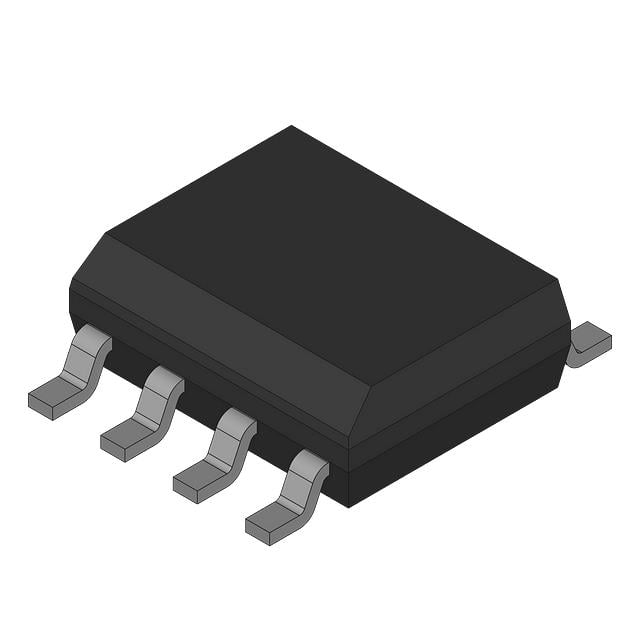
OPA277UA
OPA277UA
Active
Description:  CUSTOM REEL - OPA277UA
Manufacturer:  Texas Instruments
Datasheet:   OPA277UA Datasheet
History Price: $4.09000
In Stock: 35350
OPA277UA Specification
Specification
Mfr Part
OPA277UA
Category
Linear - Amplifiers - Instrumentation, OP Amps, Buffer Amps
Manufacturer
Texas Instruments
Series
-
Packaging
Bulk or Tube
Status
Active
Environmental Compliance
Lead Free
Radiation Hardening
No
REACH SVHC
No SVHC
RoHS
Compliant
HS Code
-
Technical Parameter
Amplifier Type
General Purpose
Number of Circuits
1
Output Type
-
Slew Rate
0.8V/μs
Gain Bandwidth Product
1 MHz
-3db Bandwidth
-
Current - Input Bias
500 pA
Voltage - Input Offset
20 μV
Current - Supply
790μA
Current - Output / Channel
35 mA
Voltage - Supply Span (Min)
4 V
Voltage - Supply Span (Max)
36 V
Operating Temperature
-40 ℃ ~ 85 ℃
Mounting Type
Surface Mount
Package / Case
8-SOIC (0.154", 3.90mm Width)
Supplier Device Package
8-SOIC
OPA277UA Description
The OPA277UA is a high-precision operational amplifier (op-amp) from Texas Instruments, designed to deliver exceptional performance in a variety of analog signal processing applications. Below is a detailed overview of the OPA277UA, covering its key features, specifications, and typical uses.

## Overview

The OPA277UA is part of the OPA277 family of op-amps, which are known for their precision, low noise, and low drift characteristics. It is designed for high-performance analog applications where accuracy and stability are crucial. This op-amp is housed in a 8-pin Dual In-Line Package (DIP), making it suitable for both prototyping and production use.

## Key Features

1. Low Offset Voltage:
- The OPA277UA features an exceptionally low input offset voltage, typically 25 µV maximum. This low offset voltage minimizes the error in the output signal due to inherent differences in the input terminals, which is critical for precision applications.

2. Low Offset Voltage Drift:
- The offset voltage drift is exceptionally low, with a typical value of 0.1 µV/°C. This characteristic ensures that the offset voltage remains stable over temperature variations, contributing to long-term accuracy and reliability.

3. Low Bias Current:
- It has a low input bias current, typically 10 pA. This low bias current reduces the errors caused by input current flow through source impedance, making it suitable for high-impedance signal sources.

4. Low Noise:
- The OPA277UA boasts low noise characteristics, with a typical voltage noise density of 0.9 nV/√Hz at 1 kHz. This low noise level is crucial for applications where signal integrity is paramount.

5. High Open-Loop Gain:
- It provides a high open-loop gain, typically 140 dB, ensuring that the op-amp can amplify even very small differential signals with high accuracy.

6. Wide Bandwidth:
- The op-amp has a wide gain-bandwidth product of 1 MHz, allowing it to handle a broad range of signal frequencies while maintaining performance.

7. Low Total Harmonic Distortion (THD):
- The OPA277UA exhibits very low total harmonic distortion, ensuring that the amplified signal is a faithful reproduction of the input signal, with minimal added harmonics.

8. High Slew Rate:
- With a slew rate of 0.5 V/µs, the op-amp can respond to rapid changes in the input signal, making it suitable for applications requiring fast signal processing.

9. High Power Supply Rejection Ratio (PSRR):
- The PSRR is typically 120 dB, which means the op-amp is highly resistant to changes in the supply voltage, contributing to stable performance under varying power conditions.

10. Low Supply Current:
- The supply current is relatively low, typically 1.4 mA, which helps in reducing power consumption, especially in battery-operated and portable devices.

## Specifications

- Supply Voltage Range: The OPA277UA can operate over a wide supply voltage range from ±2.5 V to ±18 V. This flexibility allows it to be used in various circuit configurations.
- Output Voltage Swing: It offers a wide output voltage swing, capable of reaching within ±13.5 V of the supply rails, which provides ample headroom for driving loads.
- Common-Mode Rejection Ratio (CMRR): The CMRR is typically 130 dB, which indicates the op-amp’s ability to reject common-mode signals and improve the accuracy of differential measurements.

## Applications

1. Precision Signal Conditioning:
- The OPA277UA is used in applications that require accurate signal conditioning, such as data acquisition systems, measurement instrumentation, and sensor interfacing.

2. High-Precision Analog Filters:
- Suitable for use in high-precision analog filters where low noise and low distortion are critical for maintaining signal integrity.

3. Low-Level Signal Amplification:
- Ideal for amplifying low-level signals, such as those from thermocouples, photodiodes, or low-level sensors, due to its low noise and low offset voltage.

4. Instrumentation Amplifiers:
- The OPA277UA is used in instrumentation amplifiers for precise and stable measurements, such as medical instrumentation and industrial process controls.

5. Analog Computing:
- Suitable for use in analog computing applications where high accuracy and stability are required, such as in analog multiplication, integration, and differentiation circuits.

6. High-Fidelity Audio Equipment:
- The low noise and low distortion characteristics make it well-suited for high-fidelity audio applications, ensuring clear and accurate signal reproduction.

## Conclusion

The OPA277UA operational amplifier is a versatile and high-performance device suitable for a wide range of precision analog applications. Its low offset voltage, low noise, high open-loop gain, and stable performance make it an excellent choice for tasks requiring accurate and reliable signal processing. Whether used in industrial, medical, or consumer electronics, the OPA277UA provides the precision and stability needed to achieve high-quality results in demanding applications.
OPA277UA Compare Parts
  • OPA277UA vs OPA992IDCKR
  • OPA277UA vs OPA992IDBVR
  • OPA277UA vs OPA991TIDCKR
  • OPA277UA vs OPA991SIDBVR
  • OPA277UA vs OPA991QDBVRQ1
  • OPA277UA vs OPA991IDCKR
  • OPA277UA vs OPA991IDBVR
  • OPA277UA vs OPA990SIDBVR
  • OPA277UA vs OPA990IDCKR
  • OPA277UA vs OPA990IDBVR
  • OPA277UA vs OPA890IDR
  • OPA277UA vs OPA890IDG4
  • OPA277UA vs OPA890IDBVTG4
  • OPA277UA vs OPA890IDBVT
  • OPA277UA vs OPA890IDBVR
  • OPA277UA vs OPA890ID
  • OPA277UA vs OPA863SIDBVR
  • OPA277UA vs OPA862IDTKR
  • OPA277UA vs OPA861IDRG4
  • OPA277UA vs OPA861IDR
  • OPA277UA vs OPA861IDBVT
  • OPA277UA vs OPA861IDBVRG4
  • OPA277UA vs OPA861IDBVR
  • OPA277UA vs OPA861ID
  • OPA277UA vs OPA860IDRG4
  • OPA277UA vs OPA860IDR
  • OPA277UA vs OPA860ID
  • OPA277UA vs OPA859QDSGRQ1
  • OPA277UA vs OPA859IDSGT
  • OPA277UA vs OPA859IDSGR
  • OPA277UA vs OPA858QDSGRQ1
  • OPA277UA vs OPA858IDSGT
  • OPA277UA vs OPA858IDSGR
  • OPA277UA vs OPA857TD2
  • OPA277UA vs OPA857IRGTT
  • OPA277UA vs OPA857IRGTR
  • OPA277UA vs OPA856IDSGR
  • OPA277UA vs OPA855QDSGRQ1
  • OPA277UA vs OPA855IDSGT
  • OPA277UA vs OPA855IDSGR
  • OPA277UA Related Parts
    OPA1013CN8
    OPA1013CN8
    Texas Instruments
    IC OPAMP GP 2 CIRCUIT 8DIP
    OPA1013CN8G4
    OPA1013CN8G4
    Texas Instruments
    IC OPAMP GP 2 CIRCUIT 8DIP
    OPA1013DN8
    OPA1013DN8
    Texas Instruments
    IC OPAMP GP 2 CIRCUIT 8DIP
    OPA111AM
    OPA111AM
    Texas Instruments
    IC INST AMP 1 CIRCUIT TO99-8
    OPA111BM
    OPA111BM
    Texas Instruments
    IC INST AMP 1 CIRCUIT TO99-8
    OPA121KU
    OPA121KU
    Texas Instruments
    IC OPAMP GP 1 CIRCUIT 8SOIC
    OPA121KU-TI
    OPA121KU-TI
    Texas Instruments
    IC OPAMP GP 1 CIRCUIT 8SOIC
    OPA121KU/2K5
    OPA121KU/2K5
    Texas Instruments
    IC OPAMP GP 1 CIRCUIT 8SOIC
    OPA121KU/2K5E4
    OPA121KU/2K5E4
    Texas Instruments
    IC OPAMP GP 1 CIRCUIT 8SOIC
    OPA121KUG4
    OPA121KUG4
    Texas Instruments
    IC OPAMP GP 1 CIRCUIT 8SOIC
    OPA124PA
    OPA124PA
    Texas Instruments
    IC OPAMP GP 1.5MHZ SGL LN 8DIP
    OPA124U
    OPA124U
    Texas Instruments
    IC OPAMP GP 1 CIRCUIT 8SOIC
    OPA277UA FAQ
    Q1: What is the Texas Instruments OPA277UA used for?
    A1: The Texas Instruments OPA277UA is a precision operational amplifier designed for high-accuracy applications in signal conditioning, instrumentation, and sensor interfacing.

    Q2: What is the input voltage range for the Texas Instruments OPA277UA?
    A2: The OPA277UA has an input voltage range that extends to the negative rail, making it suitable for single-supply and dual-supply applications.

    Q3: What is the output voltage swing of the Texas Instruments OPA277UA?
    A3: The output voltage swing of the OPA277UA is within 0.5V of the supply rails, ensuring good performance in low-voltage environments.

    Q4: What is the supply voltage range for the Texas Instruments OPA277UA?
    A4: The OPA277UA operates with a supply voltage range from 2.7V to 36V (or ±1.35V to ±18V in dual-supply configurations).

    Q5: What is the typical offset voltage for the Texas Instruments OPA277UA?
    A5: The OPA277UA features a typical offset voltage of 25µV, which is exceptionally low for high-precision applications.

    Q6: What is the bandwidth of the Texas Instruments OPA277UA?
    A6: The OPA277UA has a typical bandwidth of 8MHz, making it suitable for many precision signal processing tasks.

    Q7: Does the Texas Instruments OPA277UA have rail-to-rail input and output?
    A7: Yes, the OPA277UA has both rail-to-rail input and output, allowing it to operate effectively in low-voltage and battery-powered designs.

    Q8: What is the common-mode rejection ratio (CMRR) of the Texas Instruments OPA277UA?
    A8: The OPA277UA has an excellent CMRR of 120dB, which ensures stable operation in environments with varying common-mode voltages.

    Q9: What is the power consumption of the Texas Instruments OPA277UA?
    A9: The OPA277UA has a low quiescent current of 75µA, making it ideal for power-sensitive applications.

    Q10: What is the total harmonic distortion (THD) of the Texas Instruments OPA277UA?
    A10: The OPA277UA typically exhibits very low total harmonic distortion (THD), less than 0.0003%, providing clean amplification of signals.

    Q11: What is the typical slew rate of the Texas Instruments OPA277UA?
    A11: The OPA277UA has a typical slew rate of 0.3V/µs, which is sufficient for many precision applications where speed is not a critical factor.

    Q12: Is the Texas Instruments OPA277UA suitable for audio applications?
    A12: Yes, the low noise and high precision of the OPA277UA make it suitable for high-quality audio applications, such as preamplifiers and mixers.

    Q13: What is the output drive capability of the Texas Instruments OPA277UA?
    A13: The OPA277UA can drive loads with a resistance as low as 10kΩ without significant distortion or degradation in performance.

    Q14: What is the input bias current of the Texas Instruments OPA277UA?
    A14: The input bias current of the OPA277UA is typically 1nA, ensuring minimal impact on high-impedance sensor interfaces.

    Q15: What type of package is the Texas Instruments OPA277UA available in?
    A15: The OPA277UA is available in an 8-pin SOIC (Small Outline Integrated Circuit) package, suitable for surface-mount applications.

    Q16: What is the temperature range of the Texas Instruments OPA277UA?
    A16: The OPA277UA operates over a temperature range of -40°C to +125°C, making it suitable for automotive and industrial applications.

    Q17: Can the Texas Instruments OPA277UA be used in precision analog-to-digital conversion systems?
    A17: Yes, the low offset voltage, low noise, and high CMRR of the OPA277UA make it ideal for use in precision ADC systems.

    Q18: What is the output drive capability in terms of current for the Texas Instruments OPA277UA?
    A18: The OPA277UA can drive output currents of up to 20mA, which is adequate for driving many loads directly.

    Q19: What is the noise performance of the Texas Instruments OPA277UA?
    A19: The OPA277UA has a low noise density of 1.3nV/√Hz, making it suitable for applications requiring high signal fidelity.

    Q20: How does the Texas Instruments OPA277UA compare to other op-amps in terms of precision?
    A20: The OPA277UA is specifically designed for precision applications, offering superior performance in terms of low offset voltage, low noise, and high CMRR, making it ideal for sensitive instrumentation and signal conditioning.
    Customer Reviews
    4.95 out of 5.00 stars from 181 customer reviews from all over the world
    Alberto Cruz
    Spain
    5 stars
    2026-11-25 06:48
    Fast shipping and perfect item, recommended seller
    Adèle Rousseau
    France
    5 stars
    2026-11-25 06:31
    Unfortunately sold by 10 while a single piece would have enough but the price remains attractive and the piece helped me.
    Jussara Costa
    Brazil
    5 stars
    2026-11-25 06:24
    Great seller, recommend to everyone, goods arrived fast and well packed, still not tested.
    Carlos Eduardo Rocha
    Brazil
    5 stars
    2026-11-25 05:43
    Great product and working perfectly.
    Mariana
    Brazil
    5 stars
    2026-11-25 05:13
    Working perfectly, recommend.
    Maria Júlia
    Brazil
    5 stars
    2026-11-25 01:21
    According to the description, not yet tested,