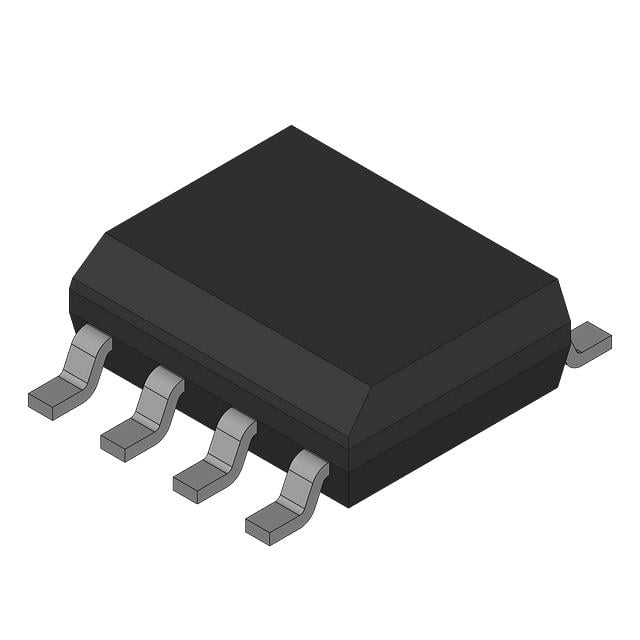
The Texas Instruments OPA237UA is a precision, low-power operational amplifier designed for a wide range of applications, including signal conditioning, data acquisition, and instrumentation. This op-amp is particularly noted for its high accuracy, low noise, and low offset voltage, making it suitable for high-performance applications. Below is a detailed overview of its specifications, features, and typical applications.
## Overview
The OPA237 is a dual operational amplifier that operates on a single or dual power supply. It is designed to provide high precision and low drift over a wide temperature range. The device is available in various package types, including the 8-pin SOIC (Small Outline Integrated Circuit) package, which is denoted by the UA suffix.
## Key Specifications
1. Supply Voltage (V+ to V-):
- The OPA237 operates with a dual supply voltage ranging from ±2.5V to ±18V, or a single supply voltage from 5V to 36V.
2. Input Offset Voltage (V_os):
- The typical input offset voltage is 50 µV, with a maximum of 200 µV. This low offset voltage is critical for precision applications.
3. Input Bias Current (I_b):
- The input bias current is typically 10 pA, which minimizes errors in applications with high source impedance.
4. Input Impedance:
- The input impedance is very high, typically around 10^12 ohms, which helps reduce loading effects on the preceding stage.
5. Common-Mode Rejection Ratio (CMRR):
- The CMRR is typically 120 dB, ensuring effective rejection of common-mode signals.
6. Power Supply Rejection Ratio (PSRR):
- The PSRR is typically 120 dB, indicating that the amplifier maintains performance despite variations in the supply voltage.
7. Gain Bandwidth Product (GBP):
- The gain bandwidth product is 1 MHz, which defines the frequency range over which the amplifier can provide gain.
8. Slew Rate:
- The slew rate is 0.3 V/µs, which determines how quickly the output can respond to rapid changes in the input signal.
9. Output Voltage Swing:
- The output voltage swing is typically within 10 mV of the supply rails, allowing for a wide range of output signal levels.
10. Temperature Range:
- The operational temperature range is from -40°C to +125°C, making it suitable for industrial and automotive applications.
## Features
- Low Noise: The OPA237 is designed to minimize noise, making it ideal for sensitive applications.
- Low Power Consumption: The device consumes low quiescent current, which is beneficial for battery-powered applications.
- Rail-to-Rail Output: The output can swing close to the supply rails, maximizing the dynamic range of the output signal.
- High Linearity: The amplifier exhibits excellent linearity, which is essential for accurate signal amplification.
- Low Drift: The OPA237 features low temperature drift, ensuring stable performance over varying temperatures.
## Applications
The OPA237UA is suitable for a wide range of applications, including:
- Signal Conditioning: Used in sensor signal processing to amplify weak signals.
- Data Acquisition Systems: Ideal for interfacing with ADCs (Analog-to-Digital Converters) due to its precision and low noise.
- Instrumentation: Commonly used in medical instrumentation, industrial sensors, and measurement devices.
- Active Filters: Can be used in designing active filter circuits due to its high performance and stability.
- Audio Applications: Suitable for high-fidelity audio applications where low distortion and noise are critical.
## Conclusion
The Texas Instruments OPA237UA operational amplifier is a versatile and high-performance device that meets the needs of various precision applications. Its low offset voltage, high input impedance, and low noise characteristics make it an excellent choice for engineers looking to design reliable and accurate electronic systems. Whether in industrial, medical, or consumer electronics, the OPA237UA provides the performance and reliability required for demanding applications.