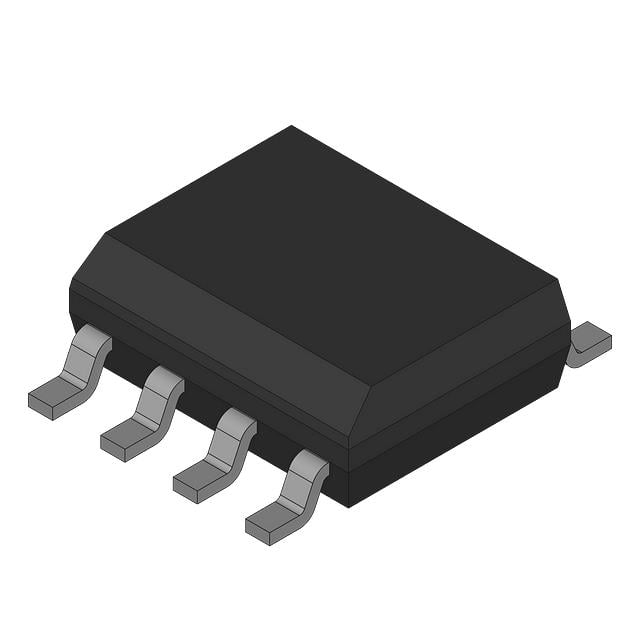
The Texas Instruments OPA2330AID is a high-precision, low-power operational amplifier (op-amp) designed to meet the needs of a variety of applications, ranging from precision signal conditioning to low-power battery-powered devices. This op-amp is ideal for circuits that require very low offset voltage, low drift, and minimal power consumption while maintaining high accuracy and stability. It belongs to the OPAx330 family, which is widely regarded for its excellent precision performance and efficiency.
## Key Features
* Low Offset Voltage: The OPA2330AID features an ultra-low input offset voltage, typically as low as 25 µV, and a maximum value of 50 µV. This ensures minimal signal distortion and allows the op-amp to be used in precision applications without introducing significant errors.
* Low Input Bias Current: With an input bias current of just 1 pA (typical), this op-amp is suitable for applications where the input impedance is high, making it ideal for precision instrumentation and sensor interfacing.
* Rail-to-Rail Output: The op-amp provides rail-to-rail output swing, which means the output voltage can go from the negative supply voltage to the positive supply voltage, maximizing the output range and making it suitable for single-supply systems.
* Low Power Consumption: The OPA2330AID consumes very little power, with a typical supply current of only 25 µA. This makes it an excellent choice for battery-powered systems and low-power applications, such as IoT devices and portable equipment.
* Wide Supply Voltage Range: It operates over a wide supply voltage range of 1.8V to 5.5V, making it flexible for a variety of applications, including 3.3V or 5V systems.
* Low Noise: The OPA2330AID has a low noise density of 0.15 µV/√Hz at 1 kHz, ensuring that it does not introduce significant noise into sensitive analog circuits, especially in high-precision systems.
* High Common-Mode Rejection Ratio (CMRR): With a typical CMRR of 120 dB, the OPA2330AID is highly resistant to common-mode signals, ensuring that differential inputs are accurately amplified even in noisy environments.
## Electrical Characteristics
* Input Voltage Range: The input voltage range extends from V– (negative supply) to V+ (positive supply), which is ideal for use in single-supply applications.
* Offset Voltage:
* Typical: 25 µV
* Maximum: 50 µV
* Input Bias Current:
* Typical: 1 pA
* Maximum: 10 pA
* Input Offset Current:
* Typical: 0.01 pA
* Maximum: 0.1 pA
* Power Supply Range: 1.8V to 5.5V
* Supply Current (Icc): 25 µA (typical)
* Open-Loop Gain (AOL):
* Typical: 100 dB
* Minimum: 90 dB
* Common-Mode Rejection Ratio (CMRR):
* Typical: 120 dB
* Power-Supply Rejection Ratio (PSRR):
* Typical: 120 dB
* Gain Bandwidth Product: 0.3 MHz
* Output Voltage Swing: Rail-to-rail
## Package Information
* Package Type: The OPA2330AID is available in an 8-lead SOIC package, providing a compact solution for surface-mount designs.
* Package Size: The small size makes it well-suited for space-constrained applications like portable devices, sensors, and embedded systems.
## Applications
The OPA2330AID is highly versatile and can be used in a wide variety of precision applications, including:
* Precision Signal Conditioning: Used for accurate amplification of low-level signals in instrumentation, measurement systems, and medical equipment.
* Low-Power, Battery-Operated Devices: The low power consumption and wide voltage range make it ideal for portable devices, including handheld meters, IoT sensors, and remote monitoring systems.
* Sensor Interfacing: Its low input bias current and offset voltage make it a perfect match for interfacing with high-impedance sensors such as thermocouples, photodiodes, and strain gauges.
* Audio Circuits: The low noise and high precision make it useful in high-quality audio circuits for preamplification and other signal processing applications.
* Operational Amplifier Circuits: Suitable for general-purpose op-amp circuits, including active filters, analog-to-digital conversion, and instrumentation.
## Advantages
* Ultra-Low Offset Voltage: The OPA2330AID's low offset voltage minimizes signal distortion, providing higher accuracy in applications that require precision.
* Low Power Consumption: At just 25 µA of supply current, it offers substantial energy savings in low-power or battery-operated systems, extending the battery life of portable devices.
* High Performance in Low-Voltage Systems: With an operating range of 1.8V to 5.5V, it performs well even in low-voltage systems, making it ideal for energy-efficient designs.
* Rail-to-Rail Output: The rail-to-rail output ensures the full range of the output signal is usable, even when powered by a single supply, which is important in systems where maximizing output voltage swing is critical.
* Robust Performance in Noisy Environments: The high CMRR and PSRR allow the OPA2330AID to perform well in noisy environments, ensuring that the op-amp amplifies the differential signal accurately without being affected by common-mode noise or power supply fluctuations.
## Conclusion
The Texas Instruments OPA2330AID is a high-precision, low-power operational amplifier that is highly suited for applications requiring high accuracy, minimal power consumption, and reliable performance. Whether used in battery-powered devices, precision sensor systems, or high-impedance signal conditioning, the OPA2330AID provides exceptional performance with minimal noise and distortion. Its ultra-low offset voltage, low bias current, and rail-to-rail output make it an excellent choice for demanding analog applications in various industrial, medical, and consumer electronic systems.