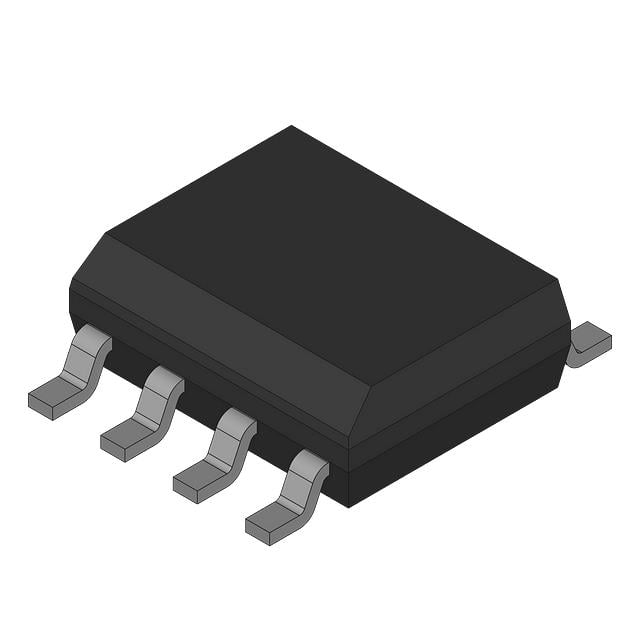
Texas Instruments OPA227UA Overview
The Texas Instruments OPA227UA is a precision, low-offset, low-noise operational amplifier designed for high-accuracy analog signal processing. It is ideal for use in a wide range of applications, including measurement instrumentation, medical devices, industrial automation, and sensor signal conditioning. With excellent DC precision, low noise, and high common-mode rejection ratio (CMRR), the OPA227UA is well-suited for tasks that require accurate and stable amplification over a wide temperature range. The device is characterized by its excellent offset voltage performance, making it suitable for applications that demand high accuracy over long periods.
Key Features
* Low Offset Voltage: The OPA227UA features an ultra-low input offset voltage, typically 25 µV, which ensures high precision in applications where even minute voltage differences need to be accurately measured.
* Low Bias Current: With input bias current as low as 1 pA, this op-amp minimizes errors in high-impedance circuits, making it suitable for use in sensor applications and precision measurement systems.
* Low Noise Performance: The OPA227UA exhibits a very low voltage noise density of 0.4 nV/√Hz at 1 kHz, making it ideal for noise-sensitive applications such as medical instrumentation and audio signal processing.
* High Common-Mode Rejection Ratio (CMRR): The device boasts an impressive CMRR of 130 dB (typical), which allows it to reject common-mode signals effectively, maintaining signal integrity in noisy environments.
* Wide Supply Voltage Range: The OPA227UA operates from a wide supply voltage range of ±2 V to ±18 V (single supply: 4 V to 36 V), offering flexibility in various application designs.
* Low Power Consumption: With a quiescent current of only 300 µA per amplifier, the OPA227UA ensures energy efficiency, making it suitable for battery-powered applications.
* Wide Temperature Range: It operates reliably across an industrial temperature range of -40°C to +125°C, making it ideal for use in demanding environments where temperature stability is crucial.
Specifications
* Part Number: OPA227UA
* Amplifier Type: Single operational amplifier
* Supply Voltage Range:
* Single supply: 4 V to 36 V
* Dual supply: ±2 V to ±18 V
* Input Offset Voltage:
* Typical: 25 µV
* Maximum: 100 µV
* Input Bias Current: 1 pA (typical)
* Input Voltage Noise Density: 0.4 nV/√Hz at 1 kHz
* Slew Rate: 0.3 V/µs
* Common-Mode Rejection Ratio (CMRR):
* Typical: 130 dB
* Minimum: 120 dB (at 1 kHz)
* Power Supply Current: 300 µA (typical)
* Power Consumption: 1.2 mW (typical)
* Gain Bandwidth Product: 0.8 MHz
* Operating Temperature Range: -40°C to +125°C
* Package Type: 8-pin SOIC (Small Outline Integrated Circuit)
* Package Dimensions: 5mm x 6.4mm x 1.75mm
Applications
* Measurement Instrumentation: The OPA227UA is commonly used in precision measurement devices, where accuracy, low noise, and high common-mode rejection are essential. Examples include oscilloscopes, voltmeters, and high-precision ADC front-ends.
* Sensor Signal Conditioning: With its low offset voltage and high input impedance, the OPA227UA is well-suited for use in signal conditioning circuits for temperature, pressure, and other sensor types.
* Medical Devices: The OPA227UA's low noise and high precision make it an excellent choice for medical instrumentation such as ECG/EEG equipment, patient monitoring systems, and diagnostic devices that require minimal signal distortion and high accuracy.
* Audio and Audio Processing Systems: Its low noise and high fidelity make the OPA227UA suitable for use in audio preamplifiers, mixers, and other audio signal processing systems that demand high-quality amplification without introducing noise.
* Industrial Automation: Used in industrial control systems for accurate signal amplification from sensors and transducers, the OPA227UA ensures precise control and measurement in systems like automation equipment, robotics, and process control.
* Precision Control Systems: The OPA227UA is ideal for use in precision control loops, including feedback amplifiers and regulation systems, where stable and accurate signal amplification is necessary.
Advantages
* Precision and Accuracy: The low input offset voltage (typically 25 µV) and low drift over temperature make the OPA227UA highly suitable for precision analog applications that require reliable long-term stability.
* Low Noise: With its low noise characteristics, the OPA227UA is ideal for noise-sensitive applications, ensuring that it does not introduce unwanted signal distortion, which is critical in high-fidelity audio, instrumentation, and medical systems.
* Low Power Operation: The low quiescent current (300 µA) ensures that the OPA227UA is energy-efficient, which is particularly beneficial for battery-powered devices or applications requiring extended operational lifetimes.
* Wide Temperature Range: The device's ability to operate across a wide temperature range (-40°C to +125°C) makes it ideal for industrial and automotive environments where temperature variation is a concern.
* High Common-Mode Rejection: The high CMRR ensures that the OPA227UA can reject common-mode interference and noise, delivering a cleaner and more accurate output in electrically noisy environments.
* Flexible Supply Voltage: The OPA227UA can be powered from a wide range of supply voltages, from 4 V to 36 V (single supply), or ±2 V to ±18 V (dual supply), making it suitable for a wide range of application needs and design considerations.
Conclusion
The Texas Instruments OPA227UA is a precision, low-noise operational amplifier that offers outstanding performance for high-accuracy applications. With its low offset voltage, low input bias current, low noise density, and high common-mode rejection ratio, it is particularly suited for use in precision measurement systems, medical devices, sensor signal conditioning, and audio applications. The OPA227UA's wide supply voltage range, low power consumption, and broad temperature tolerance make it a versatile and reliable choice for engineers designing systems where accuracy and stability are paramount.