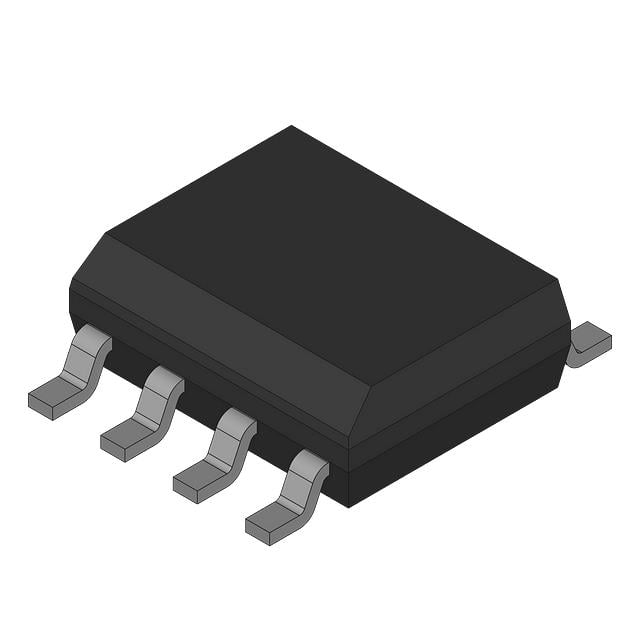
The OPA2277UA is a high-precision operational amplifier designed by Texas Instruments. It is part of the OPA2277 series, known for its ultra-low offset voltage, low drift, and high precision, making it suitable for demanding analog signal processing tasks. Below is a detailed overview of the OPA2277UA operational amplifier, including its key features, electrical characteristics, applications, and design considerations.
## Overview
The OPA2277UA operational amplifier is designed to offer high precision and stability, which is crucial for applications requiring accurate signal amplification and conditioning. The amplifier features a low offset voltage, low offset voltage drift, and low noise, contributing to its excellent performance in high-accuracy and low-drift applications.
## Key Features
1. Low Offset Voltage:
- Typical Offset Voltage: The OPA2277UA has a typical input offset voltage of 10 µV, ensuring minimal error in signal processing due to offset.
- Maximum Offset Voltage: The maximum offset voltage is guaranteed to be 25 µV, which is extremely low compared to many other operational amplifiers.
2. Low Offset Voltage Drift:
- Drift Specification: The input offset voltage drift is specified at 0.1 µV/°C, which ensures that the offset voltage remains stable over a wide temperature range, contributing to long-term accuracy and stability.
3. Low Noise:
- Voltage Noise Density: The OPA2277UA features a low voltage noise density of 0.4 nV/√Hz, minimizing noise contributions to the signal and making it suitable for low-level signal amplification.
4. High Open-Loop Gain:
- Typical Open-Loop Gain: The operational amplifier provides a high open-loop gain of 120 dB, which ensures that the amplifier can drive loads with minimal distortion and maintains high fidelity.
5. Wide Common-Mode Range:
- Input Voltage Range: The OPA2277UA offers a wide common-mode input voltage range that extends to the negative supply voltage, providing flexibility in handling signals that vary widely around the ground.
6. Low Total Harmonic Distortion (THD):
- THD: The amplifier exhibits low total harmonic distortion, which is critical for applications requiring high signal integrity and minimal signal distortion.
7. Low Power Consumption:
- Supply Current: The OPA2277UA operates with a low supply current of 1.6 mA per amplifier, making it energy-efficient and suitable for battery-powered applications.
8. High Slew Rate:
- Slew Rate: The operational amplifier features a slew rate of 0.3 V/µs, allowing it to handle rapidly changing signals with minimal distortion.
## Electrical Characteristics
- Supply Voltage: The OPA2277UA operates over a supply voltage range of ±2.5 V to ±18 V, providing flexibility in various circuit designs.
- Input Bias Current: The typical input bias current is 0.1 pA, which is very low and contributes to the high precision of the amplifier.
- Gain-Bandwidth Product (GBW): The amplifier has a gain-bandwidth product of 0.5 MHz, determining its ability to amplify signals across a wide frequency range.
## Applications
The OPA2277UA is suitable for a variety of high-precision applications due to its excellent performance characteristics:
1. Precision Analog Signal Conditioning:
- The low offset voltage and low drift make the OPA2277UA ideal for signal conditioning in high-precision measurement systems, such as data acquisition systems and sensor interfaces.
2. Instrumentation Amplifiers:
- It is commonly used in instrumentation amplifiers, where high accuracy and low noise are required for accurate measurement and signal amplification.
3. Medical Instrumentation:
- In medical devices, such as ECG and EEG monitors, the OPA2277UA provides the precision needed for accurate signal acquisition and processing.
4. Audio Equipment:
- The low noise and low distortion characteristics make it suitable for high-fidelity audio equipment, where signal integrity is critical.
5. Industrial Process Control:
- The operational amplifier’s stability and low drift make it suitable for industrial process control systems, where reliable and accurate signal processing is essential.
6. High-Precision Analog Filters:
- Used in active filter designs where precise control over the filter characteristics is necessary, such as in active low-pass, high-pass, and band-pass filters.
## Design Considerations
When designing with the OPA2277UA, consider the following factors to optimize performance and reliability:
1. Power Supply Decoupling:
- Proper decoupling of the power supply is essential to minimize noise and ensure stable operation. Use bypass capacitors close to the power supply pins to reduce noise and improve performance.
2. Layout and Grounding:
- Pay attention to PCB layout and grounding techniques to minimize noise and interference. Proper layout helps maintain the amplifier’s performance and accuracy.
3. Thermal Management:
- Ensure adequate thermal management to prevent overheating, which could affect performance. The OPA2277UA should be operated within its specified temperature range to ensure reliability.
4. Component Matching:
- When using the OPA2277UA in precision applications, component matching is crucial for maintaining performance. Use high-precision resistors and capacitors to ensure the overall accuracy of the circuit.
5. Input and Output Protection:
- Implement input and output protection circuits to safeguard the amplifier from overvoltage and transient events that could damage the device.
## Summary
The OPA2277UA operational amplifier by Texas Instruments is a high-precision, low-noise amplifier designed for demanding analog signal processing applications. Its low offset voltage, low drift, and high open-loop gain make it suitable for high-accuracy measurements and signal conditioning tasks. With applications spanning from medical instrumentation to audio equipment, the OPA2277UA provides reliable and precise performance, making it a valuable component in various high-performance analog circuits. Proper design considerations, such as power supply decoupling and PCB layout, are essential to fully leverage the amplifier’s capabilities and ensure optimal operation in your applications.