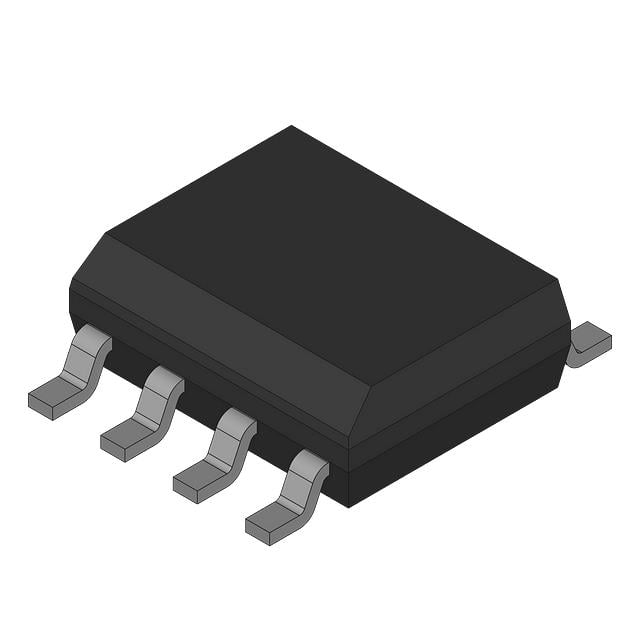
Introduction to Texas Instruments OPA2170AIDR
The Texas Instruments OPA2170AIDR is a precision operational amplifier designed for high-performance applications. This device is part of the OPAx170 family, which is known for its low offset voltage, low drift, and high open-loop gain characteristics. The OPA2170 is particularly suitable for applications in instrumentation, data acquisition systems, and medical devices where accuracy and stability are paramount.
Key Specifications
The OPA2170AIDR features several specifications that highlight its performance capabilities:
- Supply Voltage Range (V_S): ±2.5 V to ±18 V or 5 V to 36 V (single supply)
- Input Offset Voltage (V_os): Typically 50 µV (maximum 150 µV)
- Input Bias Current (I_B): Typically 10 pA
- Input Common Mode Voltage Range: Includes the negative rail (for single-supply operation)
- Gain Bandwidth Product (GBP): 1 MHz
- Slew Rate: 0.1 V/µs
- Output Voltage Swing: Within 10 mV of the rails under a load of 2 kΩ
- Total Harmonic Distortion + Noise (THD+N): Typically 0.0005% at V_out = 2 Vpp
- Power Supply Rejection Ratio (PSRR): Approximately 120 dB
- Temperature Range: -40°C to +125°C
- Package Type: Available in a variety of packages including SOIC and TSSOP.
These specifications illustrate the high precision and reliability of the OPA2170, making it an excellent choice for demanding applications.
Performance Characteristics
One of the standout features of the OPA2170AIDR is its ultra-low offset voltage and low drift over temperature. This characteristic ensures that the amplifier can provide accurate amplification without significant error due to offset voltage variations. Additionally, the low input bias current makes it suitable for high-resistance sensor applications where traditional op-amps may introduce significant errors.
The device also boasts a high open-loop gain, which contributes to its ability to maintain linearity across a wide range of input signals. This feature is particularly important in applications such as signal conditioning and analog-to-digital conversion.
Thermal Performance
Thermal performance is crucial in operational amplifiers, especially in precision applications:
- Maximum Junction Temperature (T_J): The device can operate up to +150°C.
- Thermal Resistance Junction-to-Ambient (RθJA): Approximately 100 °C/W for SOIC package.
These thermal characteristics ensure that the OPA2170 can handle significant power dissipation while maintaining stable operation.
Applications
The versatility of the OPA2170AIDR makes it suitable for various applications:
1. Instrumentation Amplifiers: Ideal for use in precision measurement systems where accurate signal amplification is required.
2. Data Acquisition Systems: Used in ADC front-end circuits to condition signals before conversion.
3. Medical Devices: Suitable for sensor signal conditioning in medical instrumentation due to its low noise and high precision.
4. Audio Equipment: Can be used in audio processing circuits where fidelity and accuracy are critical.
Design Considerations
When designing with the OPA2170AIDR, engineers should take into account several factors:
- Power Supply Decoupling: Proper decoupling capacitors should be placed close to the power supply pins to minimize noise and ensure stable operation.
- Feedback Network Design: The feedback network should be carefully designed to maintain stability and avoid oscillations.
- PCB Layout Guidelines: A good layout practice involves minimizing trace lengths, using ground planes, and ensuring proper thermal management.
Conclusion
The Texas Instruments OPA2170AIDR operational amplifier stands out as a high-performance solution for precision applications requiring low offset voltage and high stability. With its impressive specifications—including a wide supply voltage range, ultra-low input bias current, and excellent PSRR—this op-amp meets the rigorous demands of modern electronic designs across various industries. Whether used in instrumentation or audio processing applications, the OPA2170 delivers reliable performance that engineers can depend on for critical tasks.