☰
OPA207IDBVR
OPA207IDBVR
Active
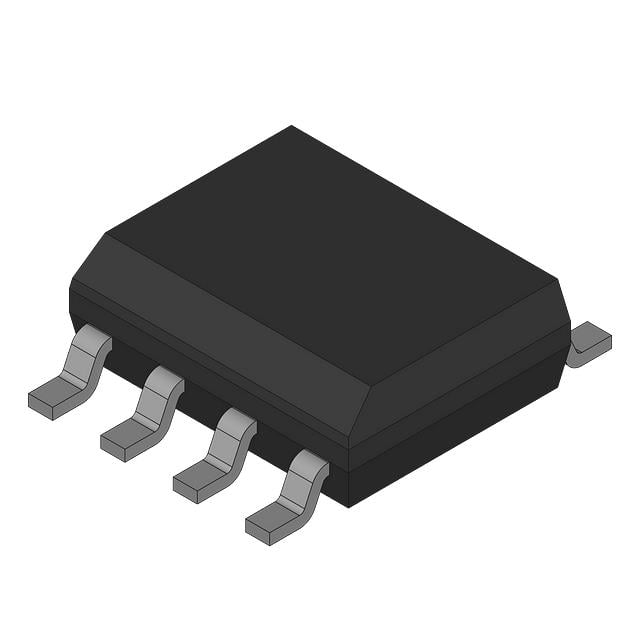
Description:  IC OPAMP GP 1 CIRCUIT SOT23-5
Manufacturer:  Texas Instruments
Datasheet:   OPA207IDBVR Datasheet
History Price: $2.27000
In Stock: 30250
OPA207IDBVR Specification
Specification
Mfr Part
OPA207IDBVR
Category
Linear - Amplifiers - Instrumentation, OP Amps, Buffer Amps
Manufacturer
Texas Instruments
Series
-
Packaging
Tape & Reel (TR)
Status
Active
Environmental Compliance
Lead Free
Radiation Hardening
No
REACH SVHC
No SVHC
RoHS
Compliant
HS Code
-
Technical Parameter
Amplifier Type
General Purpose
Number of Circuits
1
Output Type
Rail-to-Rail
Slew Rate
2.7V/μs
Gain Bandwidth Product
1.3 MHz
-3db Bandwidth
-
Current - Input Bias
200 pA
Voltage - Input Offset
15 μV
Current - Supply
350μA
Current - Output / Channel
40 mA
Voltage - Supply Span (Min)
4.5 V
Voltage - Supply Span (Max)
36 V
Operating Temperature
-40 ℃ ~ 125 ℃
Mounting Type
Surface Mount
Package / Case
SC-74A, SOT-753
Supplier Device Package
SOT-23-5
OPA207IDBVR Description

The OPA207IDBVR is a high-performance, precision operational amplifier designed by Texas Instruments. It is known for its low noise, low distortion, and excellent DC precision, making it suitable for a wide range of applications in industrial, automotive, and consumer electronics. The OPA207 features a rail-to-rail input and output, allowing it to operate effectively in single-supply configurations.

## Key Features

1. Rail-to-Rail Output: The OPA207 can drive the output voltage very close to the supply rails, maximizing the output signal range.
2. Wide Supply Voltage Range: It operates with dual or single power supplies ranging from ±2 V to ±18 V, offering flexibility for various applications.
3. Low Input Offset Voltage: With a typical offset voltage of 50 µV, it maintains high accuracy for precision signal processing.
4. High Gain Bandwidth Product (GBP): The OPA207 has a GBP of 8 MHz, making it suitable for high-frequency applications.
5. Low Noise: The input voltage noise density is 18 nV/√Hz at 1 kHz, which is beneficial for amplifying weak signals.
6. High Slew Rate: With a slew rate of 10 V/µs, it can respond quickly to rapid changes in input signals.
7. Temperature Range: The device operates over a wide temperature range of -40°C to +125°C, making it ideal for harsh environments.

## Electrical Specifications

Here are the detailed specifications for the OPA207IDBVR:

- Supply Voltage (V+ to V-):
- Minimum: ±2 V
- Maximum: ±18 V
- Input Voltage Range:
- Common-mode voltage range extends from V- to V+ (rail-to-rail).
- Output Voltage Swing:
- Typically within 20 mV of each rail at a 10 kΩ load.
- Input Offset Voltage (VOS):
- Typical: 50 µV
- Maximum: 250 µV
- Input Bias Current (IB):
- Typical: 1 pA
- Maximum: 5 pA
- Input Impedance:
- Differential: 10^12 Ω
- Common-mode: 10^12 Ω
- Open-Loop Gain:
- Typical: 130 dB
- Minimum: 110 dB
- Gain Bandwidth Product (GBP):
- 8 MHz
- Slew Rate:
- 10 V/µs
- Total Harmonic Distortion + Noise (THD+N):
- Typically 0.0004% at 1 kHz, 2 Vpp
- Power Supply Rejection Ratio (PSRR):
- Typically 100 dB (at V+ = 15 V, V- = -15 V)
- Temperature Coefficient of Input Offset Voltage:
- 0.1 µV/°C

## Package Information

The OPA207IDBVR is available in a SOIC-8 package, which is compact and suitable for surface mount applications. Key characteristics include:

- Dimensions:
- Length: 5.0 mm
- Width: 3.0 mm
- Height: 1.75 mm
- Thermal Resistance:
- Junction-to-Ambient (θJA): 100°C/W (in still air), which indicates how effectively heat is dissipated from the chip.

## Applications

The OPA207IDBVR is versatile and can be used in various applications, including but not limited to:

1. Precision Signal Processing: Ideal for data acquisition systems requiring high accuracy.
2. Instrumentation Amplifiers: Suitable for amplifying low-level signals from sensors in industrial applications.
3. Active Filters: Useful in audio and signal filtering applications due to low distortion and noise levels.
4. Medical Devices: Employed in medical instrumentation where precision and reliability are critical.
5. Automotive Sensors: Often used in sensor signal conditioning in automotive applications.

## Application Circuit Example

When designing with the OPA207, it is essential to consider proper circuit configuration. Below is a simplified non-inverting amplifier circuit example:

```
+V+
|
| R2
|------///-----+
| |
--- |
| | |
| | |
--- |
| +|
Vin | OPA207
| |
+---------------|
-|
GND |
|
GND
```

Components:
- Vin: Input voltage signal.
- R1 and R2: Resistors that set the gain of the amplifier.
- OPA207: The operational amplifier.
- +V: Positive supply voltage.
- GND: Ground reference.

## Conclusion

The Texas Instruments OPA207IDBVR is a highly capable precision operational amplifier that provides low noise, low distortion, and robust performance across a wide range of applications. Its rail-to-rail capability, combined with its high slew rate and low offset voltage, makes it an excellent choice for demanding analog signal processing tasks. For further details and a complete datasheet, please refer to the [Texas Instruments official documentation](https://www.ti.com/product/OPA207).
OPA207IDBVR Compare Parts
  • OPA207IDBVR vs OPA992IDCKR
  • OPA207IDBVR vs OPA992IDBVR
  • OPA207IDBVR vs OPA991TIDCKR
  • OPA207IDBVR vs OPA991SIDBVR
  • OPA207IDBVR vs OPA991QDBVRQ1
  • OPA207IDBVR vs OPA991IDCKR
  • OPA207IDBVR vs OPA991IDBVR
  • OPA207IDBVR vs OPA990SIDBVR
  • OPA207IDBVR vs OPA990IDCKR
  • OPA207IDBVR vs OPA990IDBVR
  • OPA207IDBVR vs OPA890IDR
  • OPA207IDBVR vs OPA890IDG4
  • OPA207IDBVR vs OPA890IDBVTG4
  • OPA207IDBVR vs OPA890IDBVT
  • OPA207IDBVR vs OPA890IDBVR
  • OPA207IDBVR vs OPA890ID
  • OPA207IDBVR vs OPA863SIDBVR
  • OPA207IDBVR vs OPA862IDTKR
  • OPA207IDBVR vs OPA861IDRG4
  • OPA207IDBVR vs OPA861IDR
  • OPA207IDBVR vs OPA861IDBVT
  • OPA207IDBVR vs OPA861IDBVRG4
  • OPA207IDBVR vs OPA861IDBVR
  • OPA207IDBVR vs OPA861ID
  • OPA207IDBVR vs OPA860IDRG4
  • OPA207IDBVR vs OPA860IDR
  • OPA207IDBVR vs OPA860ID
  • OPA207IDBVR vs OPA859QDSGRQ1
  • OPA207IDBVR vs OPA859IDSGT
  • OPA207IDBVR vs OPA859IDSGR
  • OPA207IDBVR vs OPA858QDSGRQ1
  • OPA207IDBVR vs OPA858IDSGT
  • OPA207IDBVR vs OPA858IDSGR
  • OPA207IDBVR vs OPA857TD2
  • OPA207IDBVR vs OPA857IRGTT
  • OPA207IDBVR vs OPA857IRGTR
  • OPA207IDBVR vs OPA856IDSGR
  • OPA207IDBVR vs OPA855QDSGRQ1
  • OPA207IDBVR vs OPA855IDSGT
  • OPA207IDBVR vs OPA855IDSGR
  • OPA207IDBVR Related Parts
    OPA1013CN8
    OPA1013CN8
    Texas Instruments
    IC OPAMP GP 2 CIRCUIT 8DIP
    OPA1013CN8G4
    OPA1013CN8G4
    Texas Instruments
    IC OPAMP GP 2 CIRCUIT 8DIP
    OPA1013DN8
    OPA1013DN8
    Texas Instruments
    IC OPAMP GP 2 CIRCUIT 8DIP
    OPA111AM
    OPA111AM
    Texas Instruments
    IC INST AMP 1 CIRCUIT TO99-8
    OPA111BM
    OPA111BM
    Texas Instruments
    IC INST AMP 1 CIRCUIT TO99-8
    OPA121KU
    OPA121KU
    Texas Instruments
    IC OPAMP GP 1 CIRCUIT 8SOIC
    OPA121KU-TI
    OPA121KU-TI
    Texas Instruments
    IC OPAMP GP 1 CIRCUIT 8SOIC
    OPA121KU/2K5
    OPA121KU/2K5
    Texas Instruments
    IC OPAMP GP 1 CIRCUIT 8SOIC
    OPA121KU/2K5E4
    OPA121KU/2K5E4
    Texas Instruments
    IC OPAMP GP 1 CIRCUIT 8SOIC
    OPA121KUG4
    OPA121KUG4
    Texas Instruments
    IC OPAMP GP 1 CIRCUIT 8SOIC
    OPA124PA
    OPA124PA
    Texas Instruments
    IC OPAMP GP 1.5MHZ SGL LN 8DIP
    OPA124U
    OPA124U
    Texas Instruments
    IC OPAMP GP 1 CIRCUIT 8SOIC
    Customer Reviews
    4.95 out of 5.00 stars from 141 customer reviews from all over the world
    Carlos Eduardo Rocha
    Brazil
    5 stars
    2026-11-25 05:43
    Great product and working perfectly.
    Mariana
    Brazil
    5 stars
    2026-11-25 05:13
    Working perfectly, recommend.
    Maria Júlia
    Brazil
    5 stars
    2026-11-25 01:21
    According to the description, not yet tested,
    Gisele Nascimento Silva
    Brazil
    5 stars
    2026-11-25 00:59
    Still not tested more looks good
    Eric Richardson
    United States
    5 stars
    2026-11-24 21:44
    Fast shipping, package arrived, as described. Perfect.
    Gabriela Soto
    Spain
    5 stars
    2026-11-24 19:59
    Just what I needed: it's the easiest way to share power supply in electronics projects where different modules require different power supplies. These integrated circuits generate an isolated power supply from another. And what does this mean? That bo