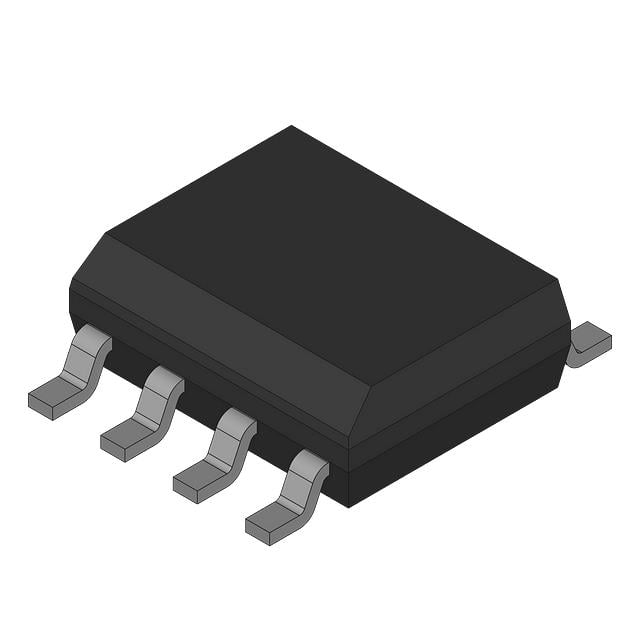
The Texas Instruments OPA130UA is a precision, low-noise operational amplifier designed for a wide range of applications, including instrumentation, data acquisition, and signal processing. It is part of the OPA series of operational amplifiers, known for their high performance and versatility. Below is a detailed overview of the OPA130UA, including its specifications, features, and typical applications.
## Overview
The OPA130UA is a single-supply, precision operational amplifier that offers low offset voltage, low bias current, and low noise characteristics. It is designed to operate with a wide supply voltage range, making it suitable for various applications in both industrial and consumer electronics. The device is available in a standard 8-pin SOIC package, which allows for easy integration into various circuit designs.
## Key Features
1. Precision Performance: The OPA130UA features a low input offset voltage (typically 50 µV) and low input bias current (typically 10 nA), ensuring accurate signal amplification with minimal error.
2. Wide Supply Voltage Range: The operational amplifier can operate with a supply voltage ranging from 2.5 V to 36 V, allowing for flexibility in design and compatibility with various power supply configurations.
3. Low Noise: The OPA130UA has a low noise density of 8 nV/√Hz at 1 kHz, making it suitable for applications where signal integrity is critical.
4. High Gain Bandwidth Product: The device features a gain bandwidth product of 1 MHz, enabling it to handle a wide range of frequencies while maintaining stable performance.
5. Rail-to-Rail Output: The OPA130UA provides rail-to-rail output swing, allowing the output voltage to reach close to the supply rails, which is beneficial in low-voltage applications.
6. Temperature Range: The operational amplifier is specified for operation over a temperature range of -40°C to +85°C, making it suitable for industrial and automotive applications.
7. Low Power Consumption: The OPA130UA consumes low quiescent current, which is advantageous for battery-powered and portable applications.
## Specifications
- Input Offset Voltage:
- Typical: 50 µV
- Maximum: 200 µV
- Input Bias Current:
- Typical: 10 nA
- Maximum: 100 nA
- Supply Voltage Range: 2.5 V to 36 V (single supply) or ±1.25 V to ±18 V (dual supply)
- Gain Bandwidth Product: 1 MHz
- Output Voltage Swing:
- Typical: 0 V to (V+ - 0.1 V) with a 10 kΩ load
- Typical: 0 V to (V- + 0.1 V) with a 10 kΩ load
- Common-Mode Rejection Ratio (CMRR): 100 dB
- Power Supply Rejection Ratio (PSRR): 100 dB
- Total Harmonic Distortion (THD): 0.0005% at 1 kHz
- Quiescent Current: 1.5 mA per amplifier
- Package Type: SOIC-8
- Operating Temperature Range: -40°C to +85°C
## Applications
The OPA130UA is suitable for a variety of applications, including:
- Instrumentation amplifiers
- Data acquisition systems
- Active filters
- Signal conditioning circuits
- Medical instrumentation
- Audio processing
- Transducer interfacing
## Conclusion
The Texas Instruments OPA130UA operational amplifier is a high-performance, precision device that offers a combination of low noise, low offset voltage, and wide supply voltage range. Its versatility and reliability make it an excellent choice for a wide array of applications in both industrial and consumer electronics. With its robust specifications and features, the OPA130UA is well-suited for engineers and designers looking to implement high-quality signal amplification in their projects.