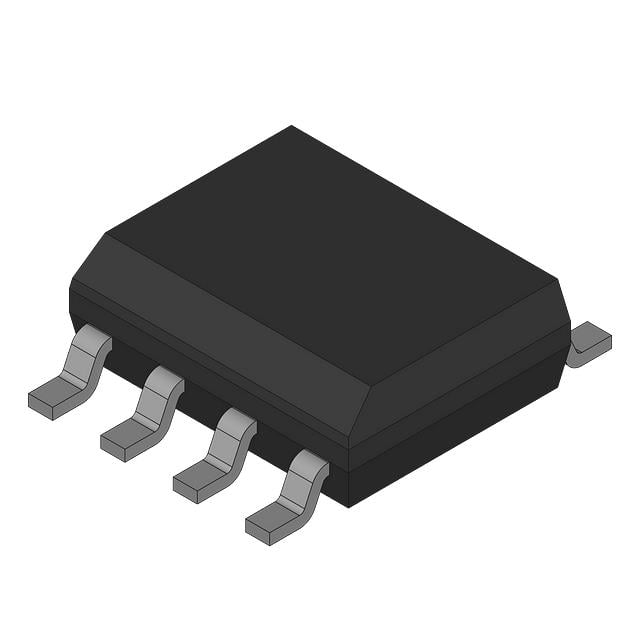
Introduction to Texas Instruments OPA129UB
The Texas Instruments OPA129UB is a precision operational amplifier designed for high-performance applications requiring low noise, low distortion, and high accuracy. It is particularly well-suited for use in instrumentation, data acquisition systems, and audio applications where signal integrity is paramount. The OPA129UB combines excellent DC performance with a wide bandwidth, making it an ideal choice for demanding applications.
Key Specifications
1. General Characteristics:
- Type: Precision Operational Amplifier
- Package Type: SOIC-8 (Small Outline Integrated Circuit)
- Pin Count: 8 pins
2. Electrical Characteristics:
- Supply Voltage (V+): +4.5 V to +36 V
- Supply Voltage (V-): -4.5 V to -36 V (can operate with dual or single supply configurations)
- Input Voltage Range: Common-mode input voltage range extends from V- to V+.
- Input Bias Current: Typically 10 nA, which minimizes loading effects on the signal source.
3. Performance Parameters:
- Gain Bandwidth Product (GBW): Typically 10 MHz at a gain of 1.
- Slew Rate: Approximately 13 V/µs, allowing for fast response to rapidly changing signals.
- Total Harmonic Distortion (THD): Less than 0.0005% at 1 kHz, ensuring high fidelity in audio applications.
4. Noise Performance:
- Voltage Noise Density: Approximately 0.9 nV/√Hz at a frequency of 1 kHz, making it suitable for low-noise applications.
- Current Noise Density: Approximately 0.1 pA/√Hz at a frequency of 1 kHz.
5. Thermal Characteristics:
- Operating Temperature Range:
- Commercial: 0°C to +70°C
- Industrial: -40°C to +125°C
- Thermal Resistance (θJA): Approximately 160°C/W for SOIC-8 package.
6. Additional Performance Metrics:
- Input Offset Voltage: Typically around 50 µV, providing high accuracy in precision applications.
- Common-Mode Rejection Ratio (CMRR): Greater than 120 dB at DC, indicating excellent rejection of common-mode signals.
- Power Supply Rejection Ratio (PSRR): Greater than 100 dB, ensuring stable performance across varying supply voltages.
7. Output Specifications:
- Output Voltage Swing: Typically within ±10 mV of the supply rails under specified load conditions.
- Output Drive Capability: Can drive capacitive loads up to several hundred pF without significant degradation in performance.
Applications
The OPA129UB is versatile and can be utilized across various applications due to its precision and performance characteristics:
- Instrumentation Amplifiers: Ideal for amplifying signals from sensors such as thermocouples and strain gauges in medical and industrial applications.
- Data Acquisition Systems: Suitable for use in data converters where accuracy and speed are essential.
- Audio Processing Equipment: Its low distortion and noise characteristics make it perfect for professional audio equipment and consumer electronics.
- Active Filters: Can be used in designing active filter circuits that require precise signal conditioning.
Development Support
Texas Instruments provides comprehensive support resources for the OPA129UB:
- Datasheets and Application Notes: Detailed documentation outlining electrical characteristics, application circuits, and design guidelines are readily available.
- Evaluation Modules: Evaluation boards are available to facilitate rapid prototyping and testing of the operational amplifier's capabilities in real-world scenarios.
- Design Tools: Online calculators and simulation models assist engineers in optimizing their designs using the OPA129UB.
Conclusion
The Texas Instruments OPA129UB operational amplifier stands out as an excellent choice for designers seeking a reliable, high-performance solution for precision amplification tasks across various industries. With its combination of low noise, high fidelity, flexible gain options, and robust performance metrics, it serves as a valuable component in electronic designs where accuracy is critical. The extensive support provided by Texas Instruments further enhances its appeal, enabling engineers to efficiently integrate this op-amp into their projects while ensuring optimal performance in real-world conditions.