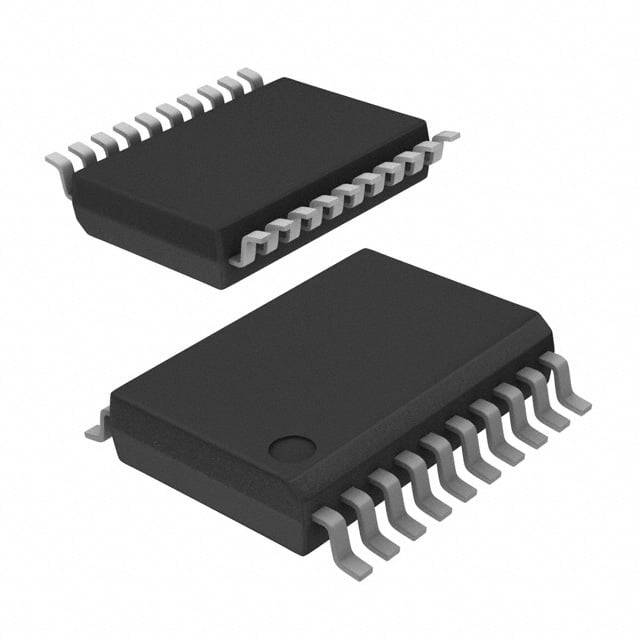
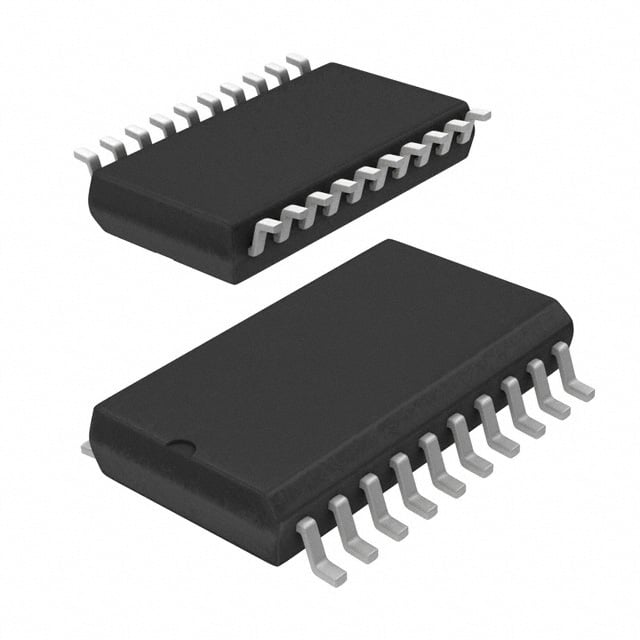
Q1: What is the Microchip Technology MT8870DSR1?
A1: The Microchip Technology MT8870DSR1 is a Dual Tone Multi-Frequency (DTMF) receiver designed to decode DTMF signals, typically used in telecommunications and control systems.
Q2: What is the operating voltage range of the Microchip Technology MT8870DSR1?
A2: The Microchip Technology MT8870DSR1 operates with a supply voltage range of 3V to 5.5V, making it compatible with both low and high voltage logic systems.
Q3: What is the maximum number of DTMF digits the MT8870DSR1 can decode?
A3: The Microchip Technology MT8870DSR1 is capable of decoding up to 16 DTMF digits, which is sufficient for most telecommunication and control applications.
Q4: What is the power consumption of the Microchip Technology MT8870DSR1?
A4: The typical power consumption of the MT8870DSR1 is low, designed to ensure energy efficiency in various embedded and telecommunication applications.
Q5: Does the Microchip Technology MT8870DSR1 require an external clock signal?
A5: No, the Microchip Technology MT8870DSR1 includes an internal oscillator, eliminating the need for an external clock to operate.
Q6: What applications is the Microchip Technology MT8870DSR1 commonly used in?
A6: The MT8870DSR1 is commonly used in telecommunication systems, such as touch-tone phones, and in control systems for DTMF signal decoding and processing.
Q7: How does the MT8870DSR1 interface with a microcontroller or microprocessor?
A7: The MT8870DSR1 interfaces with a microcontroller via its output pins, which send the decoded DTMF digits and status signals for processing and further action.
Q8: What is the output format of the MT8870DSR1 when decoding DTMF signals?
A8: The output of the MT8870DSR1 is a 4-bit binary code representing the decoded DTMF digits, which can be read by a microcontroller.
Q9: Can the Microchip Technology MT8870DSR1 be used in consumer electronics?
A9: Yes, the MT8870DSR1 can be used in consumer electronics, such as home automation systems, where DTMF signaling is used for remote control or communication.
Q10: What DTMF frequencies can the MT8870DSR1 decode?
A10: The MT8870DSR1 can decode DTMF signals with frequencies from 697 Hz to 1633 Hz, covering the standard DTMF tone frequency pairs.
Q11: What is the maximum operating temperature for the MT8870DSR1?
A11: The maximum operating temperature for the MT8870DSR1 is 85°C, making it suitable for use in typical consumer and industrial environments.
Q12: Does the MT8870DSR1 have built-in filtering for DTMF signal detection?
A12: Yes, the MT8870DSR1 includes built-in filtering to efficiently detect and decode DTMF signals while rejecting unwanted noise or non-DTMF tones.
Q13: How fast can the MT8870DSR1 decode DTMF signals?
A13: The MT8870DSR1 has a fast response time, typically decoding DTMF signals within 50ms, making it ideal for real-time processing.
Q14: Is the MT8870DSR1 suitable for use in wireless communication systems?
A14: Yes, the MT8870DSR1 is suitable for use in wireless communication systems that require the decoding of DTMF signals, such as in remote control systems and wireless data transmission.
Q15: How is the MT8870DSR1 initialized?
A15: The MT8870DSR1 is initialized by applying the supply voltage and configuring the control pins for normal operation, after which it begins decoding incoming DTMF signals.
Q16: What kind of outputs does the MT8870DSR1 provide?
A16: The MT8870DSR1 provides outputs for the decoded DTMF digits, status signals such as valid signal detection, and a ready signal indicating when a digit is ready for processing.
Q17: Can the MT8870DSR1 be used in medical or industrial equipment?
A17: Yes, the MT8870DSR1 can be used in medical and industrial equipment where DTMF signaling is used for control, monitoring, and data transmission purposes.
Q18: What is the role of the MT8870DSR1 in a telephone system?
A18: In a telephone system, the MT8870DSR1 decodes the DTMF signals generated when a user presses the keys on a touch-tone phone, allowing the system to process the input.
Q19: Does the MT8870DSR1 support both standard and extended DTMF frequencies?
A19: The MT8870DSR1 supports the standard DTMF frequencies as defined in the ITU-T recommendation, which includes 8 distinct tones for the standard telephone keypad.
Q20: How can the MT8870DSR1 be used in an embedded system?
A20: The MT8870DSR1 can be integrated into an embedded system where it is connected to a microcontroller or microprocessor to decode DTMF signals for user input or system control functions.