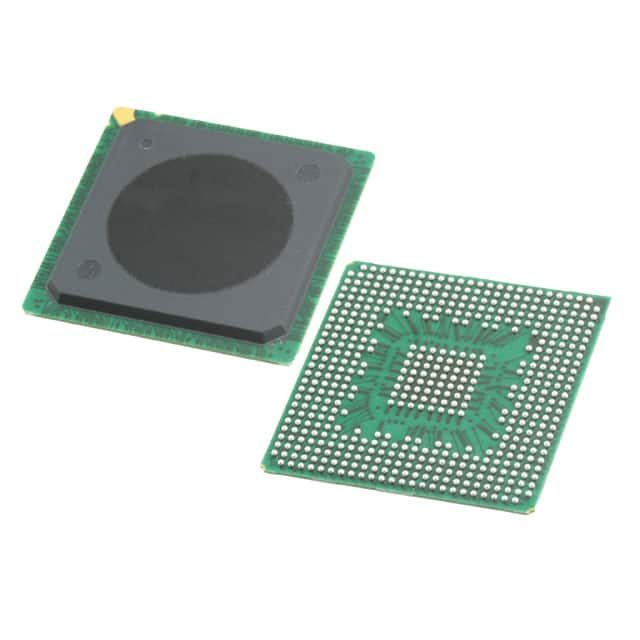
Q1: What is the NXP Semiconductors MPC8248VRPIEA?
A1: The NXP Semiconductors MPC8248VRPIEA is a PowerPC-based microprocessor designed for embedded systems, offering a balance of performance, power efficiency, and reliability in a variety of industrial and consumer applications.
Q2: What architecture does the NXP Semiconductors MPC8248VRPIEA use?
A2: The NXP Semiconductors MPC8248VRPIEA uses the PowerPC architecture, a RISC-based processor that is known for its high performance and efficiency in embedded systems.
Q3: What is the core frequency of the NXP Semiconductors MPC8248VRPIEA?
A3: The NXP Semiconductors MPC8248VRPIEA operates at a core frequency of up to 333 MHz, providing ample processing power for embedded applications.
Q4: What is the processing capability of the NXP Semiconductors MPC8248VRPIEA?
A4: The NXP Semiconductors MPC8248VRPIEA can handle complex tasks and manage multiple peripherals with its 32-bit data bus and powerful integer and floating-point processing capabilities.
Q5: What types of systems can use the NXP Semiconductors MPC8248VRPIEA?
A5: The NXP Semiconductors MPC8248VRPIEA is commonly used in applications like industrial control, networking, telecom, automotive, and embedded systems requiring reliable and high-performance processing.
Q6: How many external buses does the NXP Semiconductors MPC8248VRPIEA support?
A6: The NXP Semiconductors MPC8248VRPIEA supports multiple external buses, including a 32-bit local bus and an external memory interface, allowing flexibility in connecting various peripheral devices and memory systems.
Q7: What is the power consumption of the NXP Semiconductors MPC8248VRPIEA?
A7: The NXP Semiconductors MPC8248VRPIEA is designed to offer low power consumption, typically around 2.5W, making it suitable for energy-efficient embedded applications.
Q8: Does the NXP Semiconductors MPC8248VRPIEA have integrated memory controllers?
A8: Yes, the NXP Semiconductors MPC8248VRPIEA includes integrated memory controllers, supporting both DRAM and SRAM, which helps improve system performance and reduce overall design complexity.
Q9: What kind of communication interfaces are available on the NXP Semiconductors MPC8248VRPIEA?
A9: The NXP Semiconductors MPC8248VRPIEA features a range of communication interfaces, including Ethernet, I2C, and UART, making it suitable for various data transfer and communication tasks in embedded systems.
Q10: What is the package type for the NXP Semiconductors MPC8248VRPIEA?
A10: The NXP Semiconductors MPC8248VRPIEA is available in a 240-pin PPC package, which provides ample pins for connecting external components and ensuring flexibility in embedded designs.
Q11: Is the NXP Semiconductors MPC8248VRPIEA compatible with other PowerPC processors?
A11: Yes, the NXP Semiconductors MPC8248VRPIEA is compatible with other PowerPC-based processors, allowing easy integration in systems that use PowerPC architecture.
Q12: What is the clock speed of the NXP Semiconductors MPC8248VRPIEA?
A12: The NXP Semiconductors MPC8248VRPIEA can operate at clock speeds of up to 333 MHz, ensuring that it can handle demanding embedded applications efficiently.
Q13: What is the role of the NXP Semiconductors MPC8248VRPIEA in industrial applications?
A13: In industrial applications, the NXP Semiconductors MPC8248VRPIEA is used for automation, control systems, and process management, offering high reliability, flexibility, and processing power for complex industrial tasks.
Q14: Does the NXP Semiconductors MPC8248VRPIEA support hardware encryption?
A14: Yes, the NXP Semiconductors MPC8248VRPIEA includes hardware acceleration for cryptographic algorithms, providing improved security for embedded systems that require data protection.
Q15: What is the memory capacity supported by the NXP Semiconductors MPC8248VRPIEA?
A15: The NXP Semiconductors MPC8248VRPIEA supports up to 512MB of external memory, offering ample space for large data sets and complex program execution.
Q16: Does the NXP Semiconductors MPC8248VRPIEA support multimedia processing?
A16: While the NXP Semiconductors MPC8248VRPIEA is not specifically optimized for multimedia processing, it is capable of handling general multimedia tasks in embedded systems, such as video decoding and audio processing.
Q17: Is the NXP Semiconductors MPC8248VRPIEA suitable for automotive applications?
A17: Yes, the NXP Semiconductors MPC8248VRPIEA is suitable for automotive applications, including in-vehicle communication systems, navigation, and control, thanks to its reliability and performance in harsh environments.
Q18: How does the NXP Semiconductors MPC8248VRPIEA handle power management?
A18: The NXP Semiconductors MPC8248VRPIEA includes advanced power management features such as dynamic frequency scaling and low-power modes to reduce overall power consumption and extend system battery life.
Q19: Does the NXP Semiconductors MPC8248VRPIEA include error detection and correction features?
A19: Yes, the NXP Semiconductors MPC8248VRPIEA features built-in error detection and correction capabilities to enhance system reliability, particularly in mission-critical applications.
Q20: Can the NXP Semiconductors MPC8248VRPIEA be used in high-temperature environments?
A20: Yes, the NXP Semiconductors MPC8248VRPIEA is designed to operate in a wide temperature range, making it suitable for use in high-temperature environments such as industrial and automotive applications.