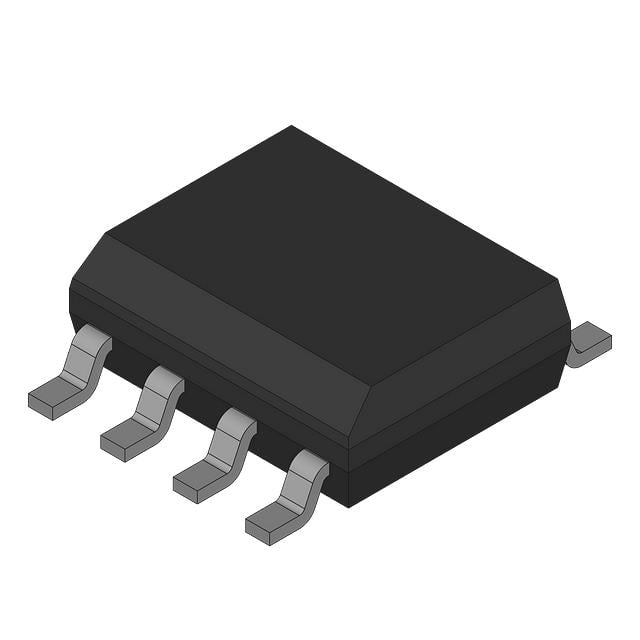
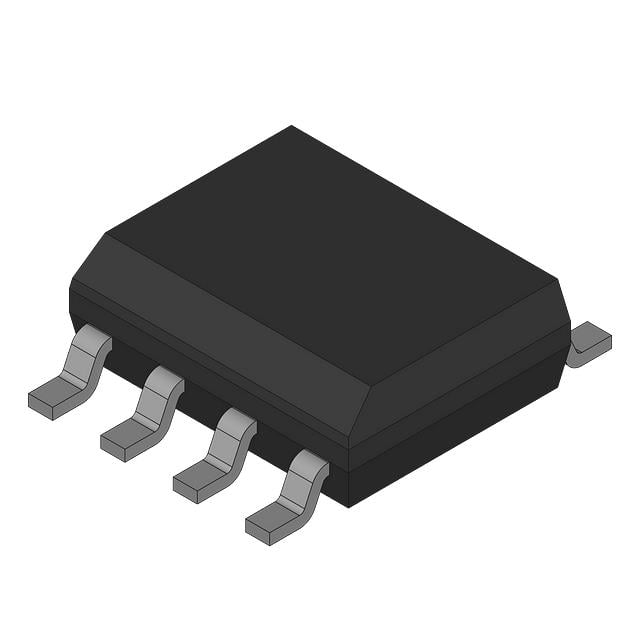
Q1: What is the Texas Instruments MC1558JGB?
A1: The Texas Instruments MC1558JGB is a dual operational amplifier (op-amp) designed for a wide range of analog applications, offering high-performance features such as low noise and low offset voltage.
Q2: How many op-amps does the MC1558JGB contain?
A2: The MC1558JGB contains two independent op-amps in a single package, making it ideal for space-constrained applications that require multiple op-amp channels.
Q3: What is the supply voltage range of the MC1558JGB?
A3: The MC1558JGB operates with a supply voltage range of ±3V to ±18V, providing flexibility for various power supply configurations in different circuits.
Q4: What is the input offset voltage of the MC1558JGB?
A4: The MC1558JGB features a low input offset voltage of typically 2mV, ensuring precise signal processing and minimizing errors in applications where accuracy is critical.
Q5: What is the gain-bandwidth product of the MC1558JGB?
A5: The MC1558JGB has a typical gain-bandwidth product of 1MHz, making it suitable for low-frequency applications where bandwidth and stability are essential.
Q6: What is the output voltage swing of the MC1558JGB?
A6: The MC1558JGB has a typical output voltage swing of ±12V, allowing it to drive external components and deliver signals that are within the required voltage range for most analog circuits.
Q7: What is the input bias current of the MC1558JGB?
A7: The MC1558JGB has a low input bias current of typically 100nA, which minimizes the impact of bias currents on circuit performance, especially in high-impedance applications.
Q8: What is the common-mode rejection ratio (CMRR) of the MC1558JGB?
A8: The MC1558JGB offers a typical common-mode rejection ratio (CMRR) of 100dB, ensuring excellent rejection of common-mode signals and enhancing the accuracy of differential measurements.
Q9: What is the output drive capability of the MC1558JGB?
A9: The MC1558JGB can drive up to 10mA of output current, making it suitable for driving small capacitive loads or interfacing with other low-power components.
Q10: What is the temperature range of the MC1558JGB?
A10: The MC1558JGB operates within an industrial temperature range of -40°C to +85°C, making it suitable for use in a variety of environments, including industrial and automotive applications.
Q11: What type of packaging is available for the MC1558JGB?
A11: The MC1558JGB is available in a 8-pin dual in-line package (DIP), which is widely used for through-hole mounting in both prototyping and production environments.
Q12: Does the MC1558JGB have any protection features?
A12: Yes, the MC1558JGB features internal protection circuitry, including short-circuit protection and thermal shutdown, ensuring safe operation under a variety of conditions.
Q13: Is the MC1558JGB suitable for audio applications?
A13: Yes, the MC1558JGB is suitable for audio applications due to its low noise, low distortion, and high fidelity, making it ideal for use in audio amplifiers, mixers, and other audio signal processing circuits.
Q14: How does the MC1558JGB perform in terms of noise?
A14: The MC1558JGB features low noise characteristics, with a typical noise density of 1.2nV/√Hz at 1kHz, ensuring minimal signal distortion in precision analog circuits.
Q15: What are the typical applications for the MC1558JGB?
A15: The MC1558JGB is commonly used in applications such as signal amplification, active filters, audio processing, sensor interfacing, and instrumentation.
Q16: What is the slew rate of the MC1558JGB?
A16: The MC1558JGB has a typical slew rate of 0.3V/µs, which is suitable for low-speed signal processing and general-purpose analog tasks.
Q17: What is the input voltage range for the MC1558JGB?
A17: The MC1558JGB supports a wide input voltage range, typically from -Vcc to +Vcc, allowing for greater flexibility in handling various input signal levels.
Q18: Can the MC1558JGB be used in automotive electronics?
A18: Yes, the MC1558JGB is well-suited for automotive applications due to its wide operating temperature range, low noise, and reliable performance under varying voltage conditions.
Q19: How does the MC1558JGB compare to other op-amps in its class?
A19: The MC1558JGB stands out for its low offset voltage, high CMRR, and wide voltage range, making it an excellent choice for general-purpose applications that require precision and stability.
Q20: Can the MC1558JGB be used in precision measurement circuits?
A20: Yes, the MC1558JGB is ideal for precision measurement circuits due to its low input offset voltage, low bias current, and high CMRR, ensuring accurate and reliable signal processing in sensitive applications.