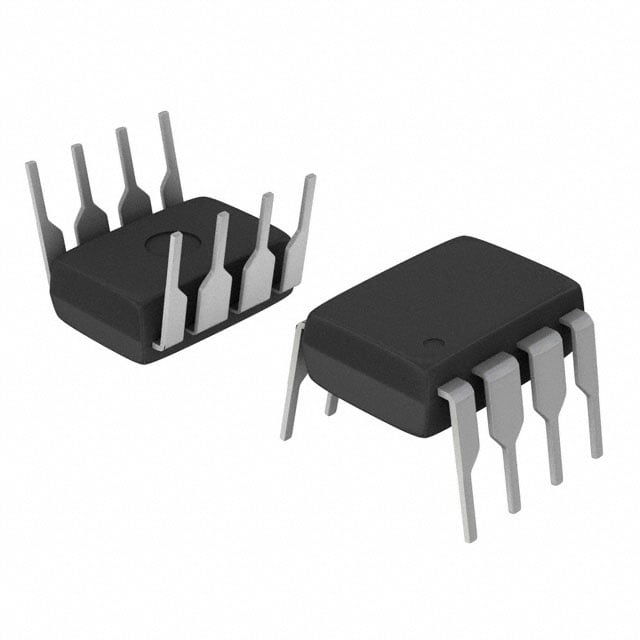
Q1: What type of device is the Maxim Integrated MAX1701EEE?
A: The MAX1701EEE is a precision voltage regulator and controller designed for efficient power management in low-voltage applications.
Q2: What is the primary function of the MAX1701EEE?
A: Its main function is to regulate and stabilize voltage supply to sensitive electronic components, ensuring consistent performance across varying loads.
Q3: What voltage range does the MAX1701EEE support?
A: The device operates efficiently over an input voltage range of 2.7 V to 5.5 V, suitable for battery-powered and portable devices.
Q4: What is the output voltage capability of the MAX1701EEE?
A: The MAX1701EEE can deliver a fixed regulated output voltage typically around 3.3 V, providing reliable power to digital circuits and analog components.
Q5: What are the typical applications for the MAX1701EEE?
A: It is commonly used in microcontroller systems, portable electronics, sensors, and low-power communication devices requiring stable voltage supply.
Q6: What type of regulation does the MAX1701EEE provide?
A: The MAX1701EEE provides linear regulation with low dropout voltage, ensuring minimal power loss and efficient operation under light and moderate load conditions.
Q7: How does the MAX1701EEE handle load variations?
A: It maintains tight voltage regulation and low output ripple under dynamic load changes, supporting reliable operation in fluctuating current conditions.
Q8: What is the dropout voltage of the MAX1701EEE?
A: The dropout voltage is typically low, around 200 mV at nominal load, which allows operation close to the input supply voltage for efficient energy use.
Q9: What is the maximum output current of the MAX1701EEE?
A: The device can source output currents up to 100 mA, making it suitable for powering low-to-moderate current digital and analog devices.
Q10: How does the MAX1701EEE support noise-sensitive applications?
A: It features low output voltage ripple and high power-supply rejection, ensuring stable operation for sensitive analog-to-digital conversion and RF circuits.
Q11: Can the MAX1701EEE be used in battery-powered systems?
A: Yes, its low quiescent current and efficient regulation make it ideal for extending battery life in portable devices.
Q12: What package does the MAX1701EEE come in?
A: The MAX1701EEE is available in an 8-pin SOIC package, providing compact integration for space-constrained applications.
Q13: How does the MAX1701EEE perform under thermal stress?
A: It features internal thermal protection, shutting down safely under over-temperature conditions to prevent damage to the device and surrounding circuitry.
Q14: Can the MAX1701EEE be paralleled for higher currents?
A: While primarily designed for single-channel operation, careful parallel design can allow multiple MAX1701EEE devices to share load current with proper current balancing.
Q15: How accurate is the voltage regulation of the MAX1701EEE?
A: The device provides high-precision output voltage with typical accuracy of ±2%, suitable for sensitive analog and digital circuitry.
Q16: Does the MAX1701EEE include protection features?
A: Yes, it incorporates overcurrent protection and thermal shutdown, enhancing system reliability in case of abnormal operating conditions.
Q17: How does the MAX1701EEE compare to switching regulators?
A: While not as efficient at high currents, the MAX1701EEE provides extremely low noise and simple linear regulation, making it preferable for noise-sensitive circuits.
Q18: What is the typical quiescent current of the MAX1701EEE?
A: The device draws a low quiescent current of approximately 55 µA, minimizing power consumption in battery-operated systems.
Q19: How is the MAX1701EEE configured for output voltage?
A: The device provides a fixed output voltage without the need for external resistor programming, simplifying circuit design.
Q20: Why choose the Maxim Integrated MAX1701EEE for precision voltage regulation?
A: The MAX1701EEE combines low dropout linear regulation, high accuracy, low noise, thermal and overcurrent protection, and compact packaging, making it ideal for portable, battery-powered, and noise-sensitive electronic systems.