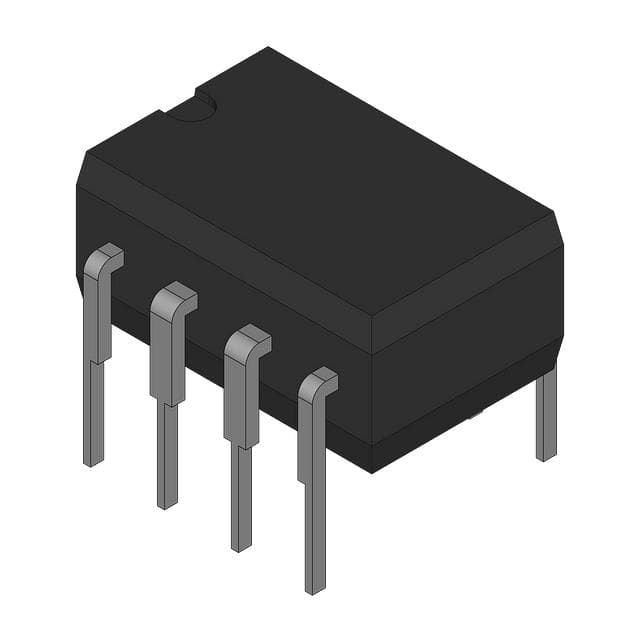
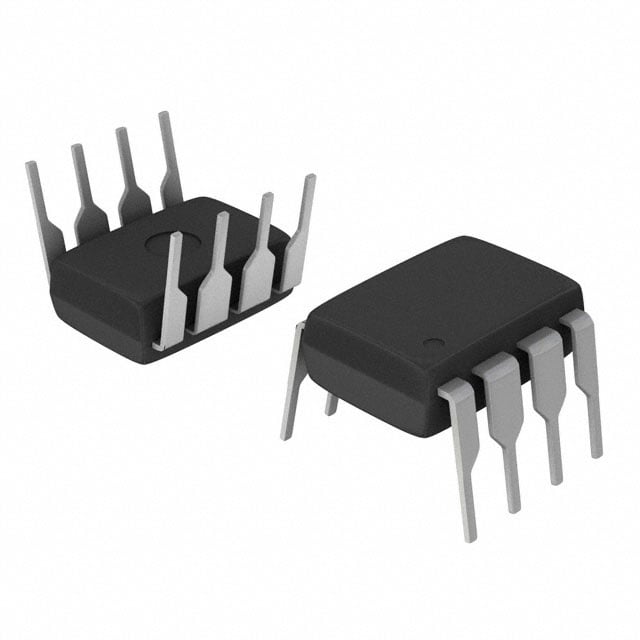
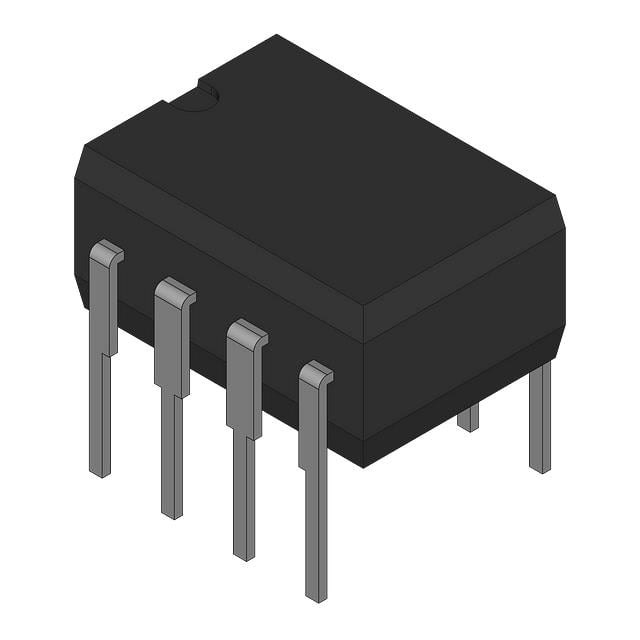
The Harris Corporation LM358N is a popular dual operational amplifier (op-amp) used in a wide range of electronic circuits. It is designed to perform as a general-purpose op-amp with high versatility and reliability. The LM358N is known for its low power consumption, wide operating voltage range, and ability to function in both single-supply and dual-supply configurations, making it a staple in both consumer electronics and industrial applications. Below is a detailed introduction to the LM358N, its specifications, and key features.
## General Overview:
The LM358N is a dual operational amplifier integrated circuit that contains two independent op-amps capable of providing amplification in both analog and digital signal processing. It is widely used in analog circuits such as signal amplification, filtering, and conditioning, as well as in applications requiring precise voltage gain, such as active filters, oscillators, and voltage followers.
## Key Features:
1. Dual Op-Amp Configuration: The LM358N integrates two op-amps in a single package, making it a space-efficient solution for designs that require multiple amplifiers.
2. Wide Power Supply Range: The LM358N can operate with a single power supply or dual supply. It has a wide voltage range, allowing it to function with supply voltages from 3V to 32V (single supply) or ±1.5V to ±16V (dual supply), which provides flexibility for different circuit designs.
3. Low Power Consumption: The op-amp operates with low power consumption, which makes it suitable for battery-powered applications. It is ideal for low-power circuits where power efficiency is crucial.
4. Rail-to-Rail Output: One of the standout features of the LM358N is its ability to drive its output voltage close to the supply rails, making it highly efficient in applications that require a wide output swing.
5. Low Input Offset Voltage: The LM358N has a low input offset voltage, which reduces error in amplification and improves accuracy, making it suitable for precision applications.
6. Internal Compensation: The LM358N comes with internal frequency compensation, eliminating the need for external components, which simplifies the design process and reduces component count.
7. Low Total Harmonic Distortion: The op-amp offers low total harmonic distortion (THD), which ensures the integrity of the input signal is maintained in high-fidelity applications.
8. Wide Temperature Range: The LM358N can operate across a broad temperature range, from 0°C to +70°C, making it suitable for standard commercial applications.
## Specifications:
Here are the detailed specifications for the Harris Corporation LM358N:
* Op-Amp Type: Dual operational amplifier
* Supply Voltage (V+ - V-):
* Single Supply: 3V to 32V
* Dual Supply: ±1.5V to ±16V
* Output Voltage Swing: Rail-to-rail output capability, typically 0V to V+ - 1.5V with a 10kΩ load
* Input Voltage Range: The input voltage range typically covers the full supply voltage, allowing for operation close to the rails.
* Input Offset Voltage: 3mV (typical)
* Input Bias Current: 100nA (typical)
* Output Current: 20mA (typical)
* Power Supply Current: 500µA per amplifier (typical)
* Open-Loop Gain: 100,000 (typical at 1kHz)
* Slew Rate: 0.3V/µs (typical)
* Gain Bandwidth Product: 1MHz (typical)
* Common-Mode Rejection Ratio (CMRR): 70dB (typical)
* Power Supply Rejection Ratio (PSRR): 70dB (typical)
* Input Impedance: 2MΩ (typical)
* Output Impedance: 100Ω (typical)
* Package Type: Dual in-line package (DIP-8), also available in SOIC-8 and other surface-mount packages
* Operating Temperature Range: 0°C to +70°C
* Storage Temperature Range: -65°C to +150°C
* Total Harmonic Distortion (THD): 0.1% (typical at 1kHz)
## Applications:
The LM358N is widely used in various analog and digital circuits across industries. Some of the typical applications include:
1. Signal Amplification: Used in amplifiers for audio, video, and RF signals where accurate, low-noise amplification is needed.
2. Active Filters: The dual op-amp configuration makes the LM358N ideal for creating active filter circuits for signal conditioning in audio or instrumentation systems.
3. Voltage Followers: Its ability to drive rail-to-rail output makes it a good choice for voltage follower circuits where impedance buffering is needed without significant loss of signal quality.
4. Oscillators: The low power consumption and stability of the LM358N make it suitable for designing oscillators for clocks, tone generators, and other timing applications.
5. Voltage Comparators: The op-amps in the LM358N can be used as comparators in systems requiring signal comparison or level detection.
6. Instrumentation Circuits: Used in measurement and control systems, where precise voltage levels need to be monitored or controlled.
7. Audio Circuits: Often found in audio preamplifiers, mixing consoles, and other audio equipment due to its low noise and distortion characteristics.
8. Switching Regulators: In power supply designs, the LM358N is used in the feedback loop of switching regulators to ensure stable operation and accurate voltage regulation.
## Protection Features:
The LM358N does not have built-in protection features such as thermal shutdown or short-circuit protection, so designers need to account for proper current limiting and heat dissipation in their applications. However, the low power consumption and wide voltage range make the LM358N less prone to excessive heat under normal conditions.
## Conclusion:
The Harris Corporation LM358N is a versatile and reliable dual operational amplifier with wide applications in both analog and digital systems. Its low power consumption, ability to operate with single or dual supplies, low offset voltage, and rail-to-rail output capability make it an excellent choice for a variety of signal amplification tasks. Whether used in audio systems, instrumentation, power supplies, or active filters, the LM358N provides a solid foundation for designing high-performance, efficient electronic circuits.