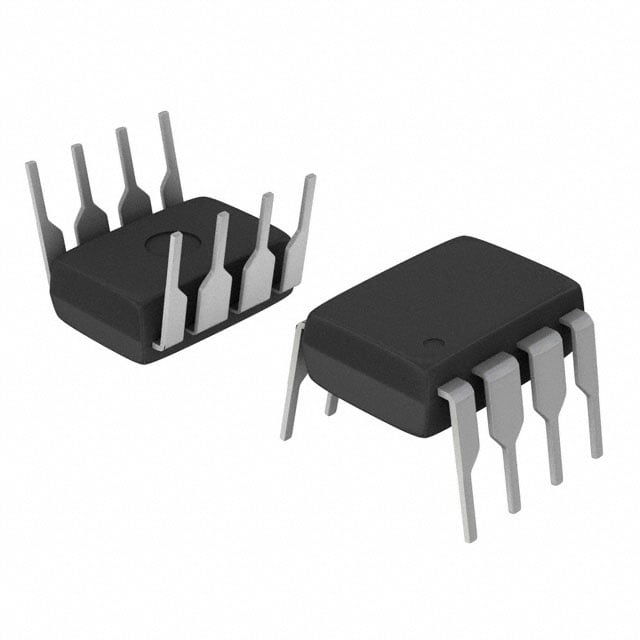
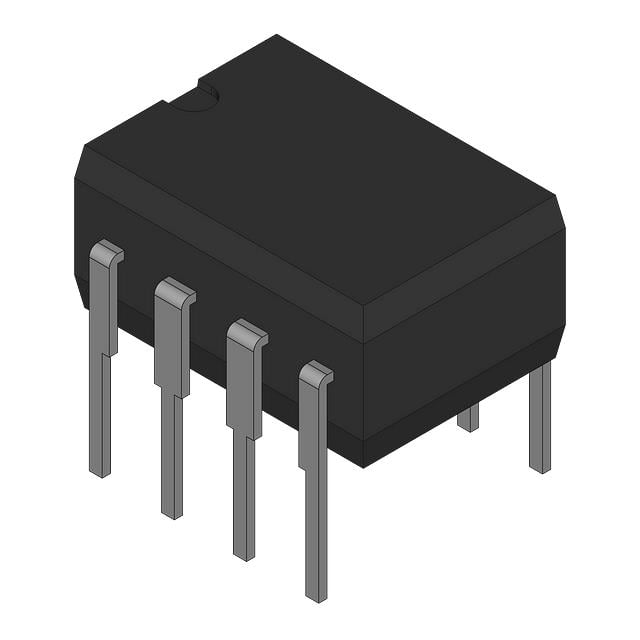
Q1: What is the Texas Instruments LM358DR?
A1: The Texas Instruments LM358DR is a dual operational amplifier IC, designed for use in general-purpose signal conditioning and amplification in analog circuits.
Q2: What is the supply voltage range for the LM358DR?
A2: The LM358DR operates within a supply voltage range of 3V to 32V (single supply) or ±1.5V to ±16V (dual supply), making it versatile for a variety of applications.
Q3: What are the key features of the LM358DR?
A3: The LM358DR features two independent op-amps, low power consumption, and a wide input voltage range. It is commonly used in applications requiring voltage amplification or signal conditioning.
Q4: What is the maximum output voltage swing of the LM358DR?
A4: The LM358DR can typically drive its output to within 1.5V of the supply rails under typical load conditions, making it suitable for low-voltage, single-supply systems.
Q5: What is the typical power consumption of the LM358DR?
A5: The LM358DR is designed for low power consumption, typically consuming 500µA per amplifier at a 5V supply, which makes it ideal for battery-powered applications.
Q6: What is the input offset voltage of the LM358DR?
A6: The LM358DR has a typical input offset voltage of 2mV, which is suitable for general-purpose applications where precise voltage comparison or amplification is needed.
Q7: What type of applications can the LM358DR be used in?
A7: The LM358DR is commonly used in audio amplification, active filters, voltage followers, signal conditioning, and other analog signal processing applications.
Q8: Does the LM358DR feature built-in short-circuit protection?
A8: Yes, the LM358DR is designed with internal short-circuit protection, which helps prevent damage to the IC in case of output overload or short circuits.
Q9: What is the maximum output current for the LM358DR?
A9: The LM358DR can provide a typical output current of up to 20mA, depending on the load, making it suitable for driving moderate loads.
Q10: What is the package type for the LM358DR?
A10: The LM358DR is available in an 8-pin SOIC (Small Outline Integrated Circuit) package, which is ideal for compact, surface-mount designs.
Q11: Can the LM358DR operate with a single supply?
A11: Yes, the LM358DR can operate with a single supply voltage, which simplifies circuit design by reducing the need for dual power supplies.
Q12: What is the common-mode input voltage range for the LM358DR?
A12: The LM358DR can handle input voltages that range from 0V to Vcc - 2V, making it suitable for low-voltage applications and interfacing with a wide range of input signals.
Q13: Does the LM358DR have internal filtering or noise rejection?
A13: The LM358DR does not feature internal noise filtering, but it has a low noise design, making it suitable for many precision analog applications with proper external filtering.
Q14: How does the LM358DR perform in temperature-sensitive applications?
A14: The LM358DR operates within a temperature range of -40°C to +85°C, making it suitable for most commercial and industrial applications, though it may require additional considerations for extreme temperature environments.
Q15: Can the LM358DR be used for precision instrumentation applications?
A15: Yes, the LM358DR is suitable for precision instrumentation applications, but for more demanding precision requirements, external components may be used to minimize offset voltage and drift.
Q16: What are the advantages of using the LM358DR in embedded systems?
A16: The LM358DR offers low power consumption, versatility in single-supply applications, and reliable performance, making it an excellent choice for embedded systems in sensors, signal conditioning, and data acquisition.
Q17: How does the LM358DR compare to other op-amps in terms of speed?
A17: The LM358DR has a typical slew rate of 0.3V/µs, which is suitable for many low- to medium-speed applications but may not be ideal for very high-speed or fast signal processing tasks.
Q18: What type of output impedance does the LM358DR have?
A18: The LM358DR has a relatively low output impedance, typically 50Ω to 100Ω, making it suitable for driving moderate loads directly or with minimal buffering.
Q19: Can the LM358DR be used for filtering applications?
A19: Yes, the LM358DR is commonly used in active filters due to its ability to amplify signals and operate in various configurations, such as low-pass, high-pass, and band-pass filters.
Q20: Does the LM358DR require any external components for stable operation?
A20: While the LM358DR is designed to operate with minimal external components, stability can be enhanced with the addition of compensation capacitors or resistors depending on the application, especially in high-gain or fast-switching circuits.