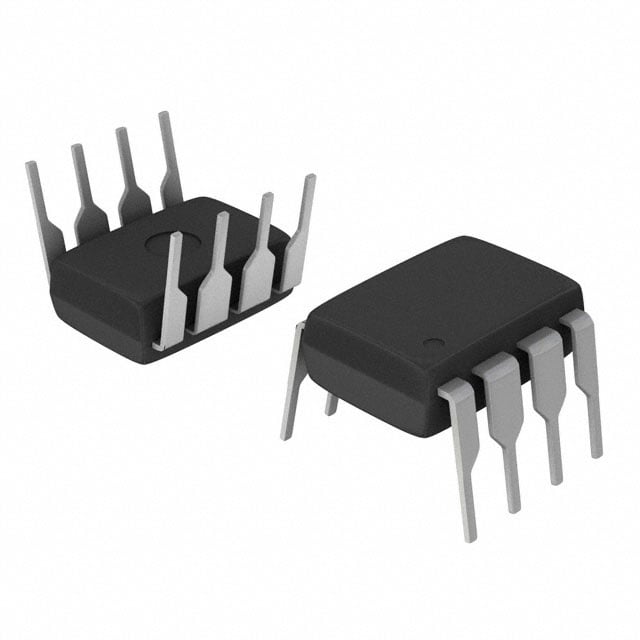
Q1: What is the STMicroelectronics LM358D?
A1: The STMicroelectronics LM358D is a dual operational amplifier (op-amp) designed for use in a wide range of analog applications, providing high performance and versatility.
Q2: How many amplifiers are in the LM358D package?
A2: The LM358D contains two independent, high-gain, internally frequency-compensated operational amplifiers.
Q3: What is the supply voltage range for the LM358D?
A3: The LM358D operates with a supply voltage range from 3V to 32V (single supply) or ±1.5V to ±16V (dual supply).
Q4: What is the maximum output current of the LM358D?
A4: The LM358D can deliver a maximum output current of 40mA per channel, making it suitable for driving low-power loads.
Q5: What is the typical input bias current of the LM358D?
A5: The typical input bias current of the LM358D is 250nA, which is relatively low and suitable for high-impedance signal sources.
Q6: What is the typical gain-bandwidth product (GBWP) of the LM358D?
A6: The LM358D has a typical gain-bandwidth product of 1MHz, which provides sufficient performance for many general-purpose applications.
Q7: Can the LM358D be used for both inverting and non-inverting configurations?
A7: Yes, the LM358D can be configured for both inverting and non-inverting applications, depending on the external circuit design.
Q8: What is the common-mode rejection ratio (CMRR) of the LM358D?
A8: The LM358D typically has a common-mode rejection ratio (CMRR) of 70dB at 1kHz, which ensures good rejection of common-mode noise.
Q9: Does the LM358D feature rail-to-rail output?
A9: No, the LM358D does not feature rail-to-rail output. The output voltage swing is typically from 0V to (Vcc - 2V) for a single supply.
Q10: What is the total harmonic distortion (THD) of the LM358D?
A10: The LM358D has a low total harmonic distortion (THD), typically less than 0.01%, ensuring high-quality amplification of audio and other analog signals.
Q11: Is the LM358D suitable for audio applications?
A11: Yes, the LM358D is often used in audio amplification circuits due to its low distortion and good overall performance.
Q12: What is the input offset voltage of the LM358D?
A12: The input offset voltage of the LM358D is typically 2mV, which can be adjusted with external components in precision applications.
Q13: What is the power consumption of the LM358D?
A13: The LM358D has a low power consumption, making it suitable for battery-operated devices and other low-power applications.
Q14: Can the LM358D be used in automotive circuits?
A14: Yes, the LM358D can be used in automotive circuits that require low power consumption and stable performance over a wide temperature range.
Q15: What is the temperature range for the LM358D?
A15: The LM358D operates within a temperature range of -40°C to +85°C, making it suitable for most industrial and commercial applications.
Q16: Is the LM358D available in both through-hole and surface-mount packages?
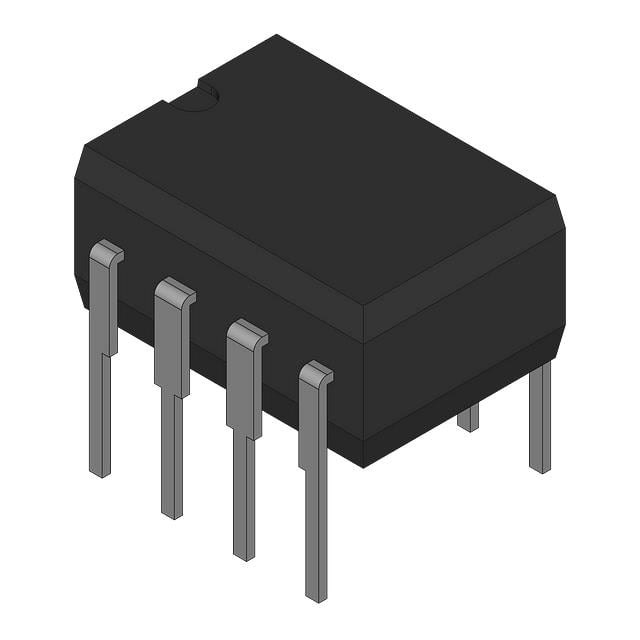
A16: Yes, the LM358D is available in both through-hole (DIP) and surface-mount (SOIC) packages, offering flexibility in circuit board design.
Q17: Can the LM358D be used in power supply regulation circuits?
A17: Yes, the LM358D can be used in low-power power supply regulation circuits, particularly for low-voltage, low-current applications.
Q18: Does the LM358D have short-circuit protection?
A18: Yes, the LM358D has built-in short-circuit protection, helping to protect the device from damage due to output shorts.
Q19: What is the input voltage range of the LM358D?
A19: The LM358D can handle input voltages that are within the supply voltage range, with typical operation between 0V and Vcc-2V.
Q20: Is the LM358D suitable for sensor signal conditioning?
A20: Yes, the LM358D is commonly used for sensor signal conditioning applications due to its low offset voltage, low input bias current, and overall reliability.