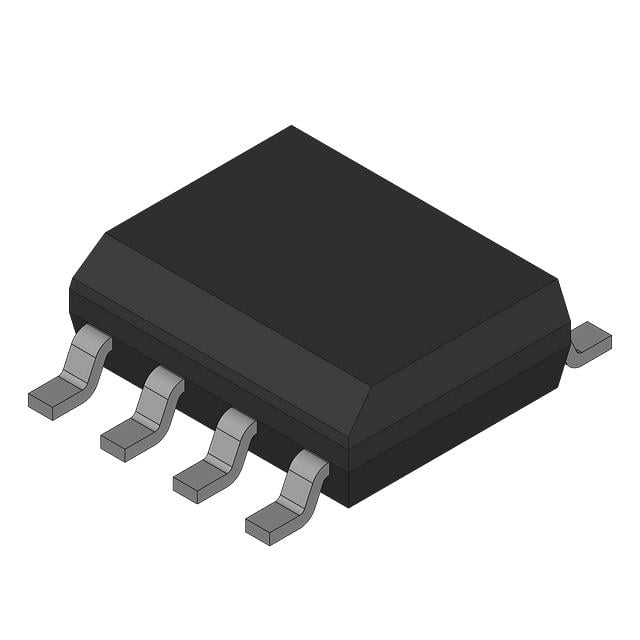
Texas Instruments LM2903BIDR Overview
The LM2903BIDR is a dual operational amplifier (op-amp) from Texas Instruments, designed for general-purpose applications. It features a high-gain, low-power design, making it suitable for a wide range of analog signal processing tasks, including audio, control systems, instrumentation, and many other analog applications. With an industry-standard dual op-amp configuration, the LM2903BIDR provides a cost-effective solution for systems requiring high precision and low power consumption.
## Key Specifications
* Device Type: Dual operational amplifier
* Package Type: SOIC-8 (Small Outline Integrated Circuit)
* Supply Voltage: 2V to 36V (single supply), ±1V to ±18V (dual supply)
* Input Voltage Range: 0V to Vcc - 2V (typical)
* Output Voltage Swing: Vcc - 1.5V (min) for a logic high output, 0.5V (max) for a logic low output
* Operating Temperature Range: -40°C to +125°C
* Power Consumption: Low power consumption (typical 500µA per amplifier)
* Gain-Bandwidth Product: 1 MHz (typical)
* Slew Rate: 0.3V/µs (typical)
* Input Offset Voltage: 2mV (max)
* Input Bias Current: 1nA (max)
* Total Harmonic Distortion (THD): 0.02% (typical)
## Performance Features
* Low Power Consumption: The LM2903BIDR is designed to operate with minimal current draw, making it ideal for battery-operated and portable devices. The typical quiescent current is 500µA per amplifier, ensuring energy efficiency in applications that require long operating hours without frequent battery replacements or excessive heat generation.
* Dual Amplifier Configuration: This op-amp features a dual amplifier configuration in a single package, reducing the overall component count in multi-stage amplifier circuits. This is especially useful in systems that require multiple amplifiers for signal conditioning, filtering, or amplification.
* Wide Supply Voltage Range: The LM2903BIDR can operate with both single and dual supply voltages, offering flexibility in system design. It operates from 2V to 36V for a single supply or ±1V to ±18V for dual supplies, making it adaptable to a broad range of power configurations.
* Low Input Offset Voltage: With a maximum input offset voltage of 2mV, the LM2903BIDR ensures minimal drift in the output signal, leading to more accurate and stable performance, particularly in precision applications.
* Output Voltage Swing: The op-amp provides a high output voltage swing with the ability to drive the output to within 1.5V of the supply voltage (for a logic high output) and as low as 0.5V (for a logic low output). This ensures that the amplifier can provide usable output voltage across the majority of the input signal range.
* High Common-Mode Rejection Ratio (CMRR): The LM2903BIDR offers a high CMRR, meaning that the device can reject common-mode signals effectively, ensuring that only the differential input signals are amplified. This feature is essential in noisy environments where the input signal may be contaminated by unwanted noise.
## Applications
* Signal Conditioning: The LM2903BIDR is commonly used in analog signal conditioning circuits, where it amplifies or filters low-level signals from sensors or other analog sources to make them suitable for further processing or digitization.
* Audio Amplifiers: Due to its low power consumption and low distortion characteristics, the LM2903BIDR is suitable for use in audio amplifier circuits, including preamplifiers and tone controls in consumer electronics, automotive audio systems, and portable audio devices.
* Precision Measurement: In instrumentation and precision measurement applications, the LM2903BIDR is used for accurate amplification of signals where high gain and low offset voltage are critical.
* Comparators: The LM2903BIDR can be used as a comparator in systems that require fast decision-making based on an analog threshold. For example, it is used in voltage threshold detection circuits, overcurrent protection systems, and switching power supplies.
* Control Systems: The low power and high precision of the LM2903BIDR make it suitable for control system applications, such as in motor control, feedback loops, and regulation systems where precise analog control is required.
## Electrical Characteristics
* Input Characteristics:
* Input Offset Voltage: 2mV (max)
* Input Bias Current: 1nA (max)
* Input Impedance: 2MΩ (typical)
* Common-Mode Input Voltage Range: 0V to Vcc - 2V (min)
* Output Characteristics:
* Output Voltage Swing: 0.5V (max) for logic low, Vcc - 1.5V (min) for logic high
* Output Current Drive: 10mA (source), 20mA (sink)
* Slew Rate: 0.3V/µs (typical), ensuring that the op-amp can quickly track changes in the input signal and handle high-frequency signals without significant distortion.
* Power Supply:
* Operating Voltage Range: 2V to 36V (single supply), ±1V to ±18V (dual supply)
* Quiescent Current: 500µA (typical), ensuring efficient power usage in battery-operated or low-power systems.
## Package and Pin Configuration
* Package Type: SOIC-8 (Small Outline Integrated Circuit)
* Pin Configuration:
* Pin 1: Offset Null (for external offset voltage adjustment)
* Pin 2: Inverting Input (Op-Amp 1)
* Pin 3: Non-Inverting Input (Op-Amp 1)
* Pin 4: V− (Negative Power Supply)
* Pin 5: Offset Null (for external offset voltage adjustment)
* Pin 6: Non-Inverting Input (Op-Amp 2)
* Pin 7: Inverting Input (Op-Amp 2)
* Pin 8: V+ (Positive Power Supply)
## Key Advantages
* Low Power Consumption: The LM2903BIDR operates at a very low quiescent current (500µA), making it ideal for low-power applications where efficiency is essential, such as battery-operated systems and portable devices.
* Precision Performance: With a low input offset voltage and low input bias current, the LM2903BIDR provides accurate signal amplification, ensuring reliable performance in precision measurement systems.
* Dual Amplifier Configuration: The device integrates two op-amps into a single package, saving space and reducing component count in multi-stage amplification circuits.
* Wide Supply Voltage Range: The LM2903BIDR is versatile and can operate with both single and dual supply voltages, giving designers flexibility in their power supply choices.
* High Common-Mode Rejection Ratio (CMRR): The op-amp provides excellent rejection of common-mode signals, ensuring that the output is highly sensitive only to differential inputs.
## Thermal and Environmental Characteristics
* Operating Temperature Range: The LM2903BIDR operates within the temperature range of -40°C to +125°C, making it suitable for use in harsh environmental conditions, including industrial, automotive, and outdoor applications.
* Storage Temperature Range: -65°C to +150°C, ensuring that the device can withstand extreme temperature variations during storage, shipping, or operational use in extreme conditions.
## Summary
The LM2903BIDR from Texas Instruments is a versatile, low-power, dual operational amplifier designed for precision analog signal processing. With its low input offset voltage, low power consumption, and dual op-amp configuration, it is suitable for a wide range of applications, including signal conditioning, audio amplification, control systems, and instrumentation. Its wide supply voltage range and high CMRR make it adaptable for use in various electronic designs that require efficient and accurate signal amplification. The LM2903BIDR is a reliable, cost-effective solution for high-performance analog circuit designs.