Overview
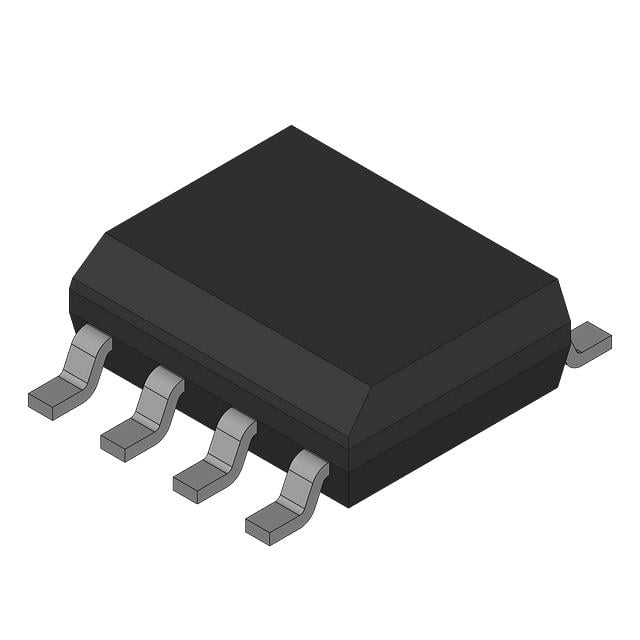
The Texas Instruments LM211MDREP is a high-performance voltage comparator designed for fast and accurate analog signal comparison in various electronic systems. It belongs to the LM211 family, well-known for its high speed, low input bias current, and wide supply voltage range. This device is commonly used in analog-to-digital converters, zero-crossing detectors, pulse-width modulation circuits, and threshold detection applications.
Key Features
* High-speed comparator with typical propagation delay of approximately 200 ns
* Wide operating voltage range: single supply from 4 V to 36 V or dual supplies ±2 V to ±18 V
* Low input bias current typically in the picoampere range, enhancing accuracy in high-impedance circuits
* Input offset voltage: typically 2 mV, allowing precise threshold detection
* Output type: Open-collector output suitable for wired-OR connections and level shifting
* Differential input voltage range includes ground, allowing input signals to swing to zero volts or below
* Low input offset current and offset voltage drift with temperature
* TTL and CMOS compatible output levels when used with appropriate pull-up resistor
* Internal frequency compensation, no external components required for stability
* Power dissipation typically low, supporting efficient system design
Electrical Specifications
* Supply Voltage (Vcc): 4 V to 36 V (single supply) or ±2 V to ±18 V (dual supply)
* Input Offset Voltage: Typical 2 mV, maximum 7 mV
* Input Bias Current: Typical 20 pA
* Input Offset Current: Typical 5 pA
* Input Voltage Range: ±30 V differential input voltage capability, common-mode voltage range includes ground
* Propagation Delay Time: Typical 200 ns at 15 V supply and 5 mV overdrive
* Output Saturation Voltage: Typically 0.25 V at 4 mA sink current
* Operating Temperature Range: 0°C to 70°C (commercial grade) for LM211M; industrial variants available separately
Functional Description
The LM211MDREP is a voltage comparator that compares two input voltages and switches its output state when the input voltage at the non-inverting terminal exceeds that of the inverting terminal. The open-collector output transistor allows wired-OR configurations and easy interface to different voltage levels using a pull-up resistor.
Its high speed is achieved through a sophisticated input stage that minimizes input capacitance and offset voltages. The device’s input stage is designed to accept signals down to ground, which is particularly useful in single-supply systems.
The device features internal frequency compensation, which ensures stable operation without the need for external components, simplifying the design process. Its low input bias and offset currents make it suitable for use with high-impedance sources.
Package and Mechanical Details
* Package Type: 8-pin MiniDIP (Dual In-line Package), designated by “MD” in the part number
* RoHS Compliant and lead-free options available
* Pin Configuration: Includes non-inverting input, inverting input, output, power supply pins, and offset null pins (for offset voltage adjustment)
* Typical Package Dimensions: 9.81 mm x 6.35 mm (standard DIP-8)
* Hermetic and plastic variants exist for different application needs
Applications
* Zero-crossing detectors in AC signal processing
* Pulse-width modulation (PWM) control circuits
* Voltage level detection and window comparators
* Analog-to-digital converters (ADC) as input signal conditioning
* Overvoltage and undervoltage protection circuits
* Oscillators and waveform generators
* High-speed logic decision circuits
Design and Usage Considerations
* The open-collector output requires an external pull-up resistor; selection of resistor value affects output rise time and power consumption
* To improve offset voltage accuracy, the device offers offset null pins, allowing external trimming with a potentiometer
* The comparator input stage can tolerate input voltages beyond the supply rails, providing robustness in noisy or unpredictable environments
* Proper bypassing and decoupling of power supply pins are critical to minimize noise and ensure stable operation at high speed
* The device’s input protection circuitry allows it to withstand high differential input voltages, which increases its applicability in harsh environments
* Careful PCB layout is recommended to minimize parasitic capacitances and inductances that may affect comparator speed and noise immunity
Summary
The Texas Instruments LM211MDREP is a versatile, high-speed voltage comparator ideal for a wide range of analog and mixed-signal applications. Its combination of fast response, wide supply voltage range, low input bias current, and flexible open-collector output makes it well suited for precision threshold detection, waveform shaping, and control circuitry. The package, electrical characteristics, and design flexibility support both commercial and industrial system requirements where reliable, accurate, and fast analog comparison is essential.