Q1: What is the STMicroelectronics L293D?
A1: The STMicroelectronics L293D is a quadruple high-current half-H driver designed for driving motors, specifically DC motors, stepper motors, and other inductive loads. It is an integrated circuit that allows control of the direction and speed of the motors.
Q2: What is the main function of the L293D?
A2: The main function of the L293D is to drive motors in both directions, enabling control over the movement of DC motors and stepper motors. It is often used in robotics, motor control applications, and other systems requiring motor direction and speed regulation.
Q3: How many motors can the L293D drive simultaneously?
A3: The L293D can drive up to two DC motors or a stepper motor simultaneously, each with independent control for forward or reverse operation.
Q4: What voltage range does the L293D support?
A4: The L293D operates with a motor supply voltage (V\_s) ranging from 4.5V to 36V, and the logic voltage (V\_s) ranges from 4.5V to 7V, making it versatile for a variety of motor control applications.
Q5: How does the L293D control the motor direction?
A5: The L293D controls the motor direction by using four input pins. By setting the appropriate input pins high or low, you can control whether the motor runs forward or in reverse.
Q6: What is the current handling capability of the L293D?
A6: The L293D can handle up to 600mA continuous current per channel, with a peak current of up to 1.2A, which makes it suitable for driving small to medium-sized motors.
Q7: Does the L293D require external diodes for protection?
A7: No, the L293D has built-in flyback diodes to protect the internal circuitry from voltage spikes generated by the inductive loads (such as motors) when switching states, so external diodes are not required.
Q8: Can the L293D be used to drive stepper motors?
A8: Yes, the L293D can be used to drive stepper motors, enabling step-by-step control of the motor for precise movement in applications such as CNC machines and robotic arms.
Q9: What type of package is the L293D available in?
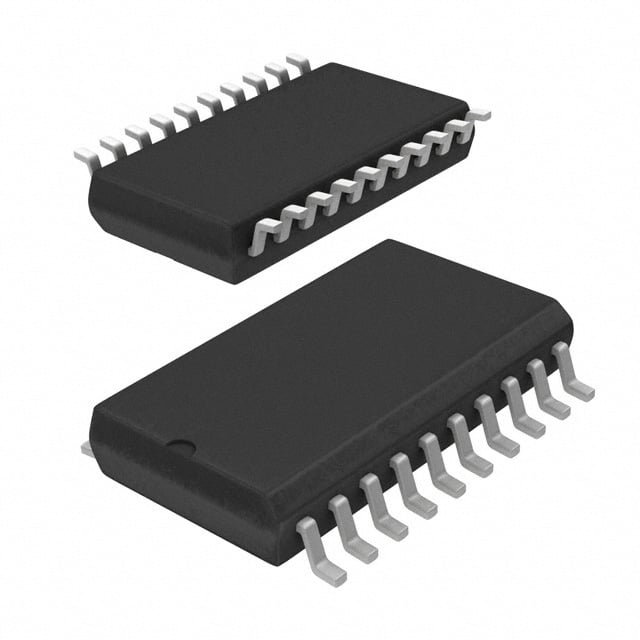
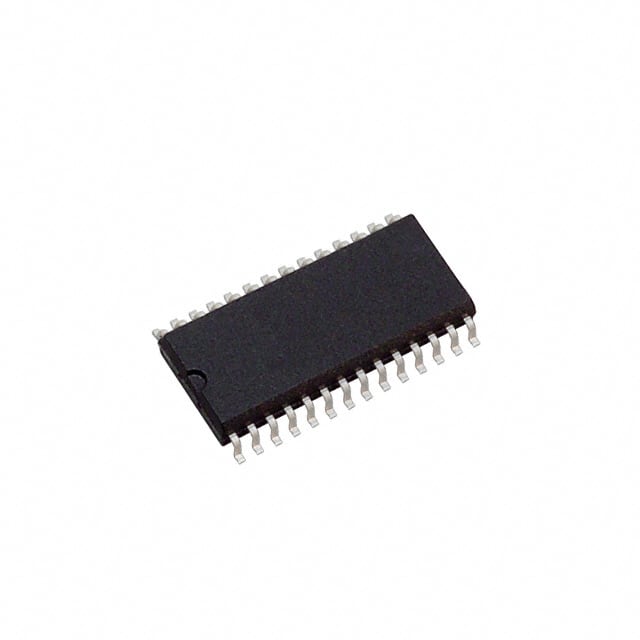
A9: The L293D is typically available in a 16-pin Dual In-Line Package (DIP) and also in surface-mount packages, offering flexibility for both breadboard and PCB-based designs.
Q10: What are the main advantages of using the L293D?
A10: The main advantages of the L293D include ease of use, integrated H-Bridge driver for bidirectional motor control, built-in protection diodes, and the ability to handle a moderate range of current and voltage.
Q11: Can the L293D be used for controlling high-power motors?
A11: The L293D is suitable for controlling low to medium-power motors, typically up to around 600mA of continuous current. For higher power motors, other driver ICs with higher current ratings may be necessary.
Q12: How does the L293D regulate motor speed?
A12: The L293D does not have a built-in speed control feature. However, speed control can be achieved using Pulse Width Modulation (PWM) signals applied to the input pins to control the duty cycle of the motor’s power.
Q13: Does the L293D support braking?
A13: Yes, the L293D can perform braking by setting both input pins of a motor channel to the same logic level, which results in a short circuit across the motor, effectively stopping its rotation.
Q14: Can the L293D drive motors in both directions?
A14: Yes, the L293D allows driving motors in both forward and reverse directions by toggling the input pins appropriately.
Q15: Is the L293D suitable for controlling servo motors?
A15: No, the L293D is not designed for controlling servo motors. Servo motors require precise PWM control that is typically handled by a servo driver or PWM controller, not an H-Bridge motor driver like the L293D.
Q16: How is the L293D controlled by a microcontroller?
A16: The L293D is controlled via four input pins from a microcontroller, which set the direction of the motor. The microcontroller sends high or low signals to these input pins, while PWM signals can be used for speed control.
Q17: What protection features are built into the L293D?
A17: The L293D includes built-in thermal shutdown, overload protection, and built-in flyback diodes to protect against back-EMF generated by the motors, making it a robust solution for motor control.
Q18: Can the L293D be used with both 3.3V and 5V logic systems?
A18: Yes, the L293D is compatible with both 3.3V and 5V logic systems, allowing it to interface with various microcontrollers, including those operating at lower voltages like 3.3V.
Q19: Is the L293D suitable for battery-powered applications?
A19: Yes, the L293D is suitable for battery-powered applications, as it has a low quiescent current draw and can operate efficiently with moderate battery voltages within its specified range.
Q20: What are the thermal characteristics of the L293D?
A20: The L293D features thermal shutdown protection and operates with a junction temperature range of -40°C to +150°C, ensuring safe operation under a variety of temperature conditions.