Overview of Texas Instruments AM26C32CNS
The Texas Instruments AM26C32CNS is a quad differential line driver designed for high-speed data transmission over twisted-pair cables. It is particularly well-suited for applications in telecommunications, data communications, and industrial control systems. The device is capable of driving long cable lengths while maintaining signal integrity, making it an essential component in various communication systems.
Key Specifications
- Number of Drivers: 4
- Supply Voltage (VCC): 4.75V to 5.25V
- Input Voltage Range: -0.3V to 5.5V
- Output Voltage Swing: 2V to 5V (differential)
- Output Current: ±60 mA
- Propagation Delay: 15 ns (typical)
- Rise/Fall Time: 10 ns (typical)
- Common Mode Range: -7V to 12V
- Operating Temperature Range: -40°C to 85°C
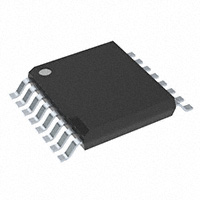
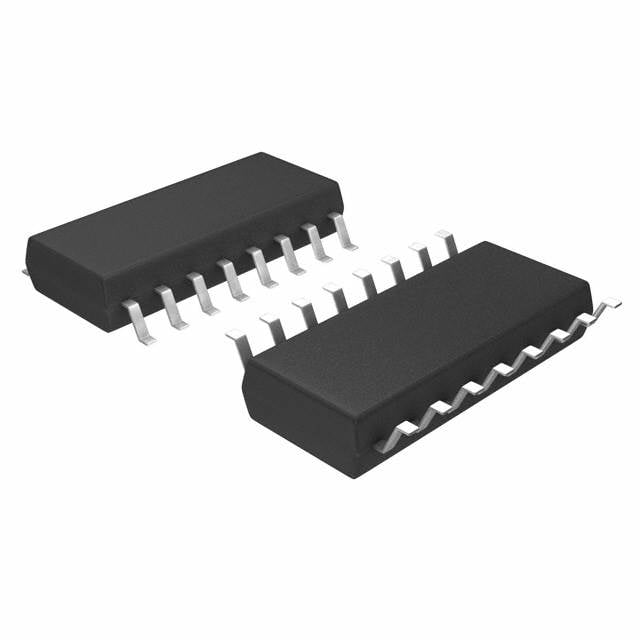
- Package Type: NSOIC (Narrow Small Outline Integrated Circuit)
- Pin Count: 16 pins
Functional Description
The AM26C32CNS is designed to provide robust differential signaling, which is essential for minimizing electromagnetic interference (EMI) and ensuring reliable data transmission over long distances. The device features four independent line drivers, allowing for the simultaneous transmission of multiple signals. Each driver is capable of driving a differential output, which enhances noise immunity and signal integrity.
Performance Characteristics
The AM26C32CNS is characterized by its high-speed performance, with a typical propagation delay of 15 ns and rise/fall times of 10 ns. This fast response time is crucial for applications that require high data rates, such as Ethernet and RS-485 communication. The output voltage swing of 2V to 5V ensures that the signals are strong enough to be transmitted over long distances without significant degradation.
The device can handle output currents of up to ±60 mA, making it suitable for driving loads with varying impedance. This capability is particularly important in applications where the line driver must interface with different types of transmission media.
Input and Output Characteristics
The AM26C32CNS accepts standard TTL and CMOS logic levels at its inputs, making it compatible with a wide range of digital systems. The differential output configuration helps to reduce common-mode noise, which is a significant advantage in noisy environments. The common mode range of -7V to 12V allows for flexibility in system design, accommodating various signal levels and ground configurations.
Thermal and Electrical Characteristics
The device operates over a wide temperature range of -40°C to 85°C, making it suitable for industrial and automotive applications where temperature variations can be significant. The NSOIC package provides good thermal performance, allowing for efficient heat dissipation and reliable operation in demanding environments.
Applications
The AM26C32CNS is suitable for a variety of applications, including:
- Telecommunications: Ideal for driving signals in telecommunication systems, including T1/E1 lines and other digital communication links.
- Data Communications: Used in RS-485 and RS-422 applications for reliable data transmission over twisted-pair cables.
- Industrial Control: Effective in industrial automation systems where robust communication is required between devices.
- Networking Equipment: Suitable for Ethernet and other networking applications that require high-speed data transmission.
Design Considerations
When designing with the AM26C32CNS, it is important to consider the layout of the PCB to minimize parasitic capacitance and inductance, which can affect signal integrity. Proper termination of the transmission lines is also crucial to prevent reflections and ensure reliable communication. Additionally, adequate power supply decoupling should be implemented to maintain stable operation, especially in high-speed applications.
Conclusion
The Texas Instruments AM26C32CNS is a high-performance quad differential line driver that meets the demands of modern communication systems. With its fast switching speeds, robust output capabilities, and wide operating voltage range, it is an excellent choice for engineers looking to implement reliable and efficient data transmission solutions in their designs. Its versatility and performance make it suitable for a wide range of applications across various industries.