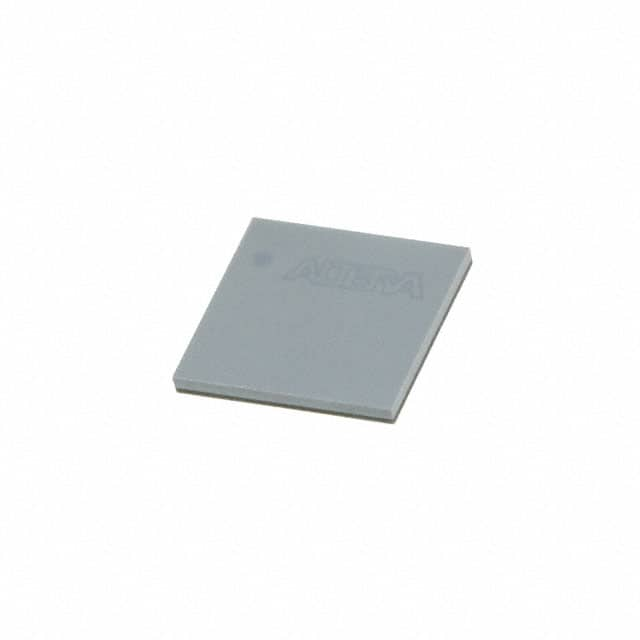
Q1: What is the Intel 10M02?
A1: The Intel 10M02 is a low-power, high-performance FPGA (Field-Programmable Gate Array) designed for various embedded applications, including communications, automotive, and industrial systems.
Q2: What is the primary application of the Intel 10M02 FPGA?
A2: The Intel 10M02 FPGA is used for embedded system designs, providing flexibility for custom logic configurations in areas like networking, signal processing, and control systems.
Q3: What is the capacity of the Intel 10M02 FPGA?
A3: The Intel 10M02 FPGA has 2,000 logic elements (LEs), offering sufficient capacity for small to medium-sized embedded applications.
Q4: What is the clock speed of the Intel 10M02 FPGA?
A4: The Intel 10M02 FPGA supports a maximum clock speed of up to 200 MHz, depending on the design and specific application.
Q5: What is the power consumption of the Intel 10M02 FPGA?
A5: The Intel 10M02 FPGA is designed for low power consumption, making it ideal for battery-operated and portable embedded systems, with typical power consumption around 250 mW.
Q6: What is the operating voltage range for the Intel 10M02 FPGA?
A6: The Intel 10M02 FPGA operates within a voltage range of 1.14V to 3.3V.
Q7: Does the Intel 10M02 support high-speed I/O?
A7: Yes, the Intel 10M02 FPGA supports high-speed I/O interfaces such as LVDS (Low Voltage Differential Signaling) and SPI (Serial Peripheral Interface), making it suitable for high-performance communication.
Q8: What programming language can be used to design logic on the Intel 10M02 FPGA?
A8: The Intel 10M02 FPGA can be programmed using hardware description languages (HDLs) such as VHDL and Verilog, as well as graphical design tools like Intel's Quartus Prime software.
Q9: What is the package type of the Intel 10M02 FPGA?
A9: The Intel 10M02 FPGA is available in multiple package types, including QFN (Quad Flat No-lead) and BGA (Ball Grid Array) packages, depending on the specific model and application needs.
Q10: Is the Intel 10M02 FPGA suitable for automotive applications?
A10: Yes, the Intel 10M02 FPGA is suitable for automotive applications, offering features like low power consumption, high reliability, and robustness against environmental conditions.
Q11: What is the temperature range for the Intel 10M02 FPGA?
A11: The Intel 10M02 FPGA operates within a temperature range of -40°C to 85°C, making it suitable for industrial and automotive applications.
Q12: Does the Intel 10M02 FPGA support partial reconfiguration?
A12: Yes, the Intel 10M02 FPGA supports partial reconfiguration, which allows parts of the FPGA to be reprogrammed while the rest of the system continues to operate.
Q13: How many I/O pins does the Intel 10M02 FPGA have?
A13: The Intel 10M02 FPGA has up to 120 I/O pins, depending on the specific package and configuration chosen.
Q14: What types of interfaces are supported by the Intel 10M02 FPGA?
A14: The Intel 10M02 FPGA supports a variety of interfaces, including SPI, I2C, UART, and GPIO, making it versatile for a wide range of embedded applications.
Q15: Is the Intel 10M02 FPGA suitable for signal processing applications?
A15: Yes, the Intel 10M02 FPGA is well-suited for signal processing applications, offering efficient parallel processing capabilities and low latency for real-time operations.
Q16: What development tools are required for the Intel 10M02 FPGA?
A16: The Intel 10M02 FPGA can be programmed and developed using Intel's Quartus Prime software, which provides a comprehensive suite of tools for design, simulation, and implementation.
Q17: Does the Intel 10M02 support high-level synthesis (HLS)?
A17: Yes, the Intel 10M02 FPGA supports high-level synthesis (HLS), allowing developers to design FPGA logic using C, C++, or SystemC, which is then automatically converted to hardware descriptions.
Q18: Can the Intel 10M02 FPGA be used for network interface cards (NICs)?
A18: Yes, the Intel 10M02 FPGA can be used in network interface cards (NICs) for high-speed data transfer and networking applications, thanks to its flexible I/O options and processing power.
Q19: What is the cost of the Intel 10M02 FPGA?
A19: The cost of the Intel 10M02 FPGA varies based on factors such as quantity, package type, and specific configuration. It is generally considered an affordable solution for embedded and industrial applications.
Q20: Where can I purchase the Intel 10M02 FPGA?
A20: The Intel 10M02 FPGA can be purchased from authorized distributors, electronics component suppliers, and online platforms that specialize in FPGA products.