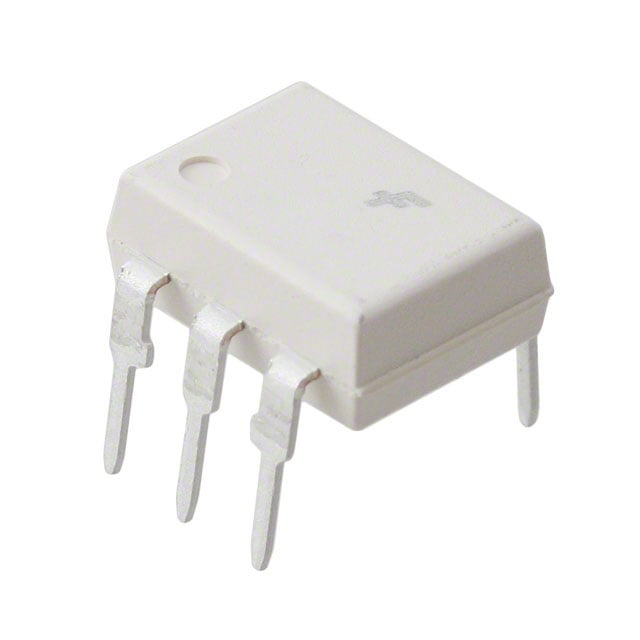
Sure! Here’s a detailed introduction to the Isocom Components TIL194BSM, including its specifications:
---
## Isocom Components TIL194BSM: Detailed Introduction
## Overview
The Isocom TIL194BSM is a high-performance optocoupler designed for applications requiring electrical isolation between different circuit stages while allowing data transmission through light signals. This device is particularly useful in digital signal interfacing, power supply circuits, and communication systems, where isolation is critical to protect sensitive components and ensure reliable operation.
## Key Specifications
1. General Description:
- Type: Optocoupler (Opto-isolator)
- Package Type: 4-pin Dual In-line Package (DIP)
- Mounting Type: Through-hole
- Case Material: Plastic (Epoxy resin)
- Lead Frame Material: Copper
2. Optocoupler Characteristics:
- Input LED:
- Forward Voltage (V_F): Typically 1.2V
- Forward Current (I_F): Maximum 20mA
- Reverse Voltage (V_R): Maximum 5V
- Wavelength (λ_peak): 940nm (Infrared)
- Output Phototransistor:
- Collector-Emitter Voltage (V_CEO): Maximum 50V
- Collector-Emitter Saturation Voltage (V_CE(sat)): Maximum 0.2V at I_C = 2mA
- Emitter-Collector Voltage (V_ECO): Maximum 5V
- Collector Current (I_C): Maximum 50mA
- Current Transfer Ratio (CTR): Typically 100% to 400% at I_F = 10mA, V_CE = 5V
3. Electrical Characteristics:
- Input:
- Forward Voltage (V_F): Minimum 1.1V, Maximum 1.4V
- Forward Current (I_F): Maximum 20mA
- Reverse Current (I_R): Maximum 10µA
- Output:
- Collector-Emitter Saturation Voltage (V_CE(sat)): Maximum 0.2V at I_C = 2mA
- Collector Current (I_C): Maximum 50mA
- Current Transfer Ratio (CTR): Minimum 100%, Maximum 400% at I_F = 10mA, V_CE = 5V
- Isolation Voltage:
- Isolation Voltage (V_iso): Minimum 5000Vrms
4. Switching Characteristics:
- Rise Time (t_r): Typically 20µs
- Fall Time (t_f): Typically 20µs
- Propagation Delay (t_p): Typically 40µs
- Propagation Delay (t_p) (High to Low): Typically 40µs
- Propagation Delay (t_p) (Low to High): Typically 40µs
5. Pin Configuration:
The TIL194BSM is housed in a 4-pin DIP package with the following pin configuration:
- Pin 1: Anode (LED Input)
- Pin 2: Cathode (LED Input)
- Pin 3: Collector (Phototransistor Output)
- Pin 4: Emitter (Phototransistor Output)
6. Features:
- Electrical Isolation: Provides isolation between input and output, protecting sensitive components from high voltages and noise.
- High CTR: Ensures reliable signal transmission with a wide range of current transfer ratios.
- Fast Switching Times: Suitable for high-speed digital applications with low propagation delays.
- Compact Package: The 4-pin DIP package is suitable for various PCB designs and allows for easy integration.
7. Applications:
- Digital Signal Isolation: Used in digital systems to isolate control signals from high-voltage circuits.
- Power Supply Circuits: Provides isolation between control and power stages in power supplies.
- Communication Systems: Ensures electrical isolation in data communication interfaces and transceivers.
- Signal Conditioning: Used in applications requiring isolation and signal conditioning in industrial controls and automation.
8. Environmental and Reliability:
- Operating Temperature Range: -25°C to +85°C
- Storage Temperature Range: -55°C to +150°C
- Relative Humidity: Maximum 85% RH (non-condensing)
- Soldering Temperature: Maximum 260°C for 10 seconds
## Conclusion
The Isocom TIL194BSM is a versatile optocoupler ideal for applications requiring electrical isolation and reliable signal transmission. Its wide current transfer ratio, high isolation voltage, and fast switching characteristics make it suitable for a variety of uses in digital systems, power supplies, and communication interfaces. For detailed design considerations and application-specific requirements, referring to the official datasheet provided by Isocom Components is recommended.
---
This comprehensive overview highlights the TIL194BSM’s specifications, features, and typical applications, providing a clear understanding of its capabilities and suitability for different scenarios.