☰
H11AA1
H11AA1
Active
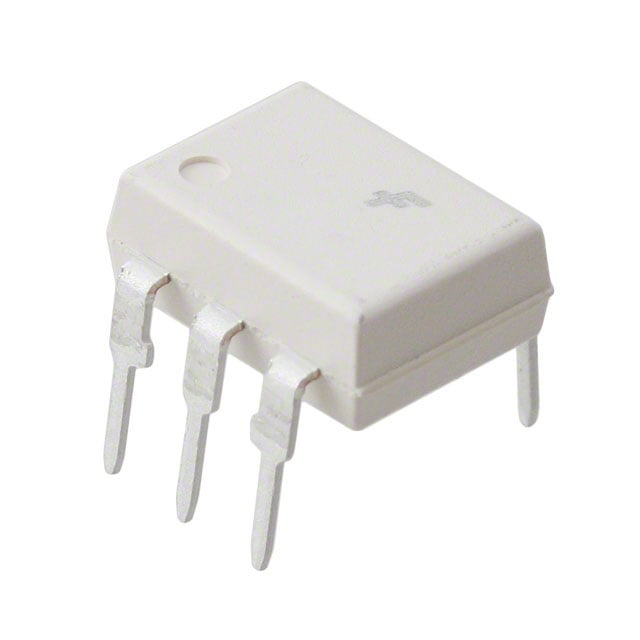
Description:  OPTOISO 5.3KV TRANS W/BASE 6DIP
Manufacturer:  Vishay
Datasheet:   H11AA1 Datasheet
History Price: $1.33
In Stock: 39700
H11AA1 Specification
Specification
Mfr Part
H11AA1
Category
Optoisolators - Transistor, Photovoltaic Output Optoisolators
Manufacturer
Vishay
Series
-
Packaging
Tube
Status
Active
Environmental Compliance
Lead Free
Radiation Hardening
No
REACH SVHC
No SVHC
RoHS
Compliant
HS Code
-
Technical Parameter
Number of Channels
1
Voltage - Isolation
5300Vrms
Current Transfer Ratio (Min)
20% @ 10mA
Current Transfer Ratio (Max)
-
Turn On / Turn Off Time (Typ)
-
Rise / Fall Time (Typ)
-
Input Type
AC, DC
Output Type
Transistor with Base
Voltage - Output (Max)
30V
Current - Output / Channel
-
Voltage - Forward (Vf) (Typ)
1.2V
Current - DC Forward (If) (Max)
60 mA
Vce Saturation (Max)
400mV
Operating Temperature
-55 ℃ ~ 100 ℃
Mounting Type
Through Hole
Package / Case
6-DIP (0.300", 7.62mm)
Supplier Device Package
6-DIP
H11AA1 PDF Datasheet
H11AA1 Description
Here is a comprehensive introduction to the Everlight Electronics H11AA1, including its specifications and features:

---

## Everlight Electronics H11AA1: Detailed Overview

## Overview

The Everlight Electronics H11AA1 is a high-performance optocoupler designed for various applications requiring electrical isolation between circuits. This device, often used in signal isolation, switching, and control circuits, is characterized by its high-speed operation and robust isolation characteristics. The H11AA1 is suitable for applications in industrial control systems, switching power supplies, and other electronic systems that need reliable signal transmission with isolation.

## Key Specifications

1. General Description:
- Type: Optocoupler
- Package Type: 4-pin Dual In-Line Package (DIP) or Surface Mount (SMD)
- Isolation Voltage: 5,000V RMS
- Temperature Range: -40°C to +85°C
- Input-Output Isolation Resistance: >10^12 Ω
- Input-Output Capacitance: 0.3pF (typical)

2. Electrical Characteristics:
- Supply Voltage (V_CC):
- Minimum: 4.5V
- Typical: 5V
- Maximum: 7V
- Input Current (I_F):
- Minimum: 5mA
- Typical: 10mA
- Maximum: 20mA
- Forward Voltage (V_F):
- Typical: 1.2V
- Maximum: 1.4V (at I_F = 20mA)
- Output Voltage (V_O):
- Minimum: 2V (at I_O = 5mA)
- Maximum: V_CC - 2V (at I_O = 5mA)
- Output Current (I_O):
- Minimum: 5mA
- Typical: 10mA
- Maximum: 20mA
- Propagation Delay (t_PHL and t_PLH):
- Typical: 1.5μs
- Maximum: 3μs
- Pulse Width Distortion (PWD):
- Typical: 0.5μs
- Supply Current (I_CC):
- Typical: 3mA

3. Features:
- High-Speed Operation: The H11AA1 provides fast switching with a typical propagation delay of 1.5μs, making it suitable for high-speed signal isolation applications.
- High Isolation Voltage: With 5,000V RMS isolation, the H11AA1 ensures reliable isolation between high-voltage and low-voltage sections, enhancing safety and protection in electronic systems.
- Low Pulse Width Distortion: The device features a pulse width distortion of 0.5μs (typical), maintaining signal integrity and accuracy in high-frequency applications.
- Wide Temperature Range: It operates effectively over a temperature range of -40°C to +85°C, suitable for various industrial and consumer applications.
- Low Supply Current: The H11AA1 consumes only 3mA of supply current (typical), contributing to energy-efficient operation.
- Compact Package: Available in a 4-pin DIP or SMD package, facilitating easy integration into different circuit designs.

4. Applications:
- Signal Isolation: Used for isolating signals between different sections of electronic systems to prevent signal interference and protect sensitive components.
- Switching Power Supplies: Provides isolation and signal transmission in power supply circuits, ensuring safe and reliable operation.
- Industrial Control Systems: Employed in control systems to separate control signals from power circuits, enhancing system robustness and safety.
- Communication Equipment: Utilized in communication devices to ensure reliable data transmission with electrical isolation.
- Consumer Electronics: Can be used in various consumer electronic devices for signal isolation and protection.

5. Pin Configuration (DIP-4 / SMD-4):
- Pin 1: Anode (Input)
- Pin 2: Cathode (Input)
- Pin 3: Collector (Output)
- Pin 4: Emitter (Output)

6. Typical Application Circuit:
- Basic Signal Isolation: The H11AA1 is often used in a basic circuit where an LED on the input side provides optical isolation to a phototransistor on the output side. The LED is driven by a control signal, and the resulting phototransistor output can be used to drive a subsequent stage in the circuit, all while maintaining electrical isolation between input and output.

## Conclusion

The Everlight Electronics H11AA1 is a versatile and reliable optocoupler that offers high-speed operation, robust isolation, and low pulse width distortion. Its features make it suitable for a wide range of applications, including signal isolation, industrial control systems, and consumer electronics. For detailed design considerations and application guidelines, refer to the official datasheet provided by Everlight Electronics.

---

This detailed overview provides a thorough understanding of the Everlight Electronics H11AA1, covering its key specifications, features, and applications.
H11AA1 Compare Parts
  • H11AA1 vs H11A1300W
  • H11AA1 vs H11A5
  • H11AA1 vs H11A5FR2VM
  • H11AA1 vs H11A5FR2M
  • H11AA1 vs H11A5FM
  • H11AA1 vs H11A53SD
  • H11AA1 vs H11A53S
  • H11AA1 vs H11A5300W
  • H11AA1 vs H11A5100
  • H11AA1 vs H11A5SM
  • H11AA1 vs H11A5
  • H11AA1 vs H11A4W
  • H11AA1 vs H11A4VM
  • H11AA1 vs H11A4TVM
  • H11AA1 vs H11A5300
  • H11AA1 vs H11A5VM
  • H11AA1 vs H11A617A300W
  • H11AA1 vs H11A617A300
  • H11AA1 vs H11A5FVM
  • H11AA1 vs H11A5W
  • H11AA1 vs H11A5TVM
  • H11AA1 vs H11A5TM
  • H11AA1 vs H11A5SVM
  • H11AA1 vs H11A5SR2VM
  • H11AA1 vs H11A5SR2M
  • H11AA1 vs H11A4SR2VM
  • H11AA1 vs H11A617A
  • H11AA1 vs H11A3SVM
  • H11AA1 vs H11A4300
  • H11AA1 vs H11A4
  • H11AA1 vs H11A4
  • H11AA1 vs H11A3W
  • H11AA1 vs H11A3VM
  • H11AA1 vs H11A4TM
  • H11AA1 vs H11A3TM
  • H11AA1 vs H11A43SD
  • H11AA1 vs H11A3SR2VM
  • H11AA1 vs H11A3SR2M
  • H11AA1 vs H11A3SM
  • H11AA1 vs H11A3SD
  • H11AA1 Related Parts
    H11AA3X
    H11AA3X
    Isocom Components
    OPTOISO 5.3KV TRANS W/BASE 6DIP
    H11AA4M
    H11AA4M
    onsemi
    OPTOISO 4.17KV TRANS W/BASE 6DIP
    H11A1-X009T
    H11A1-X009T
    Vishay
    OPTOISO 5.3KV TRANS W/BASE 6SMD
    H11G2VM
    H11G2VM
    Fairchild Semiconductor
    DARLINGTON OUTPUT OPTOCOUPLER, 7
    H11AA1SM
    H11AA1SM
    onsemi
    OPTOISO 4.17KV TRANS W/BASE 6SMD
    H11AA1SR2M
    H11AA1SR2M
    onsemi
    OPTOISO 4.17KV TRANS W/BASE 6SMD
    H11AA1SR2VM
    H11AA1SR2VM
    onsemi
    OPTOISO 4.17KV TRANS W/BASE 6SMD
    H11AA1SVM
    H11AA1SVM
    onsemi
    OPTOISO 4.17KV TRANS W/BASE 6SMD
    H11AA1TVM
    H11AA1TVM
    onsemi
    OPTOISO 4.17KV TRANS W/BASE 6DIP
    H11AA1VM
    H11AA1VM
    onsemi
    OPTOISO 4.17KV TRANS W/BASE 6DIP
    H11AA1VM
    H11AA1VM
    Fairchild Semiconductor
    AC INPUT-TRANSISTOR OUTPUT OPTOC
    H11AA1X
    H11AA1X
    Isocom Components
    OPTOISO 5.3KV TRANS W/BASE 6DIP
    H11AA1 FAQ
    Q1: What is the Everlight Electronics H11AA1?
    A1: The Everlight Electronics H11AA1 is an optocoupler, designed to provide electrical isolation between two circuits while transmitting signals.

    Q2: What is the typical application of the H11AA1?
    A2: The H11AA1 is commonly used in industrial control systems, switching power supplies, and communication systems that require signal isolation.

    Q3: What is the isolation voltage of the H11AA1?
    A3: The H11AA1 provides an isolation voltage of up to 3 kV RMS.

    Q4: What is the current transfer ratio (CTR) of the H11AA1?
    A4: The typical current transfer ratio (CTR) of the H11AA1 is 50% to 600% at an input current of 5 mA.

    Q5: What is the forward voltage of the LED in the H11AA1?
    A5: The forward voltage of the LED in the H11AA1 is typically 1.2 V at 20 mA.

    Q6: What is the maximum input current for the H11AA1?
    A6: The maximum input current for the H11AA1 is 50 mA.

    Q7: Does the H11AA1 have an integrated phototransistor?
    A7: Yes, the H11AA1 uses an integrated phototransistor to transfer the signal from the input to the output with electrical isolation.

    Q8: What is the operating temperature range of the H11AA1?
    A8: The H11AA1 operates within a temperature range of -40°C to +85°C.

    Q9: What is the output voltage rating of the H11AA1?
    A9: The H11AA1 has a maximum output voltage rating of 30 V.

    Q10: What is the package type of the H11AA1?
    A10: The H11AA1 comes in a 4-pin dual-in-line package (DIP-4).

    Q11: Can the H11AA1 be used in automotive applications?
    A11: Yes, the H11AA1 can be used in automotive applications where signal isolation is necessary.

    Q12: What is the maximum collector current for the H11AA1?
    A12: The maximum collector current for the H11AA1 is 50 mA.

    Q13: Does the H11AA1 feature built-in protection against overloads?
    A13: The H11AA1 has internal protection to ensure reliable operation within its specified current and voltage limits.

    Q14: What is the typical rise time of the H11AA1?
    A14: The typical rise time of the H11AA1 is 1.5 µs.

    Q15: What is the typical fall time of the H11AA1?
    A15: The typical fall time of the H11AA1 is 1.0 µs.

    Q16: Is the H11AA1 RoHS compliant?
    A16: Yes, the H11AA1 is RoHS compliant, making it suitable for environmentally conscious designs.

    Q17: What is the typical storage temperature range for the H11AA1?
    A17: The typical storage temperature range for the H11AA1 is -40°C to +125°C.

    Q18: What is the power dissipation rating of the H11AA1?
    A18: The maximum power dissipation rating for the H11AA1 is 100 mW.

    Q19: How does the H11AA1 provide electrical isolation?
    A19: The H11AA1 provides electrical isolation by using an opto-isolator design, where an LED transmits signals to a phototransistor through optical means, preventing direct electrical connection.

    Q20: What is the typical input current for the H11AA1 to achieve nominal performance?
    A20: The typical input current for the H11AA1 to achieve nominal performance is 5 mA.
    Customer Reviews
    4.95 out of 5.00 stars from 151 customer reviews from all over the world
    Vytautas Dapkus
    Lithuania
    5 stars
    2026-11-12 16:28
    Everything is ok.
    Ulysses Santos Filho
    Brazil
    5 stars
    2026-11-12 14:25
    Product was returned for customs reasons
    Senhor Hugo
    Brazil
    5 stars
    2026-11-12 13:13
    Very good works perfectly...
    Gabriela Ruiz
    Spain
    5 stars
    2026-11-12 12:53
    Look original
    Good packing
    Linde de Boer
    Netherlands
    5 stars
    2026-11-12 10:13
    tested, works. Appears to be genuine component. Date code 2023 week 2
    Tessa van der Kloet
    Netherlands
    5 stars
    2026-11-12 09:09
    fast shipment . it is a really nice product. and works well for this low price. really happy with the product