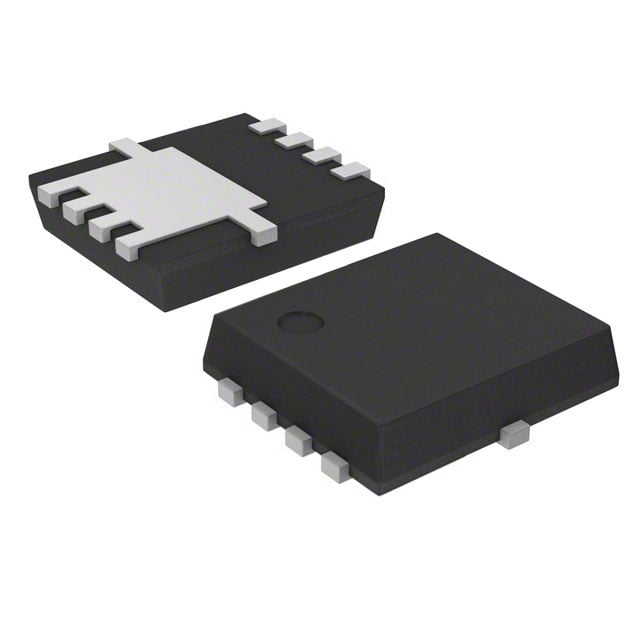
## Texas Instruments CSD17581Q3AT Overview
The Texas Instruments CSD17581Q3AT is a high-performance N-channel MOSFET designed for power management applications. With its advanced technology, this device offers low RDS(on), high efficiency, and excellent thermal performance, making it suitable for a variety of applications, including DC-DC converters, power supplies, and motor drives.
## Key Features
1. N-Channel MOSFET:
- The CSD17581Q3AT is an N-channel enhancement mode MOSFET, which provides superior conductivity and switching performance compared to P-channel devices.
2. Low On-Resistance (RDS(on)):
- The device features a low on-resistance of only 6.5 mΩ at VGS = 10V, significantly reducing conduction losses and improving overall efficiency.
3. High Current Handling:
- It can handle continuous drain currents of up to 80 A, making it suitable for high-power applications.
4. Fast Switching Speed:
- The CSD17581Q3AT exhibits fast switching speeds, which are crucial for applications requiring quick response times and minimal switching losses.
5. Low Gate Charge (Qg):
- The gate charge is minimized at approximately 20 nC, which reduces the energy required for switching, thereby enhancing efficiency in high-frequency applications.
6. Thermal Performance:
- It has a low thermal resistance, ensuring effective heat dissipation during operation. This feature is vital for maintaining reliability and performance under load.
7. Compact Package:
- The device is available in a Thermally Enhanced QFN package (8 mm x 8 mm), allowing for a reduced footprint on the PCB while providing excellent thermal performance.
8. Wide Operating Voltage Range:
- The CSD17581Q3AT operates over a wide voltage range, making it compatible with various power supply designs.
## Electrical Specifications
Here are the key electrical specifications for the CSD17581Q3AT:
- Drain-to-Source Voltage (VDS): 30 V
- Gate-to-Source Voltage (VGS): ±20 V
- Continuous Drain Current (ID):
- 80 A at 25°C
- 60 A at 100°C
- Pulsed Drain Current (IDM): 160 A
- On-Resistance (RDS(on)):
- 6.5 mΩ at VGS = 10 V
- 9.5 mΩ at VGS = 4.5 V
- Gate Charge (Qg): 20 nC (typical)
- Turn-On Delay Time (td(on)): 10 ns
- Rise Time (tr): 15 ns
- Turn-Off Delay Time (td(off)): 40 ns
- Fall Time (tf): 15 ns
- Operating Temperature Range: -55°C to +150°C
- Thermal Resistance, Junction-to-Ambient (RθJA): 25°C/W
- Thermal Resistance, Junction-to-Case (RθJC): 2°C/W
## Pin Configuration
The CSD17581Q3AT comes in a 8-lead QFN package. Below is the pin configuration:
1. Pin 1 (D): Drain
2. Pin 2 (S): Source
3. Pin 3 (G): Gate
4. Pin 4 (D): Drain (same as Pin 1 for dual configuration)
5. Pin 5 (S): Source (same as Pin 2 for dual configuration)
6. Pin 6 (G): Gate (same as Pin 3 for dual configuration)
7. Pin 7 (GND): Ground
8. Pin 8 (NC): No Connect
## Applications
The CSD17581Q3AT is ideal for a variety of applications, including:
1. DC-DC Converters:
- Used in synchronous rectification and high-efficiency buck converters.
2. Power Management:
- Suitable for power distribution in computing and telecommunications equipment.
3. Motor Drives:
- Effective in driving motors for industrial and automotive applications.
4. Battery Management Systems:
- Can be utilized in battery protection circuits and charging applications.
5. LED Drivers:
- Appropriate for driving LED arrays in lighting applications.
## Thermal Considerations
Due to its high current handling capabilities, proper thermal management is critical when using the CSD17581Q3AT. Designers should ensure adequate heatsinking and PCB layout considerations to maintain the junction temperature within spec to prolong device life and reliability.
## Conclusion
The Texas Instruments CSD17581Q3AT is a robust N-channel MOSFET that excels in high-efficiency power applications. With its low on-resistance, fast switching speed, and excellent thermal performance, it is an ideal choice for engineers looking to optimize power management and enhance system reliability. Its compact packaging and wide operating voltage range further contribute to its versatility across a myriad of applications, making it a valuable component in modern electronic designs.