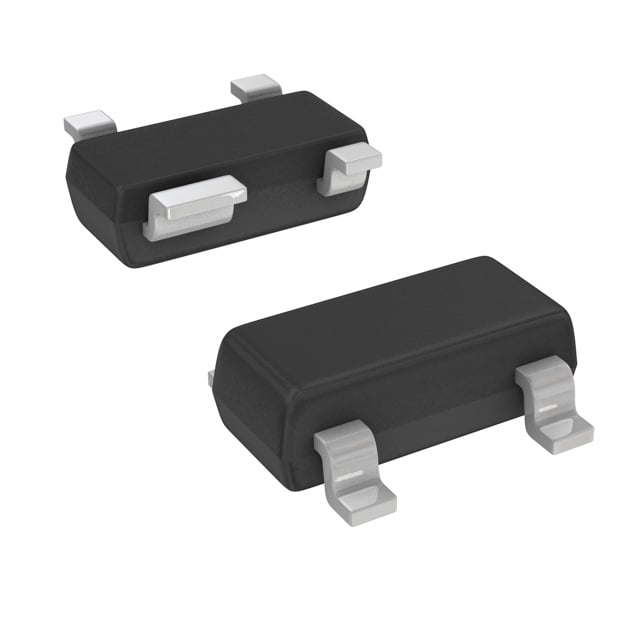
Let's explore the role of a current-sensing resistor in transistor-based current regulation.
1. Current Regulation Basics:
- Current regulation ensures a constant current flow to a specific part of a circuit, regardless of load resistance or input voltage variations.
- Unlike voltage regulation, which adjusts current to achieve a desired voltage, current regulation focuses on maintaining a steady current output.
2. Transistor-Based Current Regulators:
- Transistors can be used to create simple current regulators.
- One common configuration is the low-side current regulator, where the transistor is connected after the load and before the ground.
- Let's examine a specific example:
3. Components of a Low-Side Current Regulator:
- The low-side current regulator consists of three key components:
- Control Transistor: Often an NPN transistor (e.g., 2N5551).
- Power Transistor: Typically a power transistor (e.g., TIP41).
- Shunt Resistor (R): A low-value resistor used to measure the current flowing through the load.
4. How It Works:
- The shunt resistor (R) is placed in series with the load.
- As current flows through the load, a voltage drop occurs across the shunt resistor.
- The control transistor monitors this voltage drop.
- When the current exceeds the desired level, the control transistor adjusts its resistance to regulate the current.
- The power transistor amplifies this control signal to drive the load.
5. Role of the Shunt Resistor:
- The shunt resistor serves as a current-sensing element.
- By measuring the voltage drop across the shunt, it indirectly senses the load current.
- This information is fed back to the control transistor for regulation.
- The shunt resistor allows precise monitoring without directly affecting the load.
6. Advantages:
- Accuracy: The shunt resistor provides accurate current measurement.
- Feedback: It enables closed-loop feedback for stable current regulation.
- Protection: Detecting overcurrent conditions helps protect the load.
7. Considerations:
- Choose an appropriate shunt resistor value based on the desired current range.
- Ensure the shunt resistor's power rating can handle the dissipated power.
In summary, the current-sensing resistor (shunt resistor) plays a crucial role in transistor-based current regulation by providing accurate current measurement and enabling effective feedback control¹.
(1) Current Regulators: Construction, Working and Design Types - Circuit Digest. https://circuitdigest.com/tutorial/current-regulators-construction-working-and-design-types.
(2) What is the role of resistors in voltage regulation and current .... https://www.electricity-magnetism.org/what-is-the-role-of-resistors-in-voltage-regulation-and-current-limiting-circuits/.
(3) Regulator to Control Current Sharing among Parallel-Connected Power .... https://ieeexplore.ieee.org/document/4336531/.
(4) Transistor Voltage Regulator | How it works, Application & Advantages. https://www.electricity-magnetism.org/transistor-voltage-regulator/.
(5) Transistor-based current regulator | How it works, Application & Advantages. https://www.electricity-magnetism.org/transistor-based-current-regulator/.
icDirectory United Kingdom | https://www.icdirectory.co.uk/a/blog/what-is-the-role-of-a-current-sensing-resistor-in-transistor-based-current-regulation.html

☰

,TO-226_straightlead.jpg)